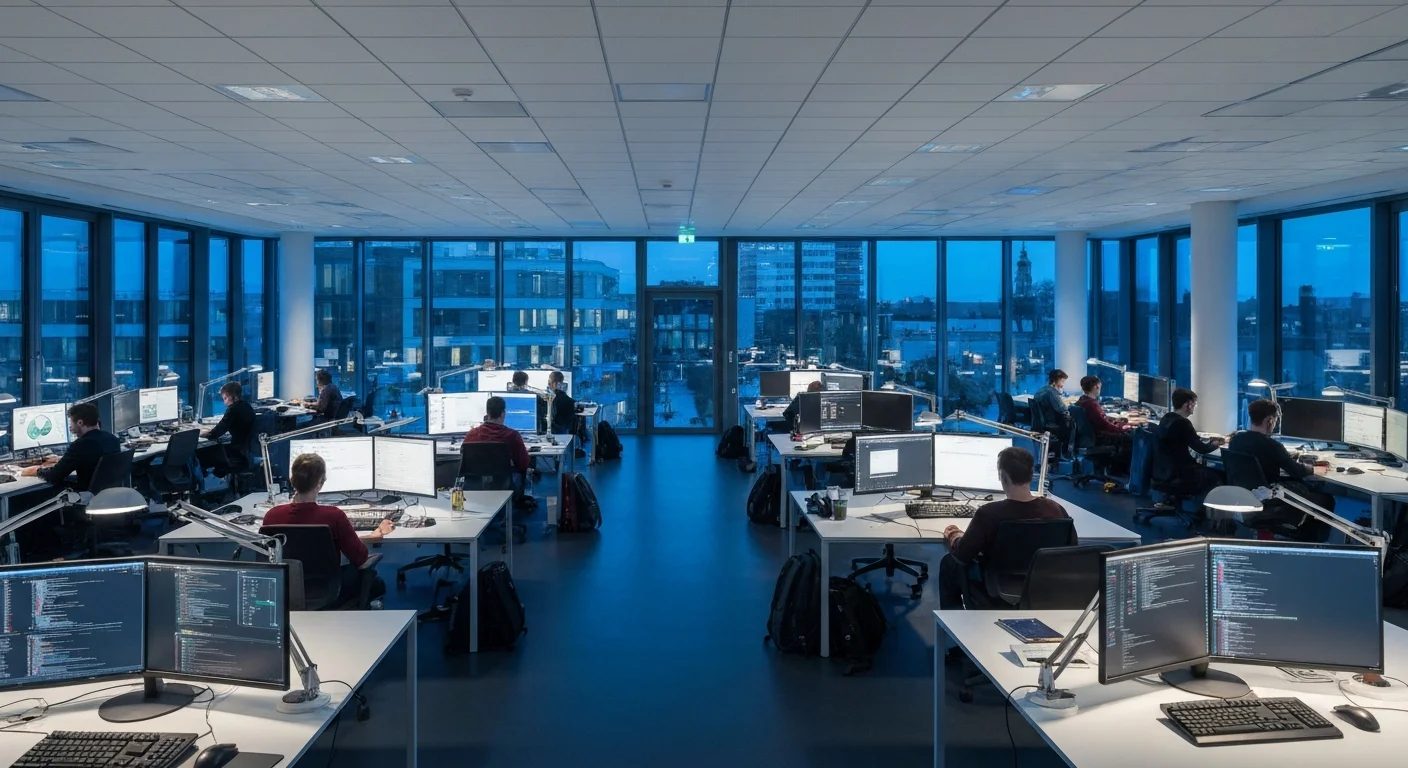
MS in Computer Science in Germany
Germany is Europe's largest tech economy and home to world-renowned TU9 research universities. Study Computer Science at top-ranked institutions with zero tuition fees, English-taught programmes, and an 18-month post-study work visa.
Leading Universities in Germany
World-class education with strong industry ties and international recognition.
Technische Hochschule Deggendorf
Deggendorf, Bayern
Applied AI and tech-focused programmes with strong industry partnerships in Bavaria.
Technische Universität München
München, Bayern
Germany's #1 technical university. World-class AI, robotics, and software engineering research.
RWTH Aachen
Aachen, Nordrhein-Westfalen
Europe's largest TU with excellent CS, data science, and computational engineering programmes.
Karlsruher Institut für Technologie
Karlsruhe, Baden-Württemberg
Leading research university for CS, cryptography, and IT security. Among Germany's largest CS departments.
Technische Universität Berlin
Berlin, Berlin
Located in Germany's startup capital with direct access to Berlin's vibrant tech ecosystem.
Technische Universität Darmstadt
Darmstadt, Hessen
Pioneer in cybersecurity and machine learning. Internationally recognised for IT security research.
Computer Science / IT Master's in Germany: Tuition Fees, Acceptance Rate & QS Ranking 2026
For international students comparing CS and IT master's programmes in Germany, the most important filters are tuition, English-taught availability, admission selectivity, and whether a university performs strongly in QS rankings for Computer Science or overall research reputation.
| University / programme path | QS 2026 context | Typical tuition for internationals | Acceptance difficulty |
|---|---|---|---|
| Technical University of Munich (TUM) | Germany's highest QS 2026 overall university; strong CS and engineering reputation. | €4,000-€6,000/semester for many non-EU master's students. | Very selective; check aptitude assessment and subject fit. |
| KIT Karlsruhe | Top German technical university in QS 2026; strong CS/engineering profile. | Baden-Württemberg non-EU tuition usually €1,500/semester plus semester contribution. | Selective; strong CS background and deadlines matter. |
| RWTH Aachen | QS 2026 top German engineering university group; excellent technical brand. | Often no tuition at public universities outside special fee states; semester contribution applies. | Selective; competitive technical profile expected. |
| Paderborn / Passau style public CS master's | May rank lower globally than TUM/KIT but can be excellent for employability and cost. | Many list no tuition; semester contribution often around €120-€350. | Moderate to selective; some programmes require GRE/dMat or strict ECTS matching. |
Acceptance rate reality
Most German universities do not publish simple acceptance-rate percentages for CS master's admissions. Use practical signals instead: restricted admission, minimum grade, required CS ECTS, IELTS/TOEFL level, GRE/dMat/GATE, aptitude test, and application deadline.
International student demand
DAAD reported about 402,000 international students and doctoral candidates in Germany in winter 2024/25, with a 2025/26 forecast around 420,000. Engineering and natural sciences remain major demand areas.
Showing 409–432 of 888 programmes
Entrepreneurship and Digital Business, M.Sc.
Technische Hochschule Ingolstadt · Ingolstadt
Apply by 1 Oct · 15d leftEntrepreneurship and Digital Transformation, M.A.
Hochschule für angewandte Wissenschaften München · München
Entrepreneurship in digitalen Technologien, M.Sc.
Universität zu Lübeck · Lübeck
Apply by 30 Sep · 14d leftErwachsenenbildung und Digitalisierung, M.A.
SRH Fernhochschule - The Mobile University · Riedlingen
Erweiterungsfach Lehramt Gymnasium: Informatik - Lehramt für die allgemeinbildenden Fächer der Sekundarstufe II und das Gymnasium (auch Gesamtschulen), M.Ed.
Universität Mannheim · Mannheim
European and Transnational Intellectual Property and Information Technology Law, LL.M.
Georg-August-Universität Göttingen · Göttingen
European Master Embedded Computing Systems, M.Sc.
Technische Universität Kaiserslautern (jetzt: RPTU) · Kaiserslautern
Executive Master in Digital Innovation and Entrepreneurial Leadership, M.Sc.
ESCP Europe Wirtschaftshochschule Berlin e.V. · Berlin
Executive Master of Science in Digital Pioneering | AI Revolution and Leadership (eMA DIP), M.Sc.
Zeppelin Universität - Hochschule zwischen Wirtschaft, Kultur und Politik · Friedrichshafen
Apply by 1 Nov · 46d leftFilm, Television and Digital Narratives, M.A.
SRH University of Applied Sciences Heidelberg · Berlin
Apply by 1 Oct · 15d leftFilmkultur: Archivierung, Programmierung, Präsentation, M.A.
Johann Wolfgang Goethe-Universität, Frankfurt am Main · Frankfurt am Main
Finance, Accounting, Controlling, Taxation - Controlling & Digitalisierung (dreisemestrig), M.Sc.
Fachhochschule Dortmund · Dortmund
Forest Information Technology, M.Sc.
Hochschule für nachhaltige Entwicklung Eberswalde · Eberswalde
Apply by 1 DecGame Engineering und Visual Computing, M.Sc.
Hochschule für angewandte Wissenschaften Kempten · Kempten
Gebäudeenergie- und -informationstechnik, M.Eng.
Hochschule für Technik und Wirtschaft Berlin · Berlin
Apply by 1 DecGeodäsie und Geoinformatik, M.Sc.
HafenCity Universität Hamburg · Hamburg
Geodäsie und Geoinformatik, M.Sc.
Gottfried Wilhelm Leibniz Universität Hannover · Hannover
Geodäsie und Geoinformatik, M.Sc.
Karlsruher Institut für Technologie · Karlsruhe
Geodäsie und Geoinformatik, M.Sc.
Universität Stuttgart · Stuttgart
Geoinformatik, M.Eng.
Hochschule Bochum · Bochum
Apply by 30 Sep · 14d leftGeoinformatik, M.Sc.
Universität Osnabrück · Osnabrück
Geoinformatik, M.Sc.
Universität Augsburg · Augsburg
Geoinformatik, M.Sc.
Friedrich-Schiller-Universität Jena · Jena
Geoinformatik/Management, M.Eng.
Hochschule für Technik und Wirtschaft Dresden · Dresden
Apply by 15 Nov · 60d leftCheck My Fit
3 quick questions — every result gets a fit tag based on your budget and languages. Stored only on this device.
Tags are an indication based on tuition and teaching language — for a real assessment, get a free profile evaluation.
Frequently Asked Questions About MS in Computer Science in Germany
Explore More Programmes in Germany
Ready to Study CS
in Germany?
Get a free profile evaluation from our experts. We will assess your academic background, recommend the best CS programmes for your profile, and guide you through the entire application process.