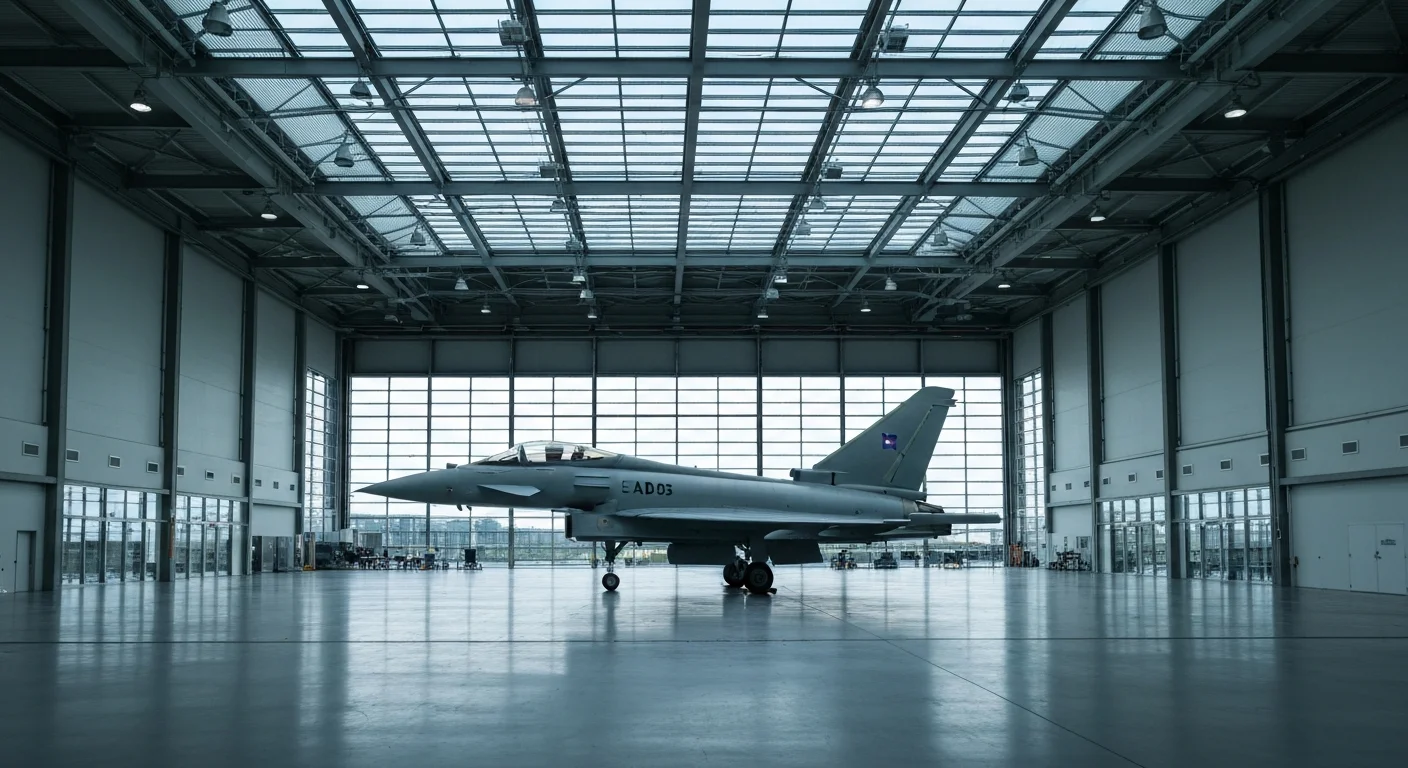
Aerospace & Aeronautical Engineering in Germany
Germany is home to Airbus, the German Aerospace Center (DLR), and Europe's leading aeronautical research institutions. Study aerospace engineering at top-ranked TU9 universities with zero tuition fees, English-taught programmes, and an 18-month post-study work visa.
Leading Universities in Germany
World-class education with strong industry ties and international recognition.
Technische Hochschule Deggendorf
Deggendorf, Bayern
Applied engineering programmes with aerospace and automotive industry connections.
Technische Universität München
München, Bayern
Home to Germany's leading aerospace research with DLR partnerships and Airbus collaboration.
RWTH Aachen
Aachen, Nordrhein-Westfalen
Excellent aerospace and mechanical engineering with wind tunnel facilities and research labs.
Universität Stuttgart
Stuttgart, Baden-Württemberg
TU9 member in Germany's aerospace hub. Close ties with DLR, Airbus, and Rolls-Royce.
Technische Universität Berlin
Berlin, Berlin
Strong aerospace engineering research with access to Berlin's aviation industry cluster.
Technische Universität Dresden
Dresden, Sachsen
Excellence university with outstanding lightweight structures and aerodynamics research.
Aeronautical Engineering in Germany: Fees, Universities & Admission 2026
In Germany the field is usually called Luft- und Raumfahrttechnik — covering what international students search as aerospace engineering, aeronautical engineering, or aviation engineering. The same degrees cover aircraft, spacecraft, propulsion, and avionics; don't filter your university shortlist by the English word alone.
| University | Aerospace strength | Tuition for non-EU students |
|---|---|---|
| Universität Stuttgart | One of Europe's largest aerospace engineering faculties; strong industry and DLR links. | €1,500/semester (Baden-Württemberg state fee) + semester contribution. |
| Technical University of Munich (TUM) | Aerospace & geodesy department in Ottobrunn/Taufkirchen — Europe's largest aerospace research campus. | €4,000-€6,000/semester for many non-EU master's programmes. |
| RWTH Aachen | Top-ranked mechanical/aerospace research; strong propulsion and lightweight-structures groups. | No tuition — semester contribution only (~€300). |
| TU Berlin | Aeronautics and astronautics institute with its own student satellite programme. | No tuition — semester contribution only. |
| TU Braunschweig | Historic aviation research city (alongside DLR Braunschweig); strong aeronautics focus. | No tuition — semester contribution only. |
Aeronautical engineering fees in Germany
30 of the 45 aerospace and aviation programmes in our database charge no tuition — you pay only the semester contribution (€150-€350). The exceptions: Baden-Württemberg's €1,500/semester non-EU fee (e.g. Stuttgart) and TUM's programme-specific fees. Budget the €11,904 blocked account (~INR 13.2 lakh) for the visa regardless of tuition.
Admission requirements
Bachelor's entry needs a recognised higher-education entrance qualification (APS certificate for India/China/Vietnam); master's entry needs a related engineering bachelor with sufficient ECTS in mechanics, thermodynamics and mathematics. English-taught programmes typically ask IELTS 6.5; German-taught ones DSH-2/TestDaF 4.
Explore for free
Compare all 45 programmes with fees and language requirements in our Programme Finder, browse the University Directory, or get a free profile evaluation.
Showing 1–24 of 31 programmes
Aeronautical Management, M.Eng.
Hochschule Bremen · Bremen
Aerospace Engineering, M.Sc.
Technische Universität Darmstadt · Darmstadt
Aerospace Engineering, M.Sc.
FH Aachen · Aachen
Apply by 30 NovAerospace Technologies, M.Sc.
Hochschule Bremen · Bremen
Aerospace, M.Sc.
Technische Universität München · Garching
Apply by 30 NovAir Transport and Logistics, M.Sc.
Technische Universität Dresden · Dresden
Aviation and Tourism Management, MBA
Frankfurt University of Applied Sciences · Frankfurt am Main
Aviation Management, Master of Aviation Management
Technische Hochschule Wildau · Wildau
Aviation Management, MBA
Hochschule Worms, University of Applied Sciences · Worms
Elektronische Systeme in Fahrzeugtechnik, Luft- und Raumfahrt, M.Sc.
Technische Universität Carolo-Wilhelmina zu Braunschweig · Braunschweig
Apply by 30 NovESPACE - Earth Oriented Space Science and Technology, M.Sc.
Technische Universität München · München
Flugzeug-Systemtechnik, M.Sc.
Technische Universität Hamburg · Hamburg
Flugzeugbau, M.Sc.
HAW Hamburg · Hamburg
Hybrid Electric Propulsion Technology, M.Sc.
Brandenburgische Technische Universität Cottbus-Senftenberg · Cottbus
International Aviation Management, M.A.
IU Internationale Hochschule · Berlin, Bad Honnef
Lightweight Engineering & Composites (vormals: Verbundwerkstoffe / Composites), M.Sc.
PFH - Private Hochschule Göttingen · Stade
Luft- und Raumfahrtinformatik, M.Sc.
Julius-Maximilians-Universität Würzburg · Würzburg
Luft- und Raumfahrttechnik, M.Sc.
Universität der Bundeswehr München · Neubiberg
Apply by 15 Nov · 60d leftLuft- und Raumfahrttechnik, M.Sc.
Hochschule für angewandte Wissenschaften München · München
Luft- und Raumfahrttechnik, M.Sc.
RWTH Aachen · Aachen
Luft- und Raumfahrttechnik, M.Sc.
Technische Universität Carolo-Wilhelmina zu Braunschweig · Braunschweig
Apply by 30 NovLuft- und Raumfahrttechnik, M.Sc.
Universität Stuttgart · Stuttgart
Luftfahrttechnik, M.Eng.
Technische Hochschule Ingolstadt · Ingolstadt
Apply by 1 Oct · 15d leftMaschinenbau, Dipl.-Aufbau, Diplom
Technische Universität Dresden · Dresden
Check My Fit
3 quick questions — every result gets a fit tag based on your budget and languages. Stored only on this device.
Tags are an indication based on tuition and teaching language — for a real assessment, get a free profile evaluation.
Frequently Asked Questions About Aerospace Engineering in Germany
Yes. Most public universities in Germany charge no tuition fees for aerospace engineering programmes, including for international students. The only mandatory cost is a semester contribution of approximately €150–€350, which typically includes a public transport pass valid across the entire state. This applies at top institutions such as TU Munich, RWTH Aachen, the University of Stuttgart, TU Berlin, and TU Braunschweig. The sole exception is Baden-Württemberg, where non-EU students pay €1,500 per semester — still far less than comparable programmes in the US ($30,000–$60,000 per year), UK (£20,000+), or Australia (AUD 40,000+). With over 40 aerospace-related programmes nationwide, Germany offers world-class aeronautical education at a fraction of the cost, making it one of the most affordable destinations for aspiring aerospace engineers globally.
The top universities include TU Munich (ranked #1 in Germany and within the global top 50 for engineering, with its own aerospace research campus in Garching), RWTH Aachen (renowned for lightweight structures, propulsion systems, and its close partnership with DLR), and the University of Stuttgart (home to one of Germany's largest aerospace faculties with over 15 dedicated institutes, located adjacent to DLR's main research campus). TU Berlin excels in satellite technology and space systems engineering, while TU Dresden is a leader in composite materials and structural design for aircraft. TU Braunschweig, the birthplace of German aviation research, hosts the Aerospace Research Centre Niedersachsen (NFL). All six belong to the prestigious TU9 alliance of Germany's leading technical universities and maintain strong industry ties with Airbus, Rolls-Royce, and the European Space Agency.
Yes. An increasing number of German universities offer aerospace and aeronautical engineering programmes taught entirely in English, particularly at the Master's level. Notable examples include the M.Sc. in Aerospace Engineering at TU Munich, the M.Sc. in Aeronautical Engineering at RWTH Aachen, and the M.Sc. in Air Quality Control, Solid Waste and Waste Water Process Engineering at the University of Stuttgart. At the Bachelor's level, most aerospace programmes are taught in German, though some universities offer bilingual tracks. English proficiency requirements typically include IELTS 6.5+ or TOEFL 90+. While learning German is advantageous for daily life, internships, and long-term career prospects — particularly when working with German aerospace firms — many students complete their entire degree, including thesis research at institutions like DLR, entirely in English.
For Master's programmes, typical requirements include a Bachelor's degree in aerospace engineering, mechanical engineering, or a closely related field with a minimum GPA equivalent to the German grade of 2.5 or better (on the 1.0–4.0 German scale, where 1.0 is the highest). English proficiency must be at B2/C1 level, demonstrated through IELTS 6.5+ or TOEFL 90+. German universities generally do not require GRE scores, reducing application costs compared to US graduate schools. Some programmes, particularly at TU Munich and RWTH Aachen, may require prerequisite coursework in fluid dynamics, thermodynamics, structural mechanics, or control systems. Application deadlines are typically July 15 for the winter semester (October start) and January 15 for the summer semester. Most universities use the uni-assist portal for international applications, which charges a processing fee of €75 for the first application.
Aerospace engineering graduates in Germany earn average starting salaries of €50,000–€60,000 per year, placing them among the highest-paid engineering graduates in the country. With 3–5 years of experience, salaries typically rise to €65,000–€80,000, and senior engineers or team leads at companies like Airbus, MTU Aero Engines, Rolls-Royce Deutschland, or DLR can earn €85,000–€110,000 annually. Specialisations in propulsion systems, avionics, or satellite engineering tend to command premium salaries. Location also matters: engineers in Munich and Stuttgart generally earn 10–15% more than the national average due to higher demand from nearby aerospace clusters. The German aerospace industry employs over 110,000 people directly and generates annual revenues exceeding €40 billion, ensuring strong and stable job prospects for qualified graduates across the sector.
Germany hosts an extensive aerospace ecosystem. Airbus, Europe's largest aircraft manufacturer, operates major centres in Hamburg (final assembly of the A320 family), Bremen (space systems), and Munich (defence and helicopters). MTU Aero Engines in Munich is Germany's leading engine manufacturer, while Rolls-Royce Deutschland in Dahlewitz develops engines for business jets and regional aircraft. Other key employers include Liebherr-Aerospace (flight control and landing gear), OHB SE in Bremen (satellites and space technology), Diehl Aviation (cabin interiors and avionics), and Premium AEROTEC (aerostructures). The German Aerospace Center (DLR) employs over 10,000 researchers across 30 institutes nationwide. The European Space Agency (ESA), with its operations centre (ESOC) in Darmstadt, also recruits German-educated engineers regularly for mission control and spacecraft development roles.
Yes. Germany's 18-month post-study job seeker visa (Section 20 (3) of the Residence Act) gives graduates ample time to secure employment without needing a job offer in advance. During this period, you can work in any field to support yourself while searching for an aerospace position. Once you find a role matching your qualification, you transition to an EU Blue Card or standard work permit, with a clear pathway to permanent residency after 21–33 months. Aerospace engineering is classified as a shortage occupation in Germany, meaning work permits are processed faster and salary thresholds may be lower than for other professions. With over 110,000 industry jobs and growing demand for engineers in urban air mobility, satellite systems, and sustainable aviation, graduates face excellent long-term career prospects in Germany's aerospace sector.
Germany offers outstanding research opportunities through the German Aerospace Center (DLR), one of Europe's largest national research organisations with over 30 institutes and an annual budget exceeding €1 billion. DLR conducts pioneering work in aeronautics, space exploration, energy, and transport, and actively hires Master's students for thesis projects and HiWi (student research assistant) positions paying €12–€15 per hour. TU9 universities maintain close ties to DLR institutes, wind tunnel facilities, and flight guidance research centres. Students at the University of Stuttgart can access the DLR campus in Lampoldshausen for propulsion testing, while TU Braunschweig collaborates on the Niedersachsen Research Centre for Aviation (NFL). Additional funding is available through the DAAD, Max Planck Society, and the Fraunhofer-Gesellschaft, which operates applied aerospace research programmes across Germany.
Explore More Programmes in Germany
Ready to Study Aerospace
Engineering in Germany?
Get a free profile evaluation from our experts. We will assess your academic background, recommend the best aerospace engineering programmes for your profile, and guide you through the entire application process to study in Germany.