
TL;DR: You'll find affordable, structured student life: expect cheap meals (€2-5 at the Mensa), social WGs, and active campus culture. Get the Deutschlandticket (€49/month) for regional travel and balance studies with part-time work (up to 140 full days/year; minimum wage €13.90/hr in 2026). Join Hochschulsport, ESN, and Fachschaft to meet people, and budget €750-1,200/month in most cities.
What's it actually like to be a student in Germany? Forget the stereotypes, German student life is a unique mix of academic rigour, affordable living, incredible travel opportunities, and cultural experiences you won't find anywhere else. Here's what to expect.
A Typical Day as a Student in Germany
Morning: Grab a coffee and Brötchen (bread roll) from the university Mensa or a nearby bakery. Head to your lecture (Vorlesung) or seminar. German professors start on time, "akademisches Viertel" means lectures begin 15 minutes past the hour, but don't be late beyond that.
Lunch: Eat at the Mensa (university cafeteria) for €2-5 for a full hot meal, subsidised by the Studierendenwerk. This is where you'll meet classmates and save serious money compared to eating out.
Afternoon: Library time, group work, or a Werkstudent job (15-20 hrs/week). German libraries are excellent and free.
Evening: Cook dinner in your WG kitchen (shared apartment), join a Stammtisch (regular meetup), or explore the city.
University Culture
Lectures, Seminars & Exams
- Vorlesung (Lecture), large classes (50-300+ students), professor presents, limited interaction
- Seminar, smaller groups (15-30), discussion-based, presentations expected
- Tutorium, practice sessions led by teaching assistants, problem-solving
- Klausur (Written exam), typically at semester end, 60-120 minutes
- Hausarbeit (Term paper), 10-25 page academic paper, common in humanities/social sciences
Mensa (University Cafeteria)
Every German university has a Mensa run by the Studierendenwerk. Full meals cost €2-5, easily the cheapest food option. Options include vegetarian, vegan, and halal at many locations. You pay with your student ID card (loaded with credit).
Hochschulsport (University Sports)
German universities offer incredibly cheap sports programmes, €0-30/semester for 100+ activities: football, swimming, climbing, yoga, martial arts, sailing, rowing. It's the best way to stay fit and meet people outside your department. Sign up at the start of each semester (popular courses fill fast).
Student Housing
| Type | Monthly Cost | Pros | Cons |
|---|---|---|---|
| WG (Shared flat) | €300-700 | Social, flexible, most popular | WG casting process, finding a room takes effort |
| Studentenwohnheim (Dorm) | €200-450 | Cheapest, easy to meet people | Long waitlists (6-12 months), shared facilities |
| Private apartment | €500-1,000 | Privacy, independence | Most expensive, deposit required |
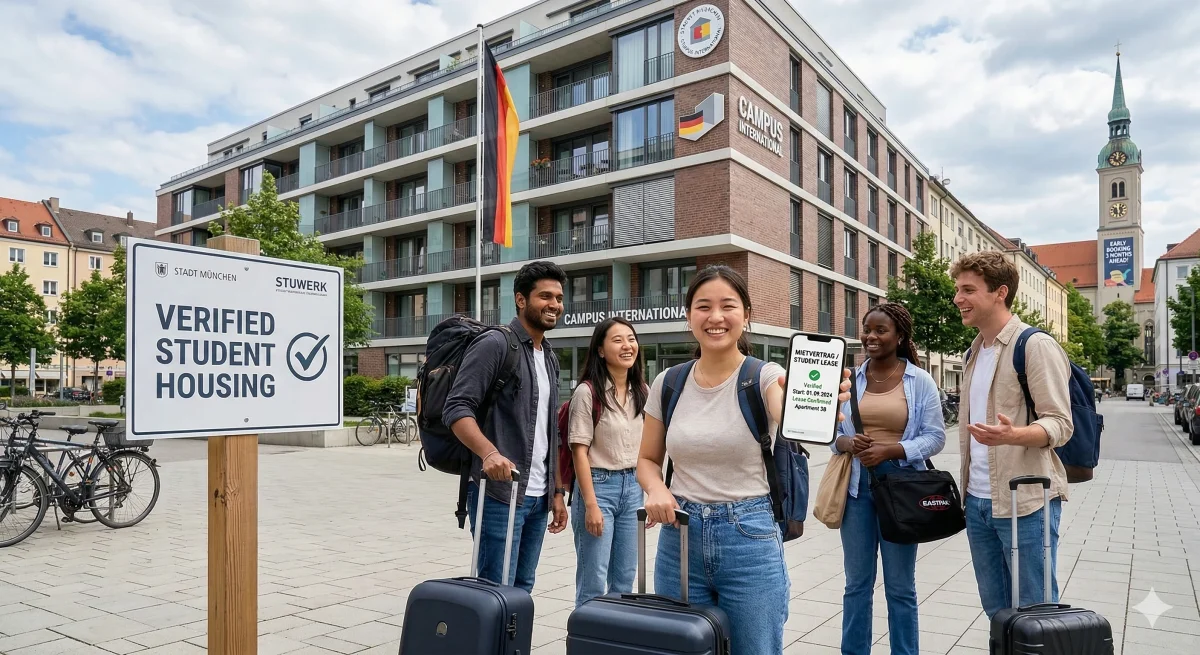
Apply for a dorm through the Studierendenwerk as soon as you get admission. For WGs, use WG-Gesucht.de, the #1 flatshare platform in Germany.
Cost of Living by City
| City | Rent (shared room) | Total Monthly | Vibe |
|---|---|---|---|
| Munich | €550-850 | €1,100-1,400 | Expensive but highest salaries, Alps nearby |
| Berlin | €450-700 | €950-1,200 | Cheapest capital in Western Europe, best nightlife |
| Hamburg | €450-700 | €1,000-1,250 | Maritime city, media hub, beautiful |
| Stuttgart | €450-650 | €950-1,200 | Engineering capital, Porsche/Mercedes HQ |
| Frankfurt | €500-750 | €1,050-1,300 | Finance hub, international, great transport |
| Dresden/Leipzig | €250-400 | €750-950 | Most affordable, growing creative scenes |
Transport: The €49 Deutschlandticket
The Deutschlandticket (€49/month) is a game-changer, unlimited travel on ALL regional trains, buses, trams, and metros across the entire country. Many universities include it in your semester fee at a discount. Combined with cycling (Germany has excellent bike infrastructure), you'll rarely need a car.
Social Life
- Stammtisch, regular pub meetups organised by student groups, departments, or language exchange programmes. Best way to meet Germans and other internationals.
- ESN (Erasmus Student Network), organises parties, trips, and events for international students. Active at most universities.
- Fachschaft, your department's student council. Organises Ersti-Woche (orientation week), exam prep, and parties.
- Nightlife, Berlin is legendary (Berghain, Tresor), but every German city has a bar/club scene. Student clubs often have €2-5 entry.
- Weekend trips, with the Deutschlandticket, you can visit any German city for free. Prague, Amsterdam, Paris, and Vienna are cheap Flixbus rides away (€15-30).
Food Culture
- Mensa: €2-5 for a full meal. Best value in the city.
- Döner Kebab: The unofficial student food of Germany. €4-7 everywhere. Berlin alone has 1,000+ Döner shops.
- Cooking at home: Groceries from Aldi, Lidl (cheapest), REWE, Edeka. Budget: €150-200/month if you cook regularly.
- Bakeries: Fresh Brötchen, Brezeln, and pastries from €0.30. A morning Brötchen with butter and cheese is a German student staple.
- Beer gardens: In summer, outdoor Biergärten are social hubs. You can often bring your own food, just buy drinks.
German Culture Tips (Don't Learn These the Hard Way)
- Ruhezeit (Quiet hours): 10 PM - 6 AM on weekdays, all day Sundays. No loud music, no drilling, no loud parties. Your neighbours WILL complain.
- Sonntagsruhe (Sunday rest): Almost ALL shops are closed on Sundays. Plan your grocery shopping for Saturday. Only bakeries (morning), gas stations, and train station shops are open.
- Mülltrennung (Waste separation): Germans take recycling very seriously. Sort into: Restmüll (general), Biomüll (organic), Papier (paper), Gelber Sack (packaging), Glas (glass by colour). Fines for incorrect sorting.
- Pfand (Bottle deposit): €0.08-0.25 deposit on most bottles/cans. Return them to supermarket Pfandautomaten machines to get your money back.
- Punctuality: Being on time means being 5 minutes early. Late to a lecture? Slip in quietly. Late to a meeting? Apologise.
- Cash (Bargeld): Germany is more cash-based than you'd expect. Many restaurants and small shops don't accept cards. Always carry €20-50.
Part-Time Work
International students can work 140 full days or 280 half days per year. The minimum wage is €13.90/hour (2026). Werkstudent positions in your field pay €14-25/hour and look great on your CV. Read our complete guide to part-time jobs.
Healthcare
Health insurance is mandatory, approximately €140/month for students under 30 through public insurers (TK, AOK, Barmer). It covers doctor visits, hospital stays, prescriptions, mental health, and basic dental. Register with a Hausarzt (family doctor) near your home for routine care.
Frequently Asked Questions
You probably qualify for more than you think.
Students who get evaluated find programmes they had no idea existed — at universities that charge nothing. 2 minutes, no cost. The only downside is not checking.
Want our guides higher up in Google?
Mark GradGermany as a preferred source and Google gives our pages more room when you search about studying in Germany. Takes one tap, and you can undo it any time from the same screen.
Living this, or on your way to it? Tell your story.
If you are already in Germany and finding it hard, or still fighting to get here, other students need to hear it from someone real. Share your honest journey. We help shape it, and nothing goes live until you approve it.
Free German Quiz · No Login
Can you score 10/10 on today's German challenge?
10 new words every day · 4,500+ words from A1 to C1 · takes about a minute.
Related Articles

Study in Germany
Healthcare Management & Leadership (MBA), MBA
VICTORIA | Internationale Hochschule
Berlin
M.A.Digital Business Modelling and Entrepreneurship, M.A.
Hochschule der Bayerischen Wirtschaft für angewandte Wissenschaften - HDBW gGmbH
München
MBAWine, Sustainability & Sales, MBA
Hochschule für Wirtschaft und Gesellschaft Ludwigshafen
Ludwigshafen