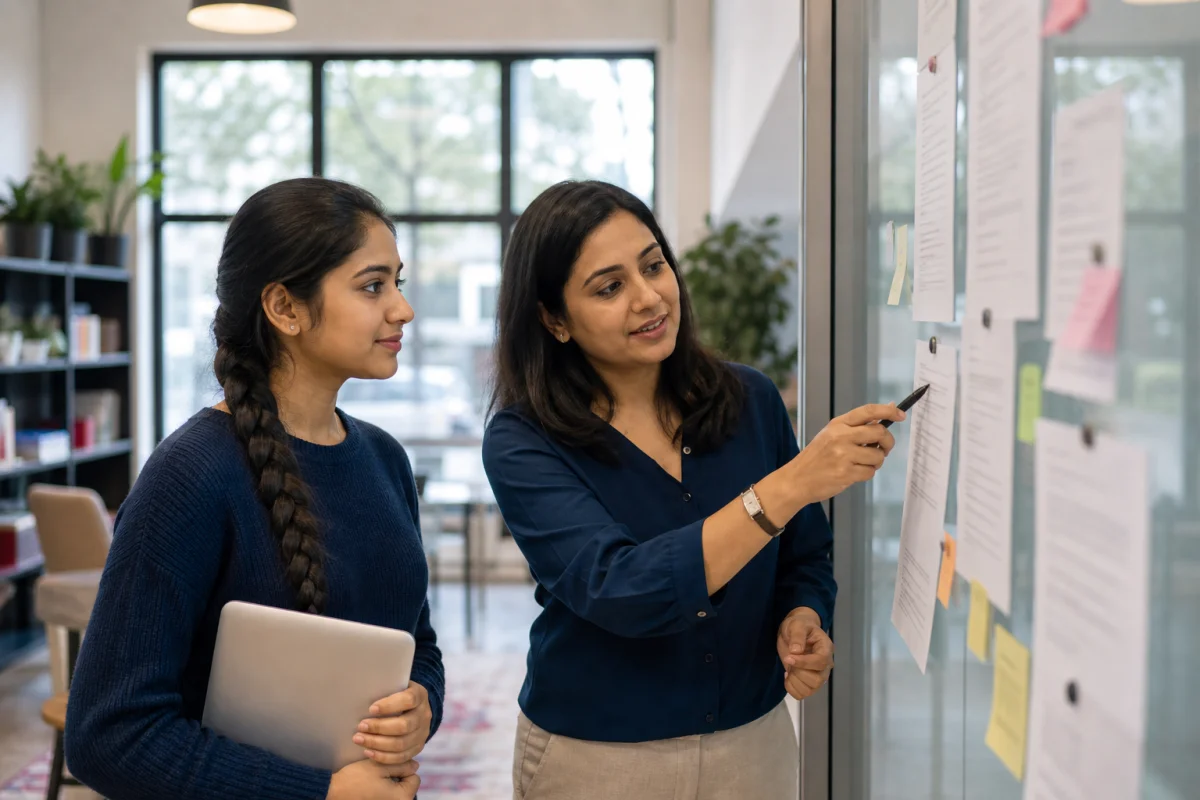
SOP & LOR Guidance
Expert guidance on crafting a strong Statement of Purpose and securing effective Letters of Recommendation for German university applications.
SOP & LOR Guidance for German Admissions
German admissions committees read your Statement of Purpose for evidence, not adjectives. We coach you through a Motivationsschreiben that connects your academic record to the exact curriculum you're applying to, and help your professors write Letters of Recommendation that meet German formality standards - letterhead, signatures, and specifics. The guidelines, structure, and common mistakes we correct are below.
Expert Insight
Your grades might get you shortlisted, but a generic Motivation Letter will get you instantly rejected
An overly long SOP doesn't show passion; it shows poor communication. We condense your trajectory into the exact 800 words the admissions committee demands.
What Makes a Strong Statement of Purpose?
German universities evaluate your SOP based on clarity, logical structure, and how well your skills connect with the programme. Here's what admissions committees look for.
Format & Structure
What Your SOP Must Cover
Strong Opening
Start with what specifically inspired you to pursue this field. Connect a personal experience, academic moment, or professional insight to your chosen programme. Avoid generic openings.
Academic Background
Highlight relevant courses, thesis work, research projects, and academic achievements that prepared you for this programme. Mention specific methodologies or technical skills you developed.
Why This Programme & University
Name specific modules, research groups, professors, or labs that attract you. Show you've researched the programme. Explain how it bridges your past experience and future goals.
Professional Experience
Describe internships, work experience, or industry projects relevant to the programme. German universities value practical skills — mention specific lab work, tools, or real-world applications.
Career Goals
Clearly state your short-term and long-term career plans. Show the logical connection: past experience → this programme → your career ambition. Be specific, not vague.
Why Germany
Go beyond "Germany has good education." Mention Germany's strength in your specific field, research culture, industry connections, or how studying in Germany aligns with your career path.
Common SOP Mistakes to Avoid
Retelling your CV — The committee already has your resume. Focus on the "why" behind your choices, not a chronological list of achievements.
Generic statements — "Germany has world-class education" says nothing. Name specific programmes, professors, or research groups.
No logical flow — An SOP that jumps between ideas without clear transitions makes a weak impression. Each paragraph should build on the previous one.
Copying samples — German universities explicitly demand original writing. Plagiarised or templated SOPs lead to immediate rejection.
Overly emotional tone — Skip the sob stories. German admissions value facts, logic, and structured arguments over emotional appeals.
Typos and grammar errors — Careless mistakes signal lack of attention to detail. Always proofread multiple times before submitting.
Recommended SOP Structure
Follow this proven structure to write a clear, logical SOP that German admissions committees expect.
Introduction
Hook the reader with what drives your interest in this field. Connect a specific moment, experience, or realisation to your decision to apply. Avoid cliches like "Since childhood, I have always been fascinated by..."
Academic Background
Describe your undergraduate studies, key courses, thesis, and academic achievements. Focus on what's relevant to the programme you're applying to. Mention specific research methods, tools, or technical skills you acquired.
Professional & Research Experience
Detail internships, work experience, or research projects. Emphasise measurable outcomes and skills gained. German programmes highly value practical experience - lab work, industry tools, and real-world problem solving.
Why This Programme & University
This is the most important part. Name specific modules, research groups, or professors. Explain why this programme is the best fit for your academic background and career goals. Show you've done your homework.
Career Goals & Conclusion
State your short-term and long-term career plans. Show the logical chain: your past → this programme → your future. Close with confidence - no need for "I hope you will consider my application."
Letter of Recommendation (LOR)
Most German Master's programmes require 1-2 LORs. Here's what universities expect and how to get the strongest recommendations.
Who Should Write It
Professors, thesis supervisors, or work managers who know you well. Academic LORs for course-based programmes; professional LORs for work-experience programmes.
Format
Official letterhead of the recommender's institution. 500-600 words (1 page). Must include the recommender's signature and contact details. Written in English or German.
How Many
Most programmes require 1-2 LORs. Postgraduate and research programmes may ask for 2-3. Always check the specific programme requirements.
What a Strong LOR Contains
Relationship Context
How the recommender knows the student, for how long, and in what capacity (supervisor, professor, manager).
Specific Examples & Achievements
Concrete instances demonstrating the student's abilities - research contributions, project outcomes, academic performance relative to peers. German universities value measurable evidence over generic praise.
Academic & Professional Strengths
Analytical thinking, research skills, independence, technical competencies, teamwork. Each strength should be backed by a real example, not just stated.
Fit for International Study
Adaptability, self-discipline, ability to study independently, and readiness for international education. These traits matter to German admissions committees.
Clear Recommendation
A direct statement recommending the student for the specific programme. The LOR should be tailored to each application, not a generic letter reused everywhere.
LOR Mistakes to Avoid
Generic praise without examples — "He is a good student" means nothing. Specifics like "ranked in the top 5% of 120 students" are convincing.
Exaggerating achievements — Overly glowing language undermines credibility. German universities value authentic, balanced assessments.
Reusing the same LOR — Each letter should be tailored to the specific programme. A generic LOR used for every application weakens its impact.
Late submissions — Give your recommender at least 4-6 weeks notice. Late LORs can disqualify your entire application.
SOP & LOR FAQs
Over 90% of German Master's programmes require an SOP as a compulsory application document. Some Bachelor's programmes also require a motivation letter. Always check the specific programme requirements on the university website.
The ideal length is 500-800 words (1-2 pages). Some universities specify exact word limits - always follow programme-specific guidelines if provided. German universities prefer concise, well-structured writing over lengthy essays.
Yes, absolutely. Each SOP should be tailored to the specific programme, mentioning relevant modules, professors, and research groups. Universities can easily spot generic SOPs, and tailored applications significantly improve your chances.
German universities explicitly demand original writing. While AI can help brainstorm or check grammar, the content must be genuinely yours. Plagiarised or AI-generated SOPs risk immediate rejection, as many universities use detection tools.
Choose someone who knows you well and can provide specific examples of your abilities. Academic LORs should come from professors or thesis supervisors. Professional LORs should come from work managers or project leads. The recommender's familiarity with your work matters more than their title.
This is common, especially in India. Provide your recommender with your CV, SOP draft, and key achievements to highlight. Draft bullet points rather than a full letter, and let them write it in their own words.
Give your recommenders at least 4-6 weeks before the application deadline. Send a polite reminder 2 weeks before the deadline. Late LOR submissions can disqualify your entire application, so plan ahead.
Yes! Our consultants review your SOP for structure, content, and programme fit. We also guide your recommenders on what German universities expect in LORs. Book a free consultation to get started with personalised feedback.
Don't Let This Intake Pass You By
Winter 2026 application deadlines are approaching. Start your journey now and secure your place at a top German university.
Free consultation. No obligations. We respond within 24 hours.
SOP & LOR Guidance
Free consultation available