Political Science &
International Relations in Germany
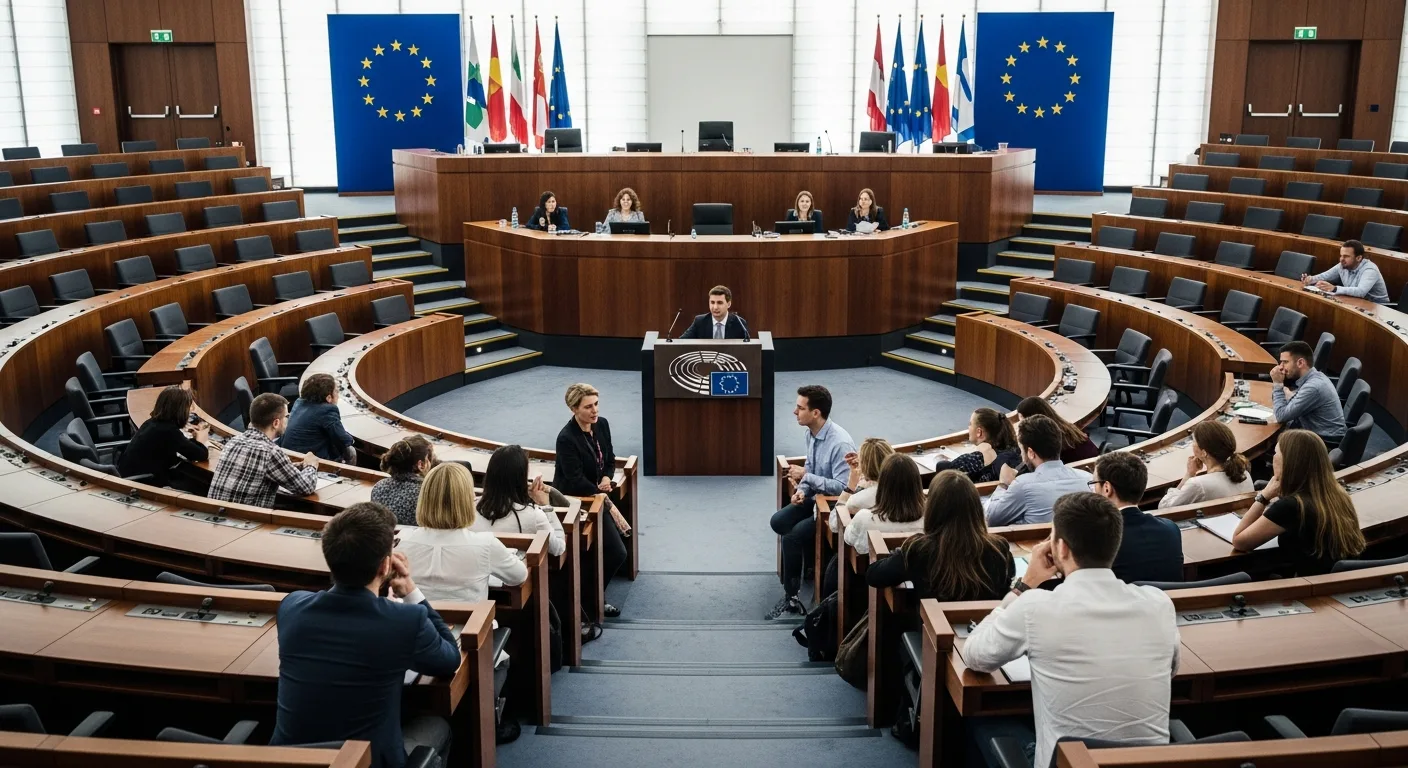
Germany sits at the heart of the European Union and hosts leading institutions for political science, international relations, and public policy. Study governance, diplomacy, and European studies at tuition-free universities — steps from where policy is made.
Political Science Programmes
Tuition at Public Universities
EU’s Political Hub
Post-Study Work Visa
Showing 145–168 of 405 programmes
Master of Data Science for Public Policy, M.Sc.
Hertie School · Berlin
Master of International Affairs, M.A.
Hertie School · Berlin
Master of Public Policy, M.P.P.
Universität Duisburg-Essen · Duisburg
Master of Public Policy, Master of Public Policy
Hertie School · Berlin
MBA Diplomacy, MBA
University of Europe for Applied Sciences · Berlin
Nachhaltige Sozialpolitik - Gesellschaft, Wirtschaft, Kommunikation, B.A.
Hochschule Bonn-Rhein-Sieg, University of Applied Sciences · Sankt Augustin
Nachhaltigkeit, Governance & Digitalisierung, B.Sc.
Technische Hochschule Deggendorf
National and International Administration and Policy, M.A.
Universität Potsdam · Potsdam
Apply by 30 NovNonprofit-Management and Governance, M.A.
Universität Münster · Münster
Apply by 9 Oct · 23d leftNonprofit-Management und Public Governance, M.A.
Hochschule für Wirtschaft und Recht Berlin · Berlin
Nonprofit-Management und Public Governance, M.A.
Hochschule für Technik und Wirtschaft Berlin · Berlin
Apply by 1 DecNordamerikastudien, M.A.
Friedrich-Schiller-Universität Jena · Jena
Öffentliche Theologie, M.A.
Otto-Friedrich-Universität Bamberg · Bamberg
Öffentliches Management, B.A.
Hochschule Osnabrück · Osnabrück
Organisation, Governance, Bildung, M.A.
Technische Universität Carolo-Wilhelmina zu Braunschweig · Braunschweig
Apply by 30 NovOsteuropa und Ostmitteleuropastudien (Haupt- und Begleitfach), B.A.
Ruprecht-Karls-Universität Heidelberg · Heidelberg
Osteuropa und Ostmitteleuropastudien, B.A.
Ruprecht-Karls-Universität Heidelberg · Heidelberg
Osteuropastudien (Nebenfach), B.A.
Universität Hamburg · Hamburg
Osteuropastudien, M.A.
Universität Regensburg · Regensburg
Osteuropastudien, M.A.
Freie Universität Berlin · Berlin
Osteuropastudien, M.A.
Universität Hamburg · Hamburg
Osteuropastudien, M.A.
Ludwig-Maximilians-Universität München · München
Peace and Conflict Studies, M.A.
Philipps-Universität Marburg · Marburg
Peace and Conflict Studies, M.A.
Otto-von-Guericke-Universität Magdeburg · Magdeburg
Check My Fit
3 quick questions — every result gets a fit tag based on your budget and languages. Stored only on this device.
Tags are an indication based on tuition and teaching language — for a real assessment, get a free profile evaluation.
What You’ll Study in a German Political Science Masters
Most master’s programmes blend a shared methodological core with a chosen specialization. The first semesters typically build a foundation in political theory, comparative politics, and empirical research methods — including qualitative and quantitative analysis — before you focus on a track and write a thesis.
Core foundations
- · Political theory & the history of political thought
- · Comparative politics & political systems
- · International relations theory
- · Empirical research methods, statistics & data analysis
- · Public policy analysis & governance
Common specialization tracks
- · International relations & security studies
- · European studies & EU governance
- · Public policy & political economy
- · Comparative democracy & political behaviour
- · Peace & conflict studies, development politics
Exact module names and tracks vary by university, so always check the programme page before applying. Not sure which specialization fits your background? A free profile evaluation can help you shortlist programmes that match your goals.
Entry Requirements for International Applicants
Requirements differ by university and programme, but most political science master’s share a similar shape. Below is a general guide — always confirm the specifics on the official programme page before you apply.
Academic background
A recognised bachelor’s degree, generally in political science, social sciences, or a closely related field. Some programmes admit graduates from other disciplines if you can show relevant coursework. A good academic standing is typically expected.
Language proficiency
Many master’s in this field are taught in English and ask for IELTS or TOEFL (commonly around IELTS 6.5). German-taught programmes generally require proof such as TestDaF or DSH. Some programmes expect both English and basic German.
APS & documents
Applicants from India, China, and Vietnam generally need an APS certificate before applying or for the student visa. Many universities accept applications through uni-assist for document verification. A GRE score is usually not required for political science.
Other common documents include a CV, motivation letter, transcripts, and sometimes a writing sample or letters of recommendation. Because intakes and deadlines change each year, verify them directly with the university.
Careers & Salaries After a Political Science Degree
Political science graduates in Germany work across a broad range of sectors. Berlin’s role as a political capital and Germany’s position at the centre of the EU create demand for analysts and policy professionals, while many graduates also build careers across Europe and with international organisations.
Typical roles & employers
- · Policy analyst · research associate at think tanks
- · Public affairs, lobbying & political consulting
- · NGOs, foundations & international organisations
- · Government, ministries & EU institutions
- · Journalism, communications & corporate strategy
- · Academia & research (often via a PhD)
Approximate salary ranges
Pay varies widely by sector, employer, and city. As a rough guide, entry-level roles typically pay around €40,000–€52,000 per year, with experienced professionals in specialised or management positions generally earning more. Public-sector pay often follows fixed collective scales, while consulting and corporate roles can sit at the higher end.
Figures are approximate and intended only as a general orientation — actual salaries depend on your role, experience, and region.
Staying to work after graduation
After completing your degree, international graduates can generally apply for an 18-month post-study residence permit to look for a job related to their qualification. Once you secure a qualifying role, you can usually switch to a work residence permit or, where the salary threshold is met, an EU Blue Card. Explore your options with our team via the GradGermany services.
Frequently Asked Questions About Political Science in Germany
Yes. Public universities in Germany charge no tuition fees for political science programmes at Bachelor's, Master's, and PhD level, regardless of your nationality. You pay only a semester contribution of €150–€350, which typically includes a public transport pass covering the entire federal state. The sole exception is Baden-Württemberg, where non-EU students pay €1,500 per semester — still far below comparable programmes in the US or UK. Monthly living costs average €934 according to the DAAD, meaning a full two-year Master's in political science or international relations can be completed for under €25,000 in total. For the student visa, non-EU applicants must open a blocked account (Sperrkonto) of €11,904 to cover one year of living expenses. Many political science students supplement their budget with research assistant (HiWi) positions at their faculty or with part-time work at think tanks, NGOs, and political foundations based in Berlin and Bonn.
Germany has several world-class political science departments. Freie Universität Berlin (FU Berlin) is consistently ranked among Europe's top five for politics and international studies, with the renowned Otto-Suhr-Institut für Politikwissenschaft. Humboldt-Universität zu Berlin offers strong programmes in social sciences with direct access to Germany's federal institutions. The Hertie School in Berlin is one of Europe's leading schools of governance and public policy, offering English-taught Master's programmes in international affairs, public policy, and data science for public policy. University of Heidelberg excels in political science and South Asia studies. LMU Munich and the University of Mannheim are top-ranked for empirical political research and comparative politics. The University of Tübingen and University of Konstanz are also highly regarded for quantitative political science. Students benefit from proximity to major think tanks such as the Stiftung Wissenschaft und Politik (SWP), the German Institute for International and Security Affairs, and numerous political party foundations.
Yes, many German universities offer political science, international relations, and public policy programmes taught entirely in English, especially at the Master's level. Popular English-taught options include the Hertie School's Master of International Affairs and Master of Public Policy in Berlin, FU Berlin's MA in International Relations, the University of Bremen's MA in International Relations: Global Governance and Social Theory, and Jacobs University Bremen's programmes in society and politics. The Berlin Graduate School of Social Sciences (BGSS) at Humboldt-Universität also offers English-track doctoral programmes. Admission typically requires IELTS 6.5+ or TOEFL 90+, a relevant Bachelor's degree, and a strong statement of purpose. While German language proficiency is not required for these programmes, learning German to A2 or B1 level significantly enhances your daily life and internship opportunities at German-language institutions such as the Bundestag, federal ministries, and political party foundations. Many universities offer free German language courses alongside the degree programme.
Admission requirements vary by programme level and university, but common requirements include a relevant Bachelor's degree (political science, international relations, history, sociology, economics, or law) with strong academic results. Most Master's programmes require a minimum GPA equivalent to the German grade of 2.5 or better (roughly a B+ average). English-taught programmes require IELTS 6.5+ or TOEFL 90+; German-taught programmes require DSH-2 or TestDaF 4 certification. A well-crafted letter of motivation explaining your research interests and career goals is critical for competitive programmes like the Hertie School or FU Berlin's Otto-Suhr-Institut. Some programmes also require a writing sample or research proposal, especially at the doctoral level. Work experience or internships at NGOs, government agencies, or international organisations strengthen your application considerably. Application deadlines typically fall on July 15 for winter semester (October start) and January 15 for summer semester (April start), though prestigious programmes like Hertie may have earlier rolling deadlines.
Germany's central role in the European Union and its status as a UN host country (Bonn is home to 25+ UN agencies) create exceptional career pathways for political science graduates. The EU institutions in Brussels and Strasbourg actively recruit from German universities, and Berlin hosts every EU member state's embassy plus hundreds of lobbying and advocacy organisations. Graduates pursue careers in diplomacy (German Foreign Service, EU External Action Service), international development (GIZ, KfW, BMZ), think tanks (SWP, DGAP, Brookings Berlin), multilateral organisations (UN, OSCE, NATO), NGOs (Amnesty International, Transparency International HQ in Berlin), and the public sector (federal and state ministries, Bundestag staff). Political foundation internships at Friedrich-Ebert, Konrad-Adenauer, Heinrich-Böll, and Rosa-Luxemburg Stiftung provide invaluable networking. Entry-level salaries in the German public sector start around €45,000–€55,000, while EU institutions offer €55,000–€75,000 for starting positions. Germany's 18-month post-study work visa gives graduates ample time to secure these roles.
Berlin is arguably Europe's most dynamic city for political science students. As Germany's capital, it hosts the Bundestag (federal parliament), the Bundesrat, all federal ministries, and over 150 embassies, providing unmatched access to live political processes. Three major universities — Freie Universität, Humboldt-Universität, and Technische Universität — plus the Hertie School and European School of Management and Technology (ESMT) offer top political science and public policy programmes. Berlin is also headquarters for leading think tanks including the Stiftung Wissenschaft und Politik (SWP), the German Council on Foreign Relations (DGAP), and Transparency International. All six major political party foundations maintain their federal offices here, offering student internships and scholarships. The city's affordable cost of living (well below Munich, Frankfurt, or London) means students can focus on their studies and internships without excessive financial pressure. Berlin's vibrant international community, with residents from over 190 countries, provides a truly global environment that mirrors the diverse, multilateral settings political science graduates will work in throughout their careers.
Explore More Programmes in Germany
Start Your Political Science Career
in Germany
Get a free profile evaluation from our experts. We'll assess your academic background, recommend the best Political Science programmes, and guide you through the entire application process.