Germany vs Canada for Masters: Honest Comparison (2026)
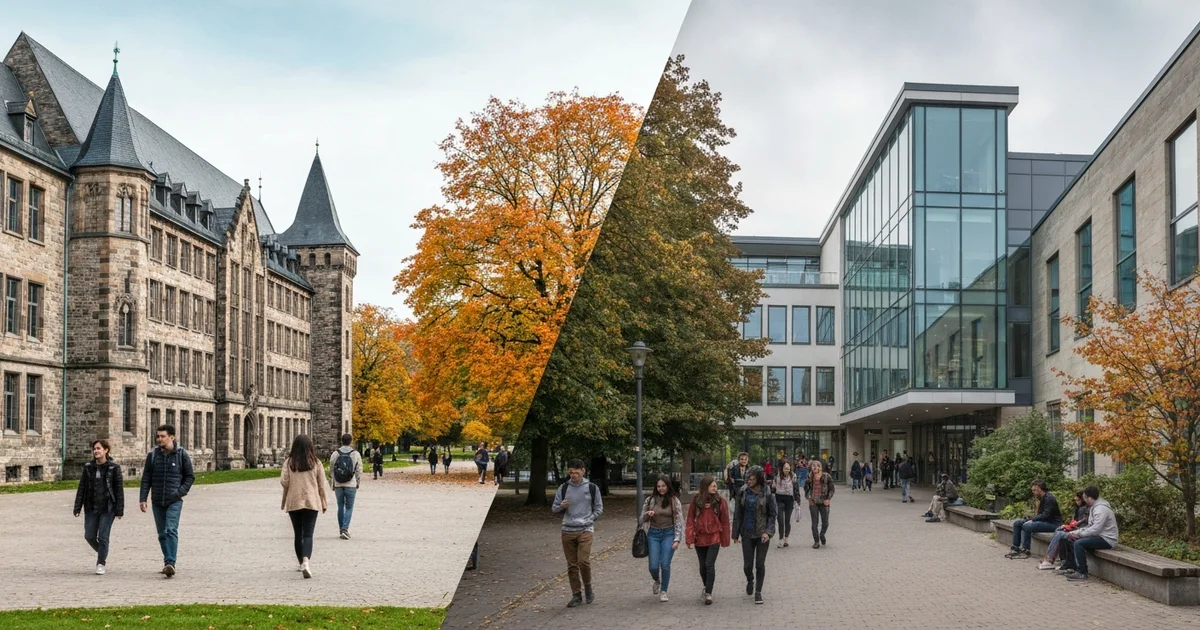
TL;DR: Choose Germany if budget and engineering careers matter: public universities charge €0 tuition (semester fee €150-390) and you can reach PR via the Blue Card in about 21 months. Choose Canada if you want a longer work stay and English-only study: the PGWP allows up to 3 years but expect CA$15,000-40,000/year tuition. Decide by cost vs post-study duration.
Choosing between Germany and Canada for your Master's degree is one of the biggest decisions you'll make. Both countries offer world-class education, post-study work opportunities, and pathways to permanent residency, but the costs, culture, and career outcomes are dramatically different. This guide compares them honestly with real 2026 data.
Quick Comparison: Germany vs Canada
| Factor | Germany | Canada |
|---|---|---|
| Tuition (public) | €0 (free at public universities) | CA$15,000-40,000/year |
| Living costs | €934/month (€11,208/year) | CA$1,000-1,500/month |
| Total 2-year cost | ~€22,000 (living only) | ~CA$60,000-100,000 |
| Post-study visa | 18 months (any job allowed) | Up to 3 years (PGWP) |
| Path to PR | 21 months (Blue Card + B1) | Express Entry (1-2 years) |
| Language | English or German | English or French |
| Minimum wage | €13.90/hour | CA$16.65/hour (Ontario) |
| Work during studies | 140 full days/year | 20 hours/week |
| Weather | Mild (0-25°C) | Harsh winters (-20 to 30°C) |
| Top universities | TU Munich (#37), LMU (#54) | U Toronto (#21), UBC (#34) |
Tuition Fees: The Biggest Difference
This is where Germany wins decisively. Public universities in Germany charge zero tuition for all nationalities, you pay only a semester contribution of €150-390. In Canada, international students pay CA$15,000-40,000 per year depending on the programme and university. For a 2-year Master's, that's CA$30,000-80,000 in tuition alone.
| University | Country | Annual Tuition |
|---|---|---|
| TU Munich | Germany | €2,000-6,000/sem (non-EU, since 2024) |
| RWTH Aachen | Germany | €0 (+ €300 semester fee) |
| University of Toronto | Canada | CA$28,000-58,000 |
| UBC | Canada | CA$9,000-45,000 |
| University of Waterloo | Canada | CA$20,000-35,000 |
Exception: Universities in Baden-Württemberg (Heidelberg, KIT, Stuttgart) charge €1,500/semester for non-EU students, still far cheaper than Canada.
Living Costs
Living costs are comparable, though Germany is slightly cheaper in most cities:
| Expense | Germany | Canada |
|---|---|---|
| Rent (shared) | €300-700 | CA$500-1,200 |
| Food | €200-280 | CA$300-400 |
| Transport | €49 (Deutschlandticket) | CA$100-150 |
| Health insurance | €140 (mandatory) | Included in tuition or CA$50-100 |
| Total/month | €934-1,200 | CA$1,000-1,500 |
Post-Study Work Visa
Germany: 18-month post-study residence permit (Section 20(3) AufenthG). You can work any job during this period with no restrictions. Transition to EU Blue Card if salary exceeds €45,934 (shortage occupations).
Canada: Post-Graduation Work Permit (PGWP) for up to 3 years, longer than Germany. However, recent PGWP policy changes in 2024 restricted eligibility for some programme types. You can work any job.
Verdict: Canada offers a longer work permit (3 years vs 18 months), but Germany's path to permanent residency is faster (21 months with Blue Card vs 1-2 years via Express Entry).
Job Market and Salaries
Germany: Engineering and IT graduates earn €48,000-65,000 starting. Germany has 400,000+ unfilled skilled positions. The economy is Europe's largest with global companies (BMW, Siemens, SAP, Bosch).
Canada: Tech and engineering graduates earn CA$55,000-80,000 starting. Strong tech hubs in Toronto, Vancouver, and Montreal. However, the Canadian job market has tightened significantly since 2024 with rising unemployment.
Which Country Is Better For You?
Choose Germany if:
- Budget is your top concern (€0 tuition saves CA$30,000-80,000)
- You're interested in engineering, automotive, manufacturing, or industrial research
- You want to be in the heart of Europe with easy travel to 26 Schengen countries
- You're comfortable with a non-English-speaking environment (though many programmes are in English)
Choose Canada if:
- You want a longer post-study work permit (3 years vs 18 months)
- English-only environment is important to you
- You're targeting North American tech companies (proximity to US market)
- You can afford higher tuition and prefer a familiar education system
Frequently Asked Questions
You probably qualify for more than you think.
Students who get evaluated find programmes they had no idea existed — at universities that charge nothing. 2 minutes, no cost. The only downside is not checking.
Want our guides higher up in Google?
Mark GradGermany as a preferred source and Google gives our pages more room when you search about studying in Germany. Takes one tap, and you can undo it any time from the same screen.
Living this, or on your way to it? Tell your story.
If you are already in Germany and finding it hard, or still fighting to get here, other students need to hear it from someone real. Share your honest journey. We help shape it, and nothing goes live until you approve it.
Free German Quiz · No Login
Can you score 10/10 on today's German challenge?
10 new words every day · 4,500+ words from A1 to C1 · takes about a minute.