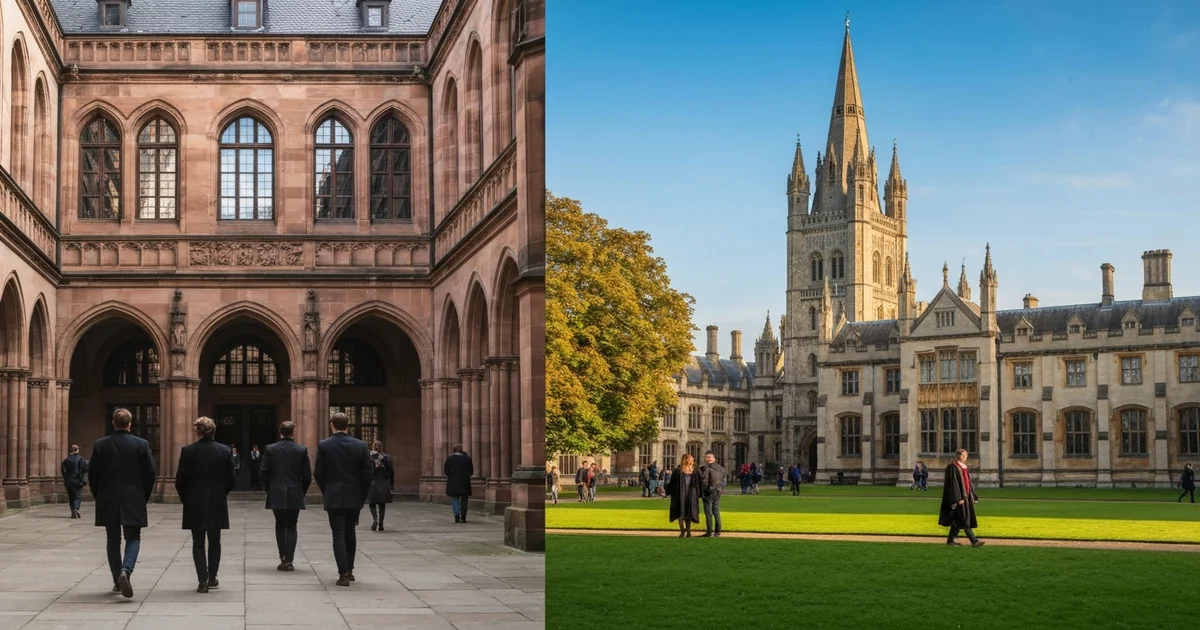
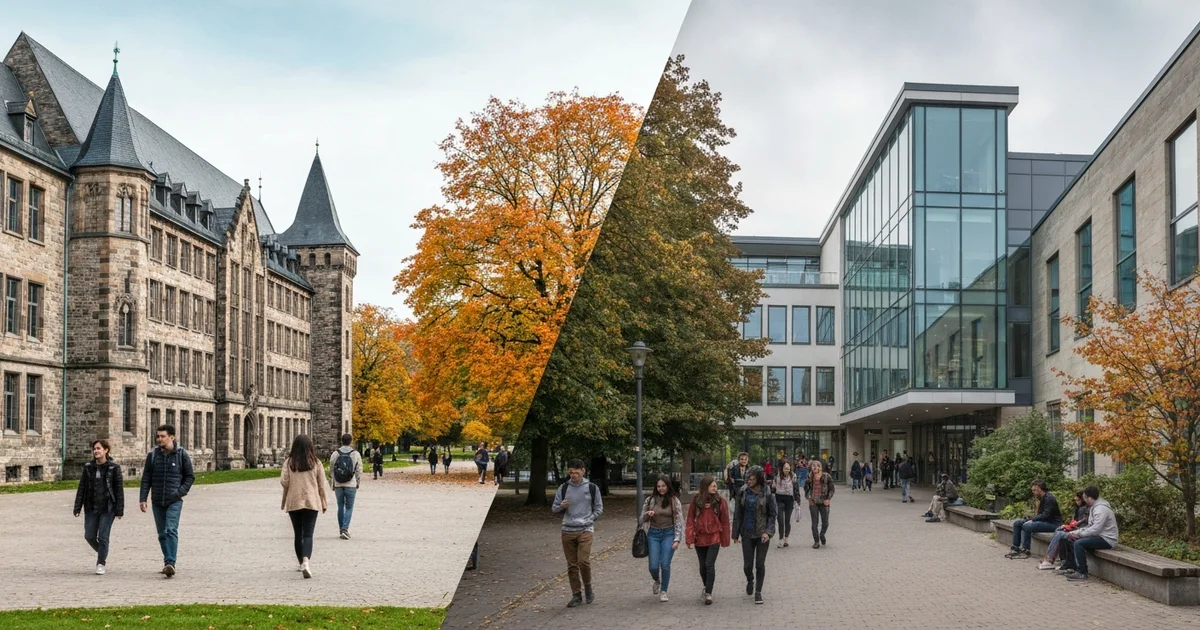
Germany vs USA for Masters: Honest Comparison (2026)
TL;DR: You'll save massively by choosing Germany: a 2‑year Master's typically costs EUR 25,000-33,000 total (blocked account €11,208/year), offers an automatic 18‑month post‑study job seeker visa and a clear path to permanent residency. The USA gives stronger global rankings and top‑tier options but costs USD 85,000-200,000 for two years and relies on OPT/H‑1B lottery, so choose based on finances and career goals.
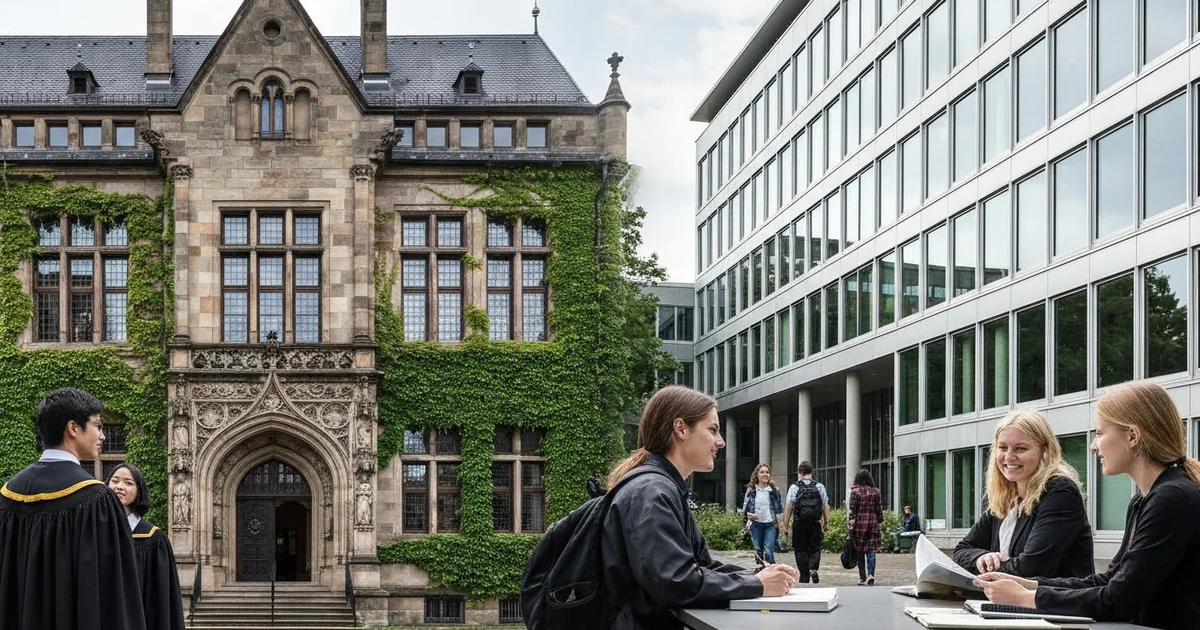
Germany and the USA are two of the top three destinations for Indian students pursuing a Master's degree abroad (Canada is the third). But they could not be more different in terms of cost, visa policy, and student experience. One costs nearly nothing in tuition; the other can set you back USD 80,000+. One gives you an 18-month post-study work visa automatically; the other depends on an annual lottery.
This guide compares Germany and the USA across every factor that matters for a Master's degree in 2026, using real numbers and honest assessments. No country is universally "better", the right choice depends on your field, finances, and career goals.
Quick Comparison Table
| Factor | Germany | USA |
|---|---|---|
| Annual tuition (public uni) | EUR 0-3,000 | USD 25,000-60,000 |
| Monthly living cost | EUR 850-1,100 | USD 1,200-2,500 |
| Total 2-year Master's cost | EUR 20,000-27,000 | USD 65,000-170,000 |
| Post-study work visa | 18 months (automatic) | 12 months OPT (36 for STEM) |
| Path to permanent residency | Clear (2-4 years after graduation) | Uncertain (H-1B lottery, green card backlog) |
| Language | English programmes available; German helpful | English |
| Application requirements | No GRE, APS required for Indians | GRE often required, no APS |
| University rankings (global top 50) | 3 German universities | ~25 universities |
| Teaching style | Research-focused, independent | Coursework-heavy, structured |
| Part-time work | 140 full days/year (~20 hrs/week) | 20 hrs/week (on-campus only in year 1) |
1. Tuition Fees
This is where Germany's advantage is overwhelming.
Germany
Public universities charge zero tuition for Master's programmes, regardless of nationality. The only cost is the semester contribution (EUR 150-350 per semester, covering student services and public transport). The exception: Baden-Württemberg charges non-EU students EUR 1,500/semester.
Total tuition for a 2-year Master's in Germany: EUR 600-1,400 (semester contributions only) or EUR 6,600-7,400 in Baden-Württemberg.
USA
Public universities charge international students out-of-state tuition, typically USD 25,000-45,000/year. Private universities (MIT, Stanford, Columbia) charge USD 55,000-65,000/year. Some programmes (MBA, engineering at top schools) exceed USD 70,000/year.
Total tuition for a 2-year Master's in the USA: USD 50,000-130,000.
Verdict
Germany wins decisively. A student attending TU Munich (QS rank #28) or RWTH Aachen (QS rank #106) pays essentially zero tuition. A student at a similarly ranked US public university (like University of Wisconsin or Ohio State) pays USD 50,000+ for the same degree.
2. Living Costs
Germany
The government-mandated blocked account amount is EUR 11,208/year (EUR 934/month). Actual costs range from EUR 850 in affordable cities like Dresden or Leipzig to EUR 1,200+ in Munich. Average across Germany: ~EUR 950/month.
USA
Living costs vary enormously. College towns in the Midwest (Indiana, Ohio) can be USD 1,000-1,300/month. Cities like Boston, New York, or San Francisco: USD 2,000-3,000/month. Average across popular student cities: ~USD 1,500-2,000/month.
Verdict
Germany is 30-50% cheaper. The difference is most dramatic in housing assistance. A room in a shared flat in Berlin costs EUR 400-550/month; a comparable room in Boston or the Bay Area costs USD 1,200-1,800/month.
3. Total Cost: The Full Picture
| Component | Germany (2 years) | USA (2 years) |
|---|---|---|
| Tuition | EUR 600-1,400 | USD 50,000-130,000 |
| Living costs (24 months) | EUR 20,400-28,800 | USD 28,800-60,000 |
| health insurance | EUR 2,880 (EUR 120/month) | USD 3,600-6,000 (often mandatory uni plan) |
| Application costs (APS/GRE, tests, fees) | EUR 500-800 | USD 1,000-2,000 |
| Travel (flights) | EUR 400-700/year | USD 800-1,400/year |
| Total | EUR 25,000-33,000 | USD 85,000-200,000 |
In Indian Rupees (approximate): Germany costs INR 23-30 lakh total. USA costs INR 72-170 lakh total. Germany is 3-6x cheaper.
4. University Quality and Rankings
USA's Strength
The USA dominates global university rankings. In the QS World Rankings 2025, roughly 25 American universities are in the global top 50. Names like MIT, Stanford, Harvard, Caltech, and Carnegie Mellon carry unmatched global brand recognition.
Germany's Strength
Germany has 3 universities in the QS top 50 (TU Munich at #28, LMU Munich at #54, Heidelberg at #47) and ~20 in the top 200. German universities may rank lower on paper but are highly respected by employers, especially in engineering, automotive, manufacturing, and applied sciences.
Key context: German universities rank lower partly because QS weights factors like "international faculty ratio" and "citations per faculty" where decentralised German research (done at Max Planck, Fraunhofer, and Helmholtz institutes alongside universities) doesn't get counted towards university scores.
Verdict
For brand recognition and rankings: USA wins. If you want a degree from a globally top-10 institution, the USA has more options. For employer reputation in Europe and engineering: Germany is equal or better. A degree from TU Munich, RWTH Aachen, or KIT opens every door in European industry.
5. Job Prospects and Post-Study Work Visa
This is where many students make their decision.
Germany
- 18-month Job Seeker Visa: After graduation, you automatically receive an 18-month residence permit to find a job in Germany. No lottery, no employer sponsorship needed during this period.
- Path to permanent residency: After 2 years of working on a regular work permit, you're eligible for a settlement permit (permanent residency). After 6-8 years total in Germany, you can apply for citizenship.
- Job market: Germany has a severe shortage of engineers, IT professionals, and STEM graduates. Unemployment among university graduates is ~2.5%, effectively full employment.
- Starting salaries: EUR 45,000-65,000/year for Master's graduates in engineering and IT (EUR 55,000-75,000 in Munich).
- Caveat: German language course proficiency (B2+) significantly improves job prospects, especially outside major cities and outside pure tech roles.
USA
- OPT (Optional Practical Training): 12 months of work authorisation after graduation. STEM graduates get a 24-month extension (36 months total).
- H-1B lottery: After OPT, you need an employer to sponsor you for an H-1B visa. The H-1B has an annual cap, and the selection rate in 2025 was approximately 25-30% in the lottery. If you don't get selected, you may have to leave the country.
- Green card backlog: For Indian nationals, the employment-based green card wait time is estimated at 50-80+ years due to per-country caps. This is not a typo.
- Starting salaries: USD 75,000-130,000/year for Master's graduates in CS and engineering (higher in tech hubs). Significantly higher than Germany in absolute terms.
- Caveat: Higher salaries come with higher costs of living, student loan repayments, and visa uncertainty.
Verdict
For visa certainty and long-term settlement: Germany wins clearly. Germany's post-study and PR pathway is straightforward and predictable. The USA offers higher salaries but with significant visa risk, your ability to stay depends on a lottery and a decades-long green card queue.
For absolute earning potential: USA wins, if you can secure a visa. A software engineer at Google or Meta earns USD 150,000-250,000, which no German employer matches.
6. Application Process
Germany
- No GRE required (with very rare exceptions)
- APS certificate required for Indian students (6-12 week process through the German Embassy)
- Application through uni-assist or directly to universities
- No application essays in most cases, a motivation letter and CV suffice
- Application fee: EUR 75 (uni-assist) or EUR 0 (direct application)
- Deadlines: July 15 for winter semester, January 15 for summer semester (general). Some universities have earlier deadlines.
USA
- GRE required by most top programmes (some have gone test-optional post-COVID, but competitive applicants still submit scores)
- Statement of Purpose (1-2 pages) and often multiple essays
- 3 Letters of Recommendation from professors or employers
- Application fee: USD 75-125 per university
- Applying to 8-12 universities is common, costing USD 600-1,500 in application fees alone
- Deadlines: December 1-January 15 for fall admission
Verdict
Germany is simpler and cheaper to apply to. No GRE, no essays, lower fees. The APS process is a hurdle but it's a one-time certificate valid for all German universities. The USA requires more standardised tests, more documents, and significantly higher application costs.
7. Student Life and Culture
Germany
- Teaching style: Research-oriented, self-directed. Fewer assignments and quizzes; more independent study and semester-end exams. You're expected to manage your own learning.
- Campus life: Less campus-centric than the USA. German universities typically don't have "campuses" in the American sense, buildings are spread across the city. Student life revolves around the city, not the university.
- Social life: Making German friends takes effort, Germans are friendly but not as immediately open as Americans. International student communities are strong.
- Travel: The Deutschlandticket (EUR 49/month, ~EUR 29 for students) lets you travel across all of Germany by regional train. Weekend trips to Paris, Amsterdam, Prague, and Vienna are common and cheap.
- Safety: Germany is extremely safe. Violent crime rates are a fraction of the USA's.
USA
- Teaching style: Coursework-heavy with regular assignments, projects, and mid-terms. More structured and guided. Class participation often counts towards grades.
- Campus life: Rich campus culture with clubs, sports, Greek life, and networking events. American universities are designed as self-contained communities.
- Social life: Americans are generally outgoing and approachable. Making friends is easier initially, though friendships can be more surface-level.
- Travel: Domestic travel is expensive (flights) and public transport is limited outside major cities. You'll likely need a car in many locations.
8. When to Choose Germany vs USA
Choose Germany If:
- You want to minimise debt, Germany is 3-6x cheaper
- You want visa certainty, 18-month job seeker visa + clear PR path
- You're studying engineering, automotive, manufacturing, or applied sciences
- You want to live and work in Europe long-term
- You're comfortable with independent, research-focused learning
- You want to travel Europe easily during your studies
Choose USA If:
- You want a globally recognised brand-name degree (top 10-20 schools)
- You're targeting maximum salary (Big Tech, Wall Street)
- You're studying fields where the USA is clearly dominant: MBA, AI/ML research, biotech, finance
- You can afford the cost or have a full scholarship/assistantship
- You prefer a structured, coursework-heavy learning style
- You're comfortable with H-1B visa uncertainty
The ROI Question
Let's do the math for a Computer Science Master's graduate:
| Metric | Germany | USA |
|---|---|---|
| Total investment | ~EUR 25,000 (INR 23 lakh) | ~USD 120,000 (INR 102 lakh) |
| Starting salary | ~EUR 55,000/year | ~USD 110,000/year |
| Years to recover investment | <1 year | ~2-3 years |
| Net savings after 5 years of work | ~EUR 80,000+ | ~USD 100,000+ (if visa works out) |
| Visa risk | Near zero | Significant (H-1B lottery) |
Germany offers a lower-risk, high-certainty path to a comfortable career in Europe. The USA offers a higher-ceiling, higher-risk path with potentially larger earnings but significant visa uncertainty and debt.
Ready to explore your options for studying in Germany? See our admission services or create your free account to get personalised guidance.
Germany or USA: Which Is Better for Your Master's?
There is no single winner. The right answer depends on your budget, your tolerance for debt, and where you want to work after graduating. A quick way to decide:
- Choose Germany if you want to graduate with little or no debt. Most public universities charge no tuition for consecutive master's degrees (Baden-Wuerttemberg state universities are the main exception, at roughly EUR 1,500 per semester for non-EU students). Your main proof-of-funds is a blocked account of around EUR 11,900 for the first year.
- Choose the USA if you prioritise the highest starting salaries, a larger choice of specialised programmes, and you can fund tuition that often runs into tens of thousands of USD per year, or secure an assistantship.
Post-study work also differs sharply. Germany gives graduates an 18-month job-seeker residence permit, and staying long-term does not depend on a lottery. In the USA, work after an F-1 degree usually runs through OPT (with a STEM extension), followed by the H-1B visa, which is allocated by lottery and is not guaranteed. If predictable settlement matters to you, Germany is often the safer bet.
Germany vs USA for an Engineering Master's
For engineering specifically, both countries are strong, but they win on different terms:
- Reputation: Germany's TU9 group (RWTH Aachen, TU Munich, KIT and others) is globally respected, especially in mechanical, automotive and electrical engineering. The USA has more top-20 ranked engineering schools overall.
- Cost vs salary: German starting salaries for engineers are typically lower than US ones, but near-zero tuition usually means a faster payback and no large loan to service.
- Industry access: Germany's engineering job market is deep, with employers like Bosch, Siemens and the automotive sector hiring international graduates; many master's programmes include a mandatory industry internship or thesis with a company.
- Language: Most German engineering master's are taught in English, but B1-level German strongly improves your hiring odds. In the USA, English is sufficient throughout.
If your goal is long-term, low-debt engineering work in Europe, Germany is hard to beat. If you are aiming for the highest possible salary and have the funds, the USA remains competitive.
Frequently Asked Questions
You probably qualify for more than you think.
Students who get evaluated find programmes they had no idea existed — at universities that charge nothing. 2 minutes, no cost. The only downside is not checking.
Want our guides higher up in Google?
Mark GradGermany as a preferred source and Google gives our pages more room when you search about studying in Germany. Takes one tap, and you can undo it any time from the same screen.
Living this, or on your way to it? Tell your story.
If you are already in Germany and finding it hard, or still fighting to get here, other students need to hear it from someone real. Share your honest journey. We help shape it, and nothing goes live until you approve it.
Free German Quiz · No Login
Can you score 10/10 on today's German challenge?
10 new words every day · 4,500+ words from A1 to C1 · takes about a minute.