Cost of Living in Germany for Indian Students 2026: A City-by-City Breakdown
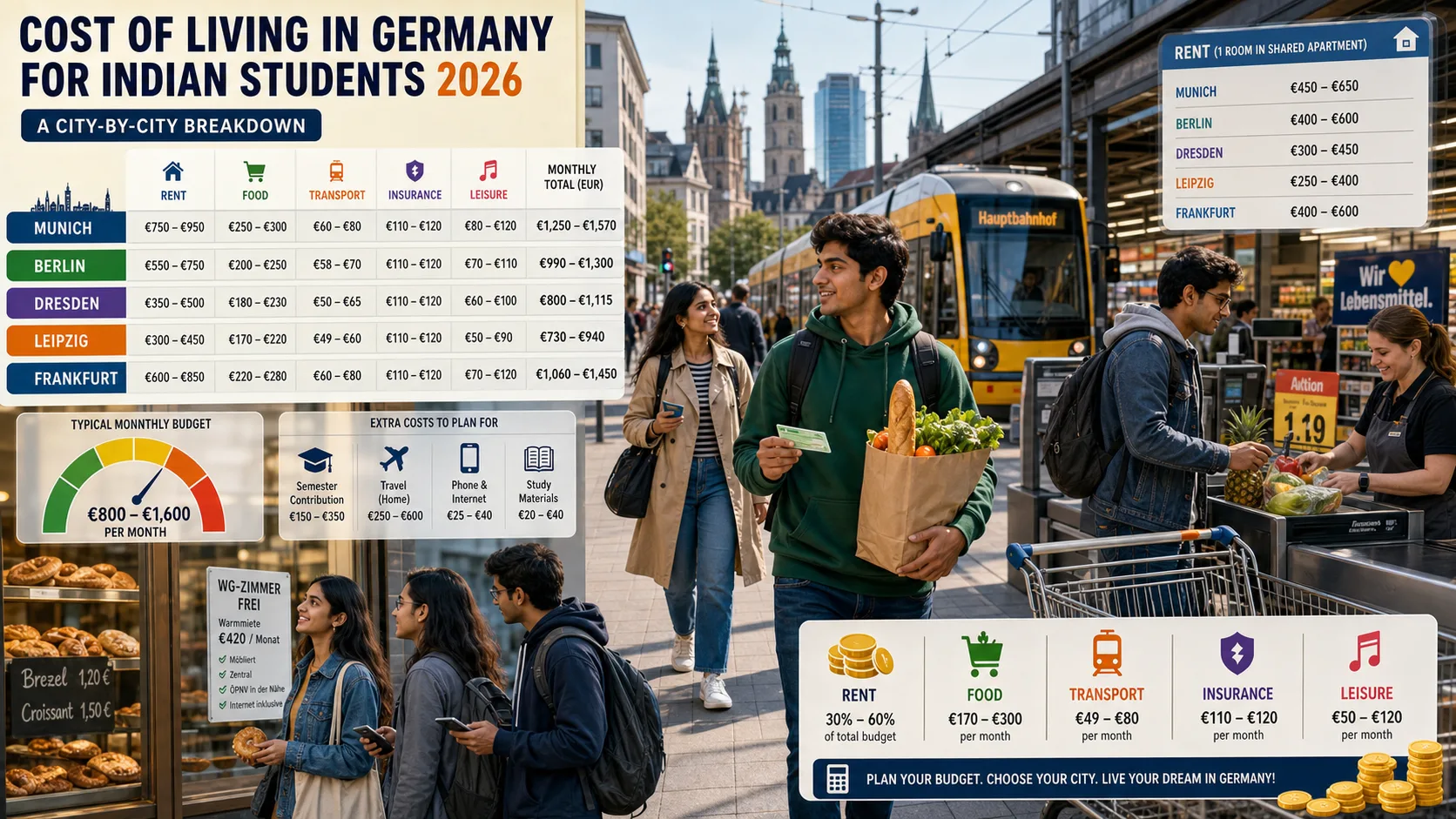
TL;DR: Most Indian students spend €600 to €1,350 per month in 2026, depending heavily on the city. Leipzig, Dresden, and Magdeburg are among the cheapest (around €600 to €900 all-in), while Munich and Frankfurt are the most expensive. The blocked account releases €992/month, which stretches comfortably in cheaper cities but needs topping up in the priciest ones.
Monthly budget at a glance
| Item | Typical range/month |
|---|---|
| Rent | €300 to €700+ (city-dependent) |
| Food | €200 to €250 |
| Health insurance | €120 to €150 (under 30) |
| Transport | €50 to €80 (often via semester pass) |
| Total | €600 to €1,350 |
Tuition may be free, but living costs are real and they vary more by city than students expect. Here is a clear-eyed budget for 2026.
The headline range
Plan for roughly €600 to €1,350 per month, all-in. The single biggest variable is rent, which is why your city choice matters so much. The blocked account that funds your visa releases €992/month, designed to cover a typical student budget.
Where the money goes
A typical monthly breakdown looks like: rent (the big one, from around €300 in cheaper cities to €700+ in expensive ones), food (€200 to €250), health insurance (€120 to €150 for under-30s on the public student rate, covered in Volume 2), and transport (€50 to €80, often bundled into a semester pass that comes with your semester contribution).
The cheapest cities for students
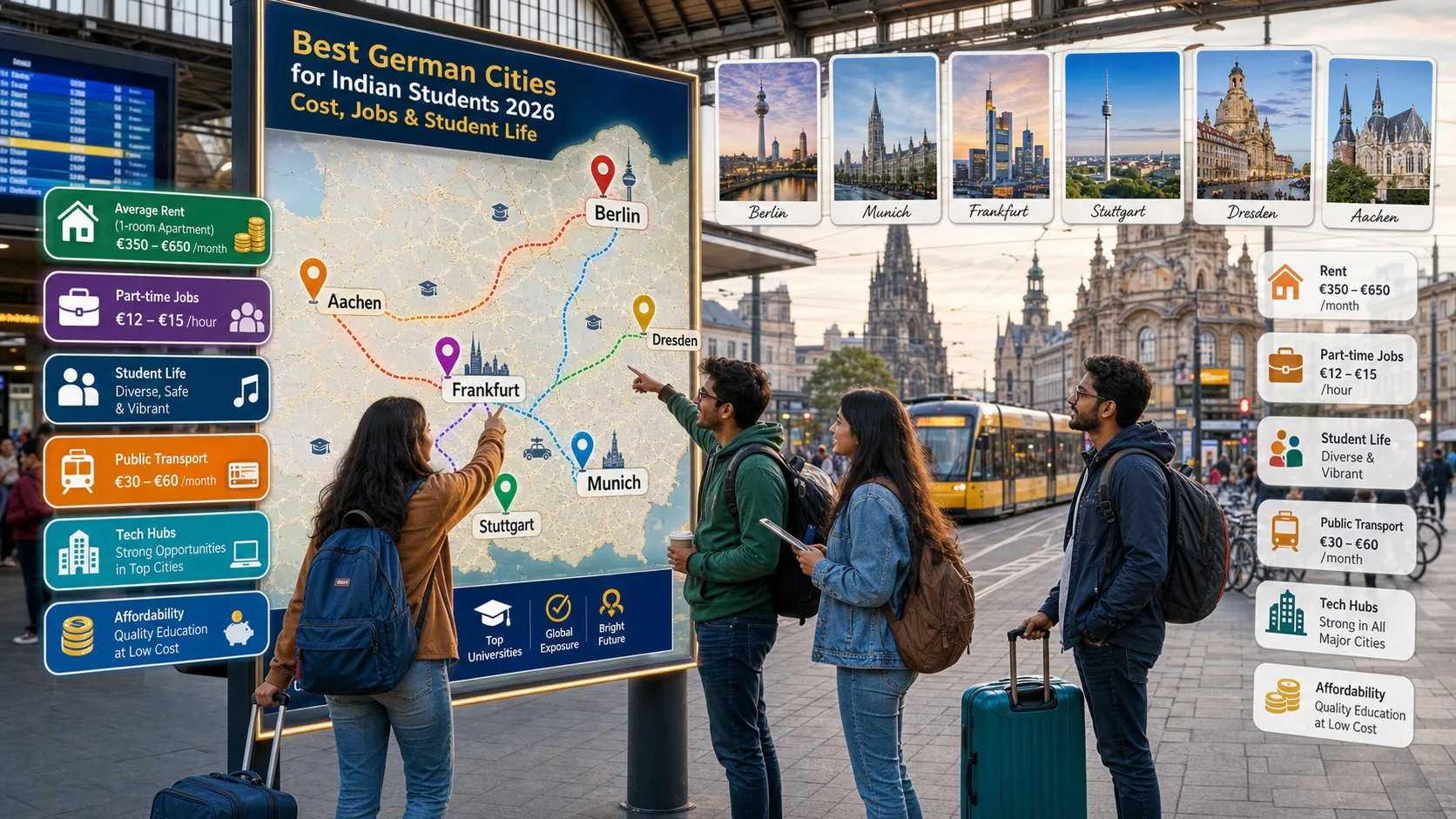
If budget is your priority, look east and to mid-sized cities. Leipzig, Dresden, and Magdeburg consistently rank among the cheapest, with total monthly costs around €600 to €900 including accommodation, food, insurance, and transport. They also host strong public universities (TU Dresden, Leipzig University, Otto-von-Guericke Magdeburg) with English-taught programmes.
The most expensive cities
Munich and Frankfurt are the priciest, driven by rent. The €992 blocked-account release alone is tight here; most students need part-time income or family support on top. The trade-off is stronger local job markets in tech and finance.
How the blocked account fits
The blocked account releases €992/month, which is comfortable in Leipzig or Dresden but stretched in Munich. Many students supplement with Werkstudent or part-time work (within the legal work-day limit), which is covered in Volume 2.
How to keep costs down
- Choose a cheaper city or a WG over a private studio.
- Use the semester transport pass that comes with your contribution.
- Cook at home; eat at the Mensa (subsidised student canteen).
- Buy a student travel/forex card to avoid high foreign-exchange fees.
- Apply early for a dormitory, the cheapest housing option.
Plan a realistic budget for your city
Underestimating costs is a common mistake. GradGermany helps Indian students match their city, housing, and budget so the numbers actually work.
Get a free profile evaluation or explore blocked account setup.
Frequently Asked Questions
You probably qualify for more than you think.
Students who get evaluated find programmes they had no idea existed — at universities that charge nothing. 2 minutes, no cost. The only downside is not checking.
Want our guides higher up in Google?
Mark GradGermany as a preferred source and Google gives our pages more room when you search about studying in Germany. Takes one tap, and you can undo it any time from the same screen.
Get new guides as soon as they go live
Add our feed to Feedly, Inoreader or any RSS reader and every new guide on studying in Germany shows up there by itself. No email, no sign-up.
Living this, or on your way to it? Tell your story.
If you are already in Germany and finding it hard, or still fighting to get here, other students need to hear it from someone real. Share your honest journey. We help shape it, and nothing goes live until you approve it.
Free German Quiz · No Login
Can you score 10/10 on today's German challenge?
10 new words every day · 4,500+ words from A1 to C1 · takes about a minute.