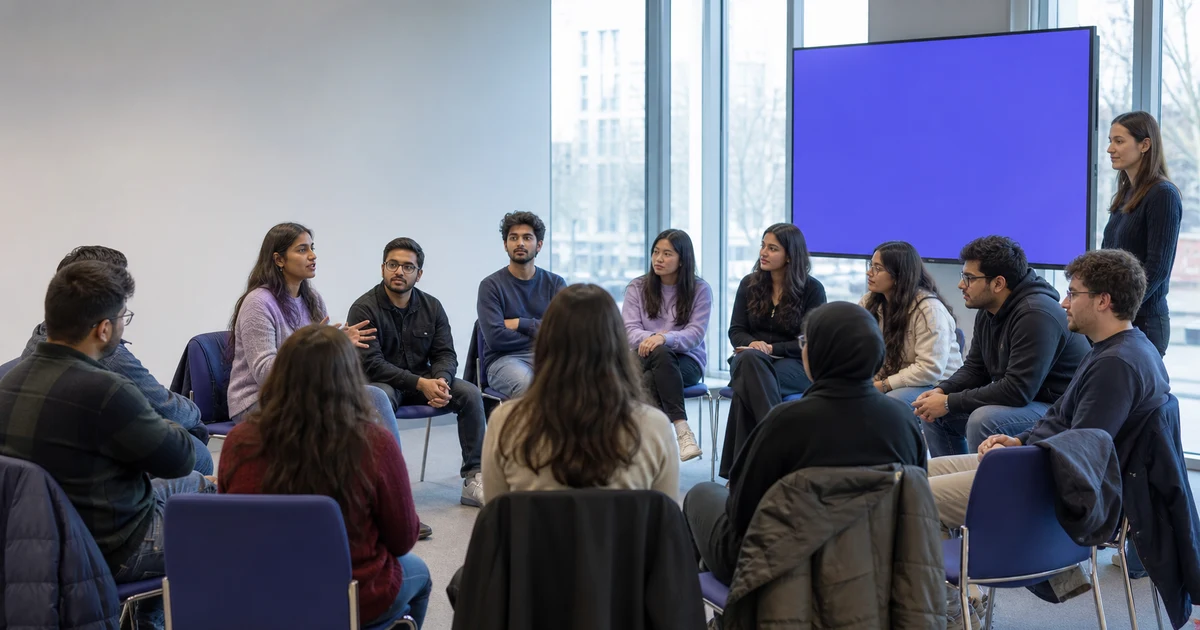
DAAD Scholarship for Nigerian, Kenyan & African Students 2026

TL;DR: DAAD-EPOS pays African postgraduates EUR 992 a month plus health insurance, a travel allowance and a study subsidy, usually for 12 to 24 months. The award letter is accepted as proof of financing, so you skip the EUR 11,904 blocked account. Most EPOS courses ask for two years of work experience and a first degree finished within the last six years. Apply about a year before the intake.
Nigerian, Kenyan and Ghanaian applicants ask the same question every year: can you study in Germany without EUR 11,904 sitting in a blocked account? With DAAD-EPOS, yes. Development-Related Postgraduate Courses is the DAAD funding line for people already working in their home country who want a German masters. Nothing else about the application changes. You still apply to the university, sometimes through uni-assist, still have your degree checked against anabin, and still prove English with IELTS or German with TestDaF or DSH. DAAD only handles the money.
What DAAD-EPOS pays for
EPOS is a full scholarship, and calling it a tuition waiver misses the point. Public universities charge no tuition for most masters anyway. The money goes to the part that actually stops people: living costs. The rate for graduates is EUR 992 a month, paid into a German account once you arrive, for the standard length of the course.
| What you get | Detail |
|---|---|
| Monthly payment | EUR 992 for graduates, for 12 to 24 months (36 on a few courses) |
| Insurance | Health, accident and liability cover through the DAAD group policy |
| Travel | Allowance, unless your employer already pays the flight |
| Study subsidy | Lump sum for books, printing and research costs |
| German course | Two to six months, funded before the degree starts |
| Extras | Rent subsidy and family allowance where they apply |
| Blocked account | Not needed. The award letter is your proof of financing |
Read that last row twice. The Federal Foreign Office expects EUR 992 per month, EUR 11,904 for a year, before it issues a student visa. The EPOS rate matches it, so the scholarship letter does the same job as opening a blocked account in Abuja, Nairobi or Accra. You still pay the EUR 75 visa fee.
Insurance is covered too, so you avoid the roughly EUR 140 a month a self-funded student under 30 pays for statutory student health insurance in Germany. EPOS does not pay the semester contribution of EUR 150 to 390, which usually includes a transport ticket.
Who DAAD-EPOS is built for
EPOS is not a merit scholarship, and top grades alone will not win one. It funds mid-career professionals from countries on the OECD development assistance list, which covers Nigeria, Kenya, Ghana, Tanzania, Uganda, Ethiopia and most of the continent. The committee is looking for someone who will take the degree back to a ministry, a utility or an NGO at home, and it reads every application through that lens.
- Two years of professional experience after your first degree. This is the filter that removes most applicants, and coordinators check the dates on your employment letters.
- A first degree finished within the last six years. A 2014 bachelor with no further study usually falls outside the window, so check each programme page first.
- A relevant employer: public authority, state company, private firm or NGO, as long as the work connects to the course subject.
- Language proof. English-taught courses commonly want IELTS 6.0 to 6.5 or the TOEFL equivalent. Some accept a medium-of-instruction letter, many do not. German-taught courses want DSH-2 or TestDaF 4x4.
- Intent to return. You state in writing how the degree gets used at home. Vague answers here lose otherwise strong applications.
Which programmes carry EPOS funding
Read Also: Germany's Political Foundation Scholarships: Six Funders Almost No Indian Student Applies To
You cannot bring EPOS money to any masters you like. The funding sits on a short list of development-related courses, a few dozen, across agriculture, water, energy, planning, public health, economics and governance.
| Programme | University | City |
|---|---|---|
| Agricultural Sciences and Resource Management in the Tropics and Subtropics (ARTS) | University of Bonn | Bonn |
| Tropical Forestry | TU Dresden | Dresden |
| International Health | Heidelberg University | Heidelberg |
| Natural Resources Management and Development | TH Koeln | Cologne |
| Infrastructure Planning | University of Stuttgart | Stuttgart |
| Sustainable International Agriculture | University of Goettingen | Goettingen |
That is a sample, not the list. Courses join and leave the catalogue between intakes, so check the current EPOS page on daad.de before you build a shortlist around one of them. Our searchable catalogue of German master's programmes covers everything outside the EPOS list.
How the application actually works
Here is where people lose the year. The DAAD scholarship application does not go to DAAD. It goes to the programme coordinator at the university, in the same package as your admission application, and the university does the first round of sorting.
- Pick two or three EPOS courses that match your degree and your job. The work-experience wording varies.
- Check your degree on anabin. Some universities also route admission through uni-assist, whose process we walk through here. It charges EUR 75 for the first application and EUR 30 for each additional one in the same semester.
- Collect the paperwork: certified degree and transcripts, dated employment letters, two references (one academic, one from your employer), CV, language certificate, passport copy and the signed DAAD form.
- Write the motivation letter around impact. Name the problem you work on, the gap in your training, and what changes at your organisation afterwards. Personal ambition alone reads as a poor fit.
- Submit by the programme deadline in the format the coordinator asks for: one PDF by email, a portal upload, or hard copies by post.
- University shortlist, then DAAD selection. The department ranks candidates and a DAAD committee makes the final call.
- Award letter, then visa. Decisions usually land early in the year for an autumn intake, which leaves room to book the student visa appointment.
The timeline that works
Start 12 to 18 months out. Embassy appointments in Lagos, Abuja and Nairobi book out weeks ahead, and no university registry has ever produced a certified transcript on the day it was asked.
| When | What you do |
|---|---|
| 18 months before | Shortlist EPOS courses, check the six-year rule against your degree date |
| 15 months before | Book IELTS or TestDaF, request transcripts, ask your referees |
| 12 months before | Draft the motivation letter, get employment letters signed and stamped |
| 10 to 12 months before | Deadlines hit. Most close between July and October, a few in December |
| 6 to 8 months before | Admission decision, then the DAAD committee result |
| 4 to 6 months before | Award letter. Book the visa appointment that week |
| 1 to 3 months before | Visa issued, DAAD language course, flight, room search |
Other DAAD routes for African applicants
EPOS is the biggest door, not the only one. DAAD also runs research grants and individual postgraduate scholarships without the two-year work requirement. The Helmut-Schmidt-Programme funds public policy and governance masters at a small set of universities, among them the Willy Brandt School of Public Policy in Erfurt.
The In-Country/In-Region programme pays for a masters or PhD at a university inside sub-Saharan Africa instead of in Germany. DAAD keeps regional offices in Nairobi, Accra, Johannesburg and Cairo, and they answer country questions faster than the Bonn head office. Our guide to how a DAAD application is assessed covers the mechanics they all share, and the scholarship directory for Germany lists the non-DAAD funding.
If EPOS does not come through
Plenty of strong applicants miss out, and it is almost always the work experience rather than the grades. Germany is still reachable self-funded.
- Blocked account: EUR 11,904 for the first year, released to you at EUR 992 a month.
- Work while studying: 140 full days or 280 half days a year at a minimum wage of EUR 13.90 an hour. Werkstudent roles in Munich or Stuttgart pay more. See what student jobs in Germany actually pay.
- Smaller scholarships: the Deutschlandstipendium pays EUR 300 a month through the university; KAAD funds EUR 934 to EUR 1,200 a month.
- Language first: German-taught masters draw fewer applicants, and an A1 to B2 German course takes most people nine to twelve months.
- After graduation: the 18-month job-seeker visa is how self-funded students recover the cost.
Mistakes that sink African EPOS applications
- Applying to a course that is not EPOS-listed. No listing, no funding, no exceptions.
- Sending the DAAD form to DAAD. It goes to the programme coordinator, with your admission file.
- Counting unrelated work. Two years in retail will not support a water engineering application.
- Leaving transcripts to the last week. Registries in Lagos, Nairobi and Accra can take a month, and every employment letter needs a date, signature and stamp.
Sources
- DAAD - Development-Related Postgraduate Courses (EPOS)
- DAAD scholarship database
- DAAD Nigeria
- Study in Germany (DAAD)
- Federal Foreign Office - student visa requirements
- uni-assist - fees and documents
- anabin (KMK) - degree recognition
- OECD - ODA recipient list
Chasing a fully funded offer? Send us your degree, job title and years of experience through a free profile evaluation, and we will tell you which EPOS courses your file fits and which deadline to aim at.
Frequently Asked Questions
You probably qualify for more than you think.
Students who get evaluated find programmes they had no idea existed — at universities that charge nothing. 2 minutes, no cost. The only downside is not checking.
Want our guides higher up in Google?
Mark GradGermany as a preferred source and Google gives our pages more room when you search about studying in Germany. Takes one tap, and you can undo it any time from the same screen.
Living this, or on your way to it? Tell your story.
If you are already in Germany and finding it hard, or still fighting to get here, other students need to hear it from someone real. Share your honest journey. We help shape it, and nothing goes live until you approve it.
Related Guides
Free German Quiz · No Login
Can you score 10/10 on today's German challenge?
10 new words every day · 4,500+ words from A1 to C1 · takes about a minute.