Falling Rupee in 2026: Why Germany Is the Smart Value Choice for Indian Students

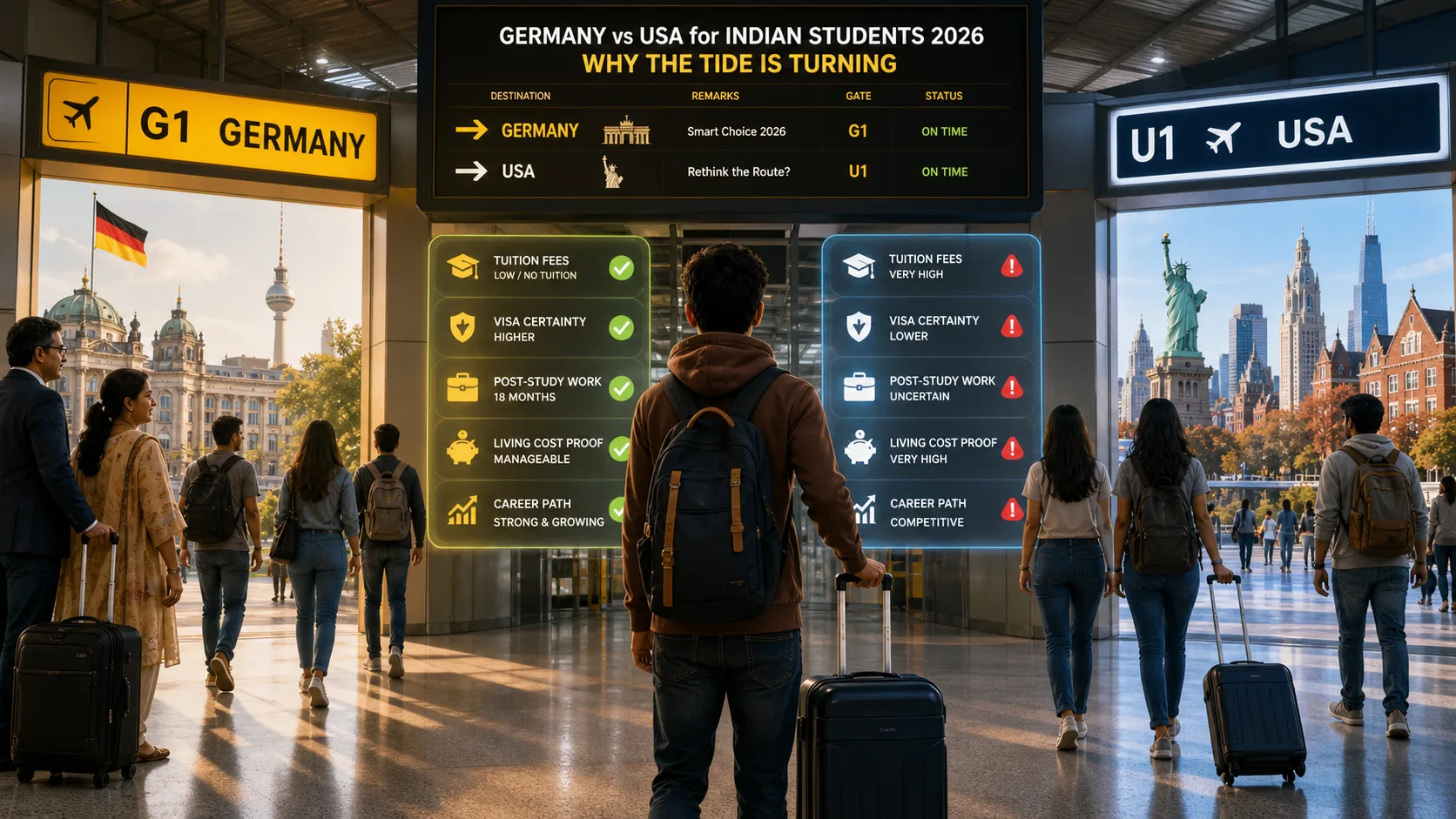
The Indian rupee has slipped a long way against the dollar and the euro over the past few years, and that single fact is quietly reshaping how families choose a study abroad destination in 2026. When every fee, rent payment, and flight is priced in a stronger foreign currency, value stops being a nice extra and becomes the deciding factor. This is exactly where Germany stands out.
GradGermany is a paid consultancy for German public universities and the Ausbildung route. We are upfront about costs, and the figures below are rounded estimates that move with the exchange rate, so treat them as a guide rather than a quote.
How far has the rupee fallen?
In 2021 the rupee traded near 73 to the United States dollar. By June 2026 it had weakened to roughly 95 to the dollar. For a family planning a budget of 40 to 60 lakh rupees for an overseas degree, even a small move in the exchange rate opens a gap of several lakhs. Rising living costs abroad, higher visa fees, and global market swings have all added to the pressure.
Why a weaker rupee changes the maths
Counsellors across India describe the same shift. Families now study the numbers far more closely before they commit, and many students respond by asking for larger education loans, chasing scholarships, weighing return on investment carefully, or delaying a year. The destination that wins is the one that keeps the total cost sensible without lowering the quality of the degree.
Where Germany pulls ahead
Germany answers the value question in a way few destinations can match.
- No tuition at most public universities. Public universities across most German states charge no tuition for a Bachelor or a Master. You pay only a modest semester contribution, often somewhere around 150 to 350 euros, which usually includes local transport.
- A fixed and predictable proof of funds. The blocked account for 2026 sits at 11,904 euros for the year, which is roughly 11 to 12 lakh rupees at current rates. Rather than paying high tuition every year, you set aside a savings buffer that you then spend on your own living costs.
- The right to work while you study. Students can work a set number of days each year, which helps offset living costs in euros rather than relying only on money sent from home.
- Strong job prospects after graduation. A German degree opens the door to well paid work in engineering, technology, and health, which improves the return on the money you invest.
How to protect your budget against the exchange rate
- Lock your blocked account and major fees early when the rate is favourable, rather than waiting.
- Target tuition free public universities and keep private options as a backup only.
- Apply for scholarships such as DAAD to cover living costs. See our DAAD scholarship guide.
- Plan part time work into your budget rather than treating it as a bonus.
Related guides
Frequently Asked Questions
You probably qualify for more than you think.
Students who get evaluated find programmes they had no idea existed — at universities that charge nothing. 2 minutes, no cost. The only downside is not checking.
Want our guides higher up in Google?
Mark GradGermany as a preferred source and Google gives our pages more room when you search about studying in Germany. Takes one tap, and you can undo it any time from the same screen.
Living this, or on your way to it? Tell your story.
If you are already in Germany and finding it hard, or still fighting to get here, other students need to hear it from someone real. Share your honest journey. We help shape it, and nothing goes live until you approve it.
Free German Quiz · No Login
Can you score 10/10 on today's German challenge?
10 new words every day · 4,500+ words from A1 to C1 · takes about a minute.