The German CV (Lebenslauf) and Motivationsschreiben Guide (2026)
TL;DR: German applications expect a specific format: a concise, factual Lebenslauf (CV), usually 1 to 2 pages in reverse-chronological order, and a tailored Motivationsschreiben (motivation letter) explaining your fit. Both are central to university applications, Werkstudent roles, and the Ausbildung pathway. Getting the format right signals you understand how Germany works.
Key facts at a glance
| Item | Detail |
|---|---|
| Lebenslauf | German CV, concise, factual, 1 to 2 pages |
| Order | Reverse-chronological |
| Motivationsschreiben | Tailored motivation letter |
| Used for | University, jobs, Werkstudent, Ausbildung |
| Tone | Clear, structured, no fluff |
Free tool: Skip the formatting and build a properly structured German Lebenslauf you can export as a PDF with our free German CV (Lebenslauf) maker.
Germans value structure and precision, and your application documents are the first place they judge whether you "get" that. A polished Lebenslauf and Motivationsschreiben can set you apart before anyone reads your transcripts.
The Lebenslauf (German CV)
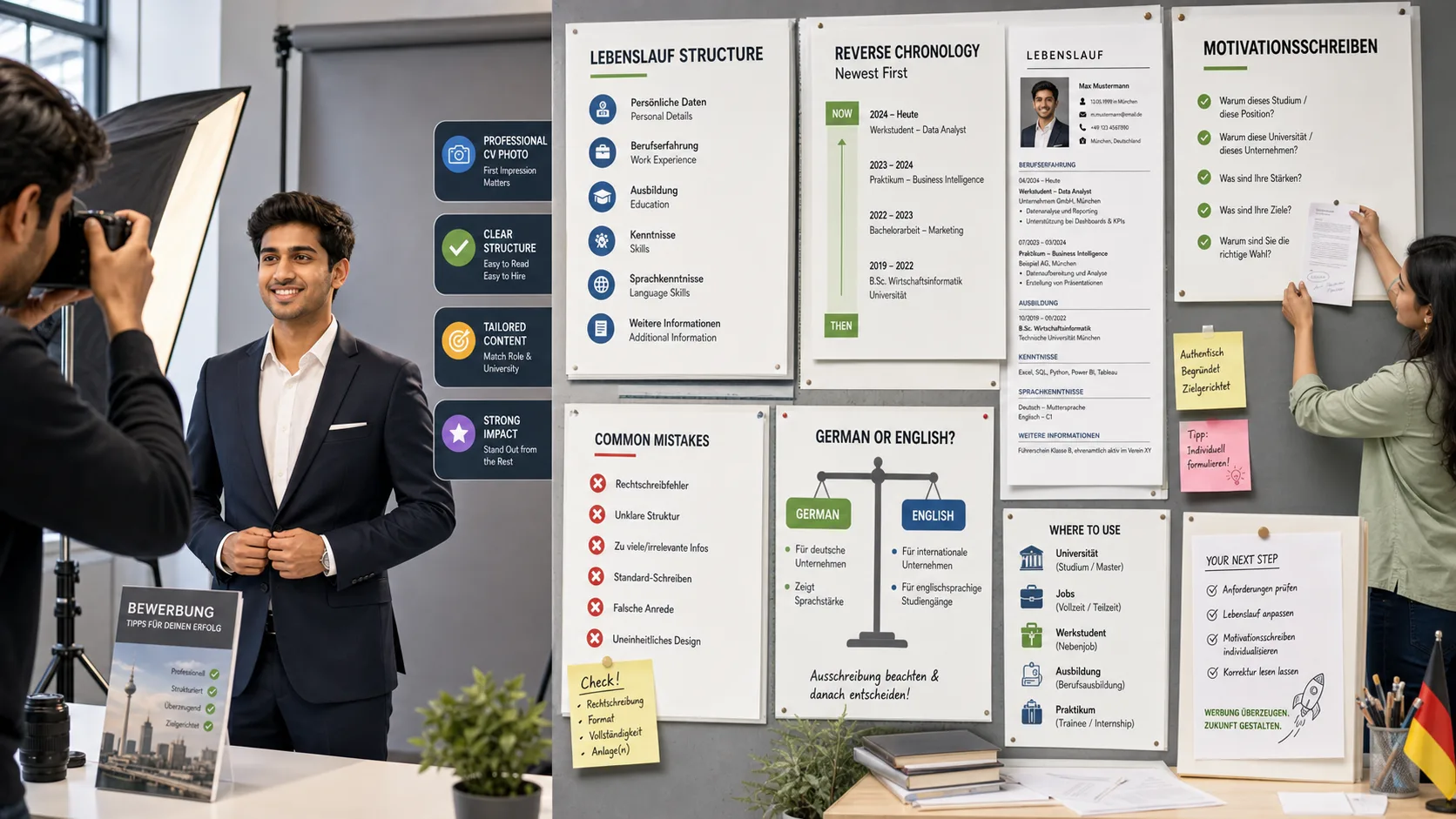
The Lebenslauf is a concise, factual CV, typically 1 to 2 pages, in reverse-chronological order (most recent first). It favours clear structure over design flourish. Core sections usually include:
- Personal details (name, contact; photo is common but increasingly optional)
- Education, most recent first
- Work experience and internships
- Skills (languages with levels, technical skills)
- Certifications and relevant projects
Keep it clean and honest. German recruiters and admissions staff prefer substance and clarity to marketing language.
The Motivationsschreiben (motivation letter)
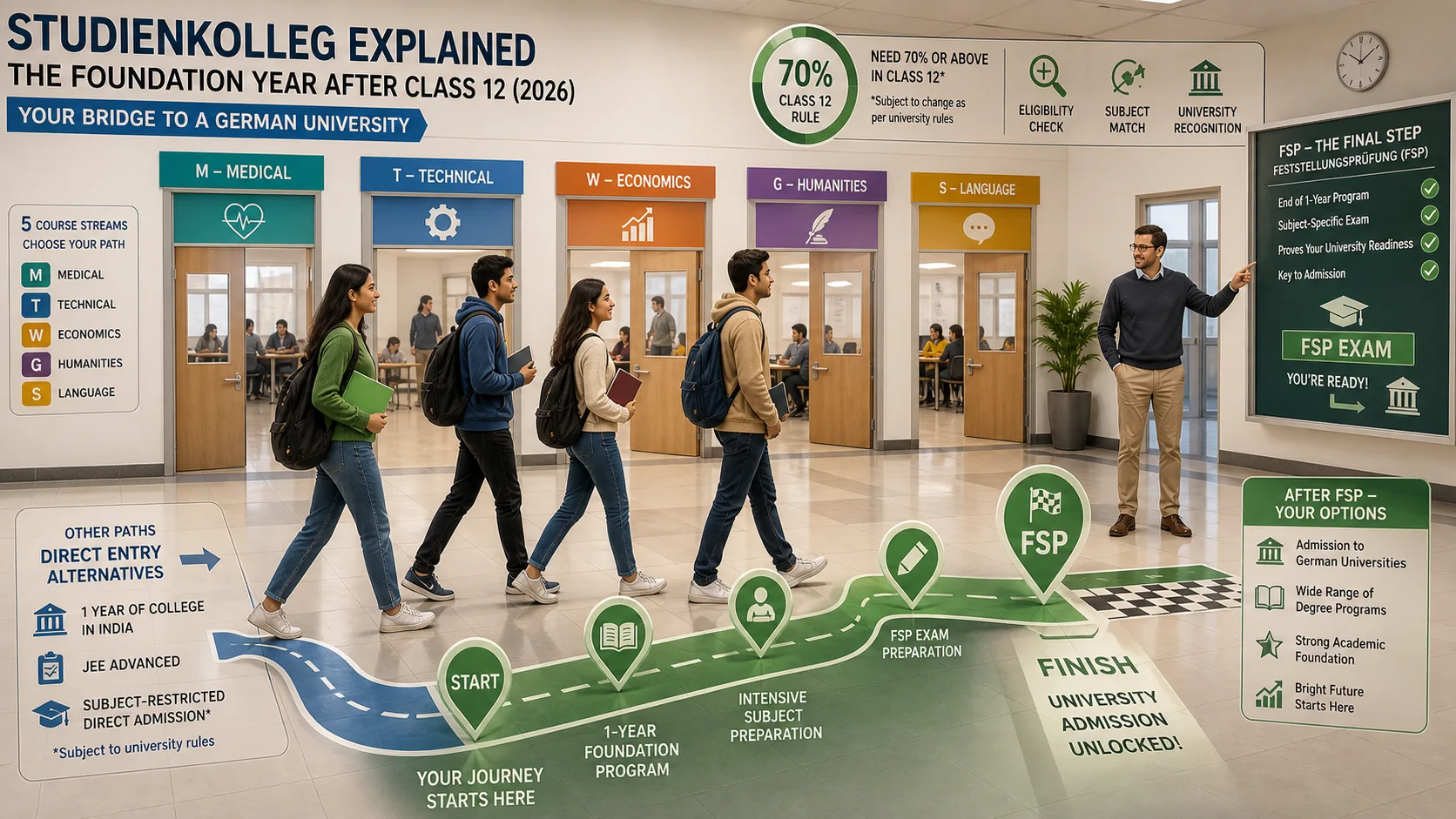
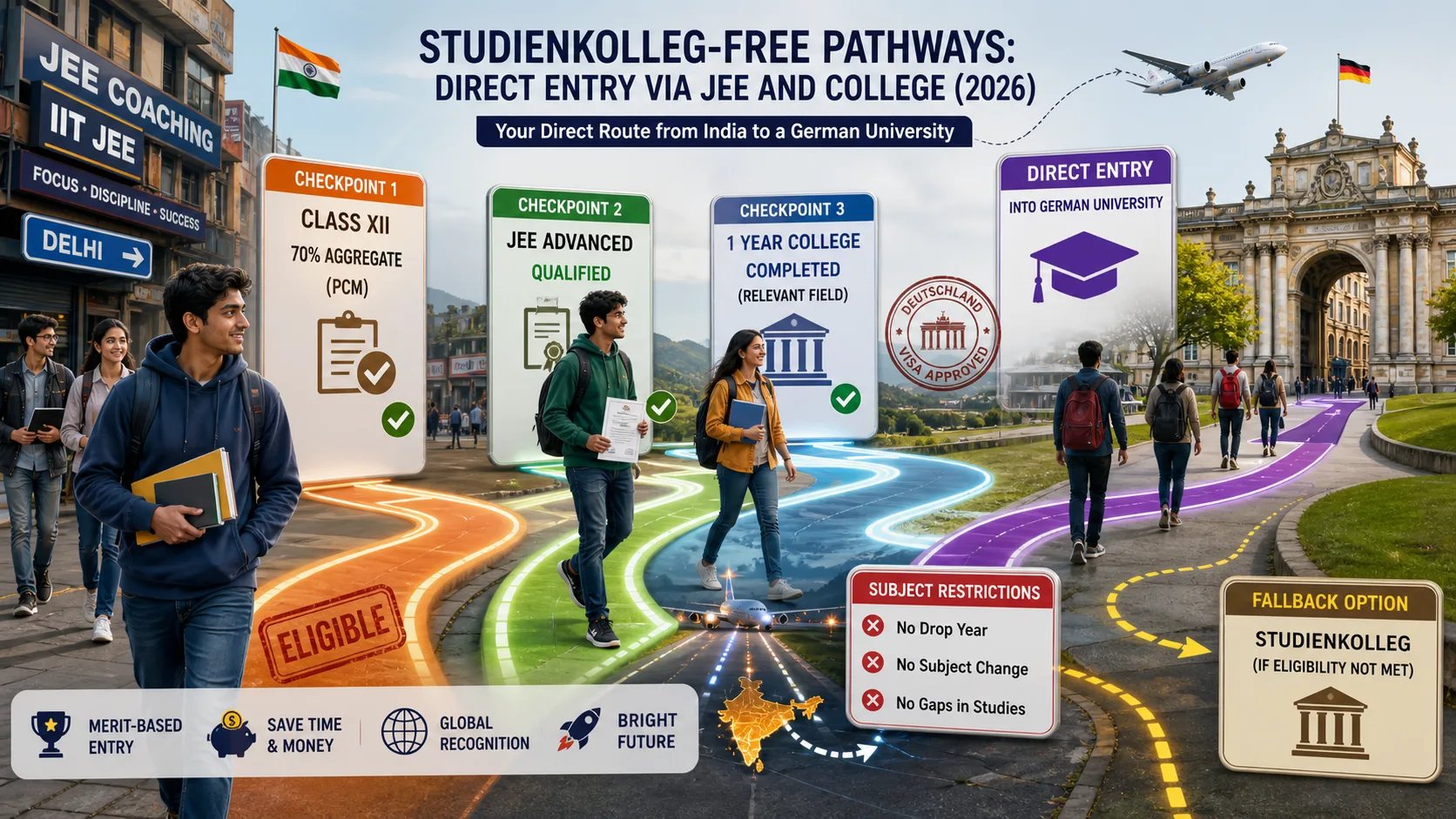
Read Also: Studienkolleg Explained: The Foundation Year After Class 12 (2026)
The Motivationsschreiben explains why you and why this programme or role. Unlike a generic cover letter, it should be specifically tailored: name the programme or company, connect your background to it, and show you understand what you are applying for. For university applications this overlaps with your SOP; for jobs and Ausbildung it is your pitch.
What German employers and universities look for
- Relevance: every line should earn its place.
- Consistency: dates and facts must match your other documents (and your APS and transcripts).
- Specificity: concrete achievements and clear motivation beat vague claims.
- Correctness: clean formatting and error-free language, in German or English as appropriate.
Common mistakes Indian applicants make
- Using a long, US-style multi-page CV instead of a concise Lebenslauf
- A generic motivation letter sent to many programmes unchanged
- Inconsistent dates or details versus other documents
- Over-designed templates that obscure the facts
- English documents where German is expected, or vice versa
German or English?
Match the language of the application. German-taught programmes and many German employers expect German documents; English-taught programmes and international roles often accept English. When in doubt, check the listing. Building your German through our A1 to C1 courses also lets you produce credible German documents.
Where these documents matter most
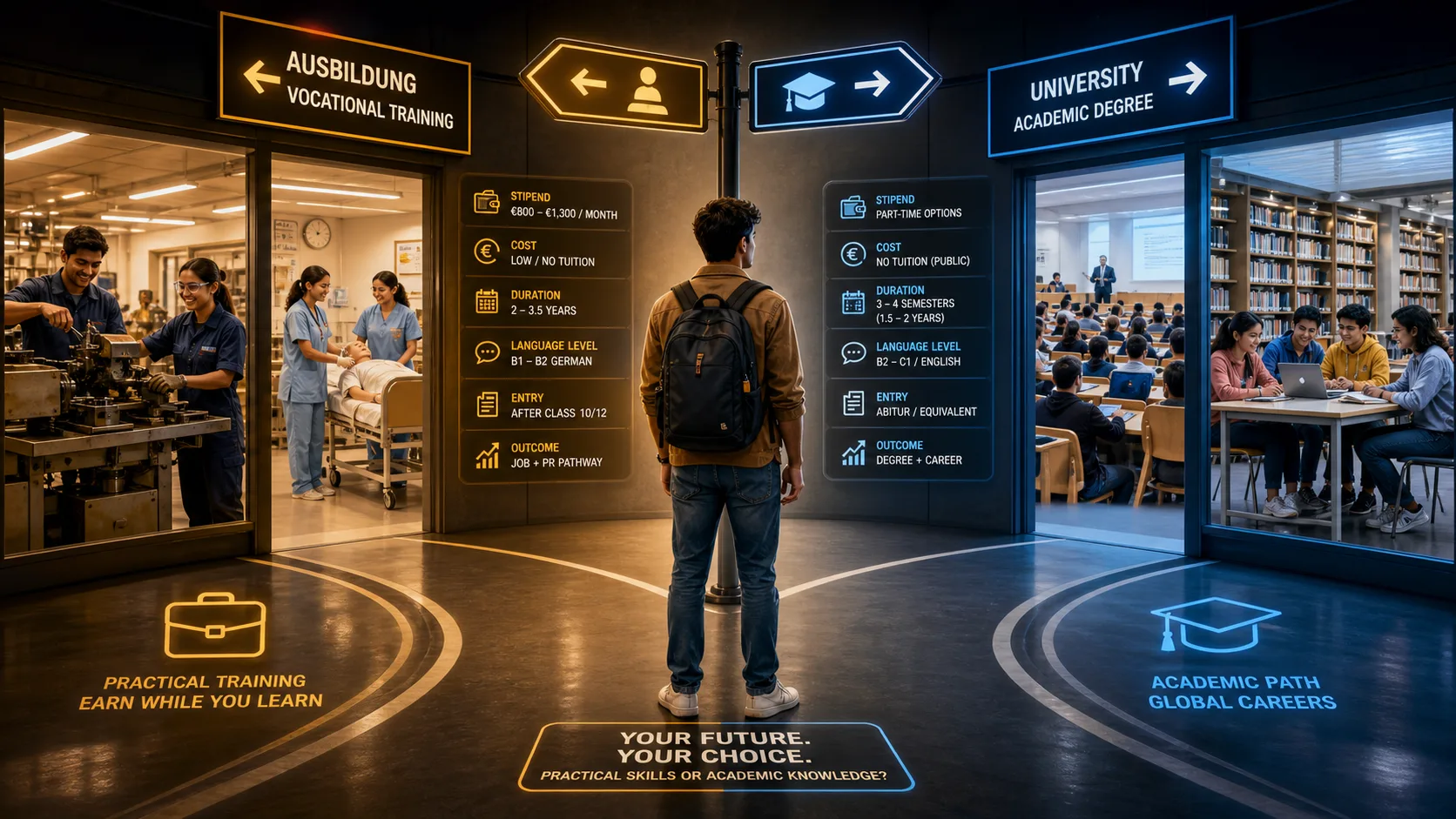
A strong Lebenslauf and Motivationsschreiben are pivotal for Werkstudent roles, the nursing and broader Ausbildung routes (where a German-style CV and motivation letter are explicit steps), and university applications. Investing time here pays off across your whole journey.
Get application-ready documents
A German-style CV and motivation letter open doors that a generic application closes. GradGermany helps Indian students prepare SOPs, LORs, and German-format documents.
Explore SOP and LOR guidance or get a free profile evaluation.
Frequently Asked Questions
You probably qualify for more than you think.
Students who get evaluated find programmes they had no idea existed — at universities that charge nothing. 2 minutes, no cost. The only downside is not checking.
Want our guides higher up in Google?
Mark GradGermany as a preferred source and Google gives our pages more room when you search about studying in Germany. Takes one tap, and you can undo it any time from the same screen.
Get new guides as soon as they go live
Add our feed to Feedly, Inoreader or any RSS reader and every new guide on studying in Germany shows up there by itself. No email, no sign-up.
Living this, or on your way to it? Tell your story.
If you are already in Germany and finding it hard, or still fighting to get here, other students need to hear it from someone real. Share your honest journey. We help shape it, and nothing goes live until you approve it.
Free German Quiz · No Login
Can you score 10/10 on today's German challenge?
10 new words every day · 4,500+ words from A1 to C1 · takes about a minute.