Merit Scholarships in Germany for Indian Students 2026: Top Awards and How to Win One

Germany already keeps tuition low or free at its public universities, but a strong scholarship can cover the part that still costs real money, your living expenses. For Indian students with good grades and a clear story, several merit based scholarships pay a monthly stipend that can fund most or all of your stay. This guide walks through the main options for 2026, what each one pays, and how to give yourself a genuine chance.
GradGermany is a paid consultancy that helps Indian students plan their studies in Germany, including the scholarship search. Funding amounts change from year to year, so confirm the current figures on each scholarship's own website before you apply.
What does merit based mean in Germany?
Merit based scholarships reward academic strength, but in Germany merit rarely means grades alone. Most providers also look closely at your motivation, your chosen field, and in many cases your social engagement and leadership. An applicant with a solid but not perfect record, a sharp statement of purpose, and real community work often beats a higher scorer who shows nothing beyond marks.
The main merit based scholarships for Indian students
DAAD Study Scholarship
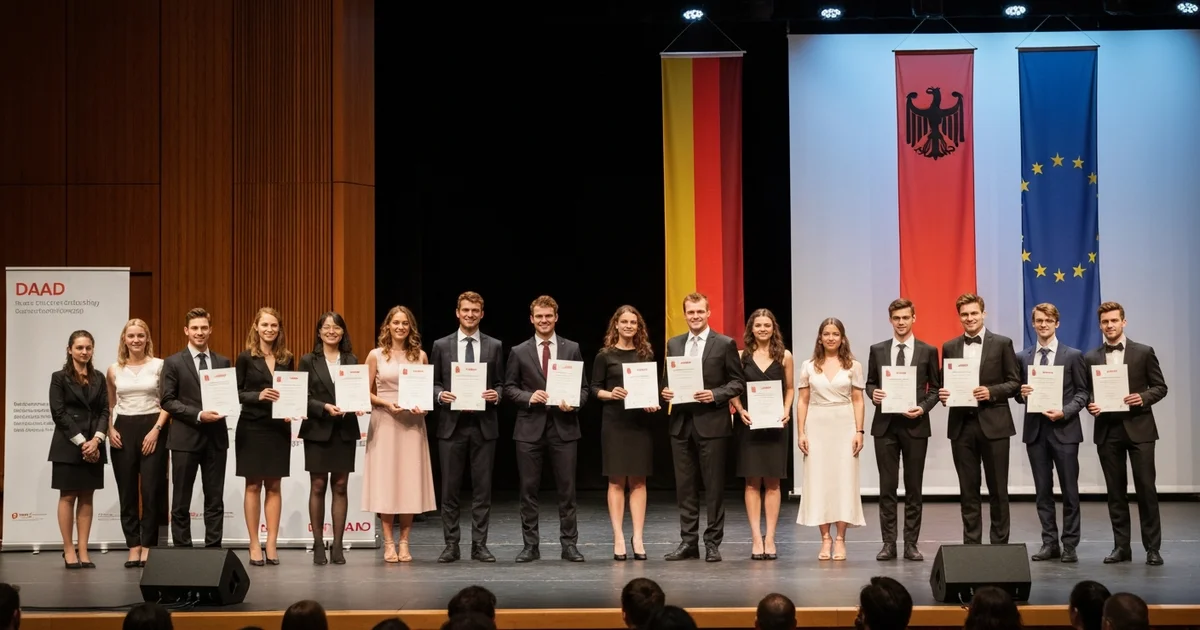
The German Academic Exchange Service runs the best known programme. For a Master it pays around 992 euros a month, and for a doctorate roughly 1,300 euros a month, usually with travel support, a health insurance contribution, and a study allowance on top. It is generous and therefore very competitive. Read our full DAAD scholarship guide for the detail.
Deutschlandstipendium
This scholarship pays 300 euros a month and is funded half by the German government and half by private sponsors. It is open to students of every nationality once you are enrolled at a participating German university, and you apply through the university itself rather than a central body. The amount is modest, but it is one of the easier merit awards to win and it carries real prestige.
Heinrich Böll Foundation
Linked to green and environmental values, this foundation pays around 934 euros a month for a Master and up to about 1,300 euros for a doctorate, along with insurance and travel support. It weighs your values and engagement as heavily as your grades, so it suits students with a record of activism or community work.
Konrad Adenauer Foundation
One of Germany's political foundations, it pays around 992 euros a month and looks for strong academics combined with an interest in society, politics, and leadership. Like the other foundations, it expects you to take part in its wider programme of events and networking.
Friedrich Ebert Foundation
This foundation offers a merit stipend of roughly 850 euros a month and places clear weight on social commitment alongside academic results. A student with a 7.0 average and strong volunteering can be a serious candidate here.
Erasmus Mundus Joint Masters
For students on a joint Master delivered across several European universities, an Erasmus Mundus scholarship can pay around 1,400 euros a month and cover tuition across the consortium. These are prestigious and very competitive, and you apply to the specific joint programme rather than to a foundation.
How competitive are these really?
Honestly, very. In one recent year DAAD funded only a few hundred Indian students for postgraduate study across every field combined. That is not a reason to skip applying, it is a reason to apply well. Target two or three scholarships that genuinely fit your profile rather than firing off many weak applications.
How to win a merit scholarship in Germany
Read Also: Rosa Luxemburg Foundation Scholarship 2027: The Fully Funded Option Most Indian Students Miss
- Start a year early. The strongest applications are built slowly, with time for recommendation letters and several drafts.
- Match the funder to your story. A climate focused student fits Heinrich Böll, a politics minded one fits Konrad Adenauer or Friedrich Ebert.
- Write a specific statement. Connect your past, your chosen programme, and what you plan to do afterward. Avoid generic lines.
- Show your engagement. Volunteering, leadership, and projects matter as much as grades for the foundations.
- Get strong references. A professor who knows your work well writes a better letter than a famous name who barely remembers you.
Related guides
Frequently Asked Questions
You probably qualify for more than you think.
Students who get evaluated find programmes they had no idea existed — at universities that charge nothing. 2 minutes, no cost. The only downside is not checking.
Want our guides higher up in Google?
Mark GradGermany as a preferred source and Google gives our pages more room when you search about studying in Germany. Takes one tap, and you can undo it any time from the same screen.
Living this, or on your way to it? Tell your story.
If you are already in Germany and finding it hard, or still fighting to get here, other students need to hear it from someone real. Share your honest journey. We help shape it, and nothing goes live until you approve it.
Free German Quiz · No Login
Can you score 10/10 on today's German challenge?
10 new words every day · 4,500+ words from A1 to C1 · takes about a minute.