Free Tuition in Germany: What Nepali Students Need to Know for 2027

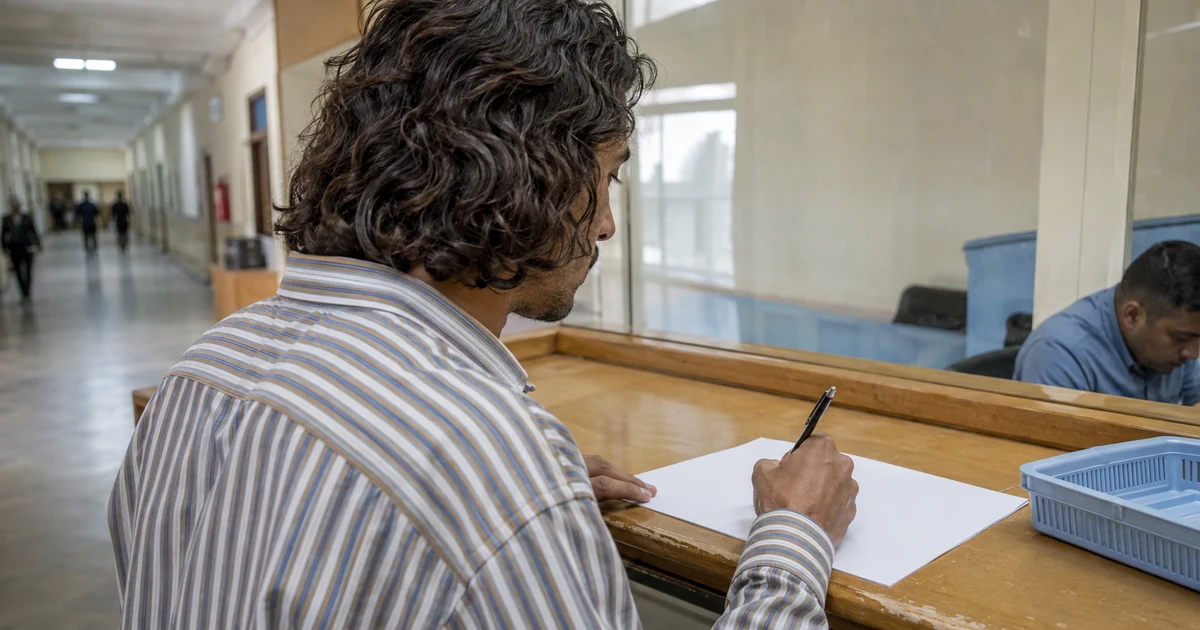
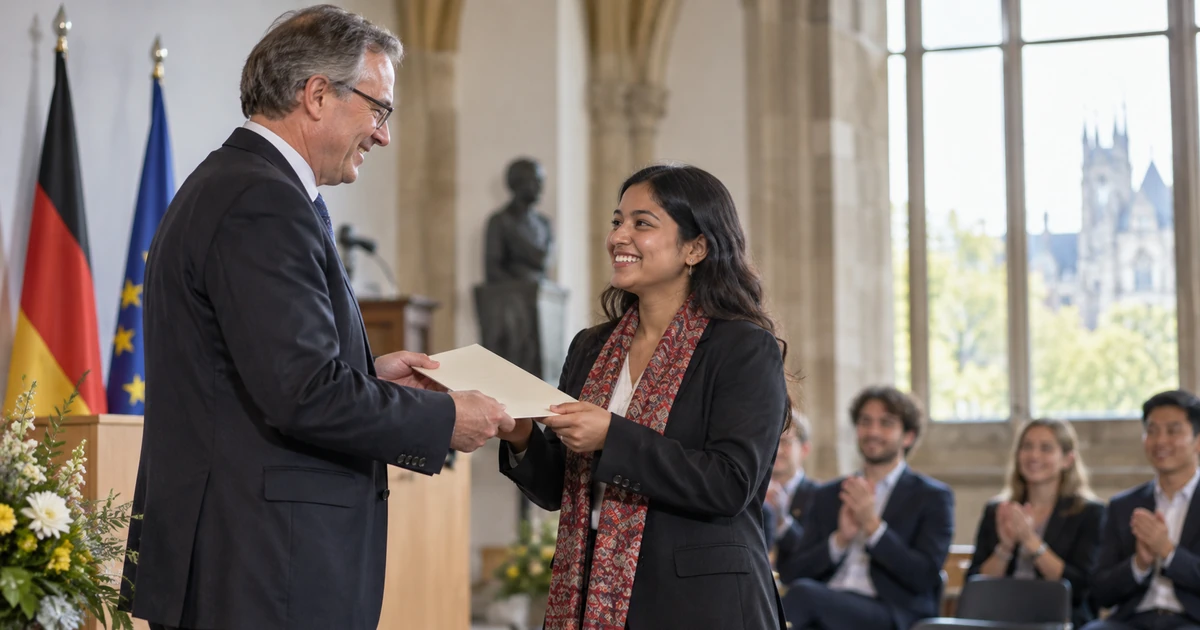
Most state universities in Germany charge no tuition, and that holds for Nepali citizens as much as for Germans. DAAD's page on study costs says bachelor's courses and most master's courses at state institutions come without tuition fees. Two words in that sentence do a lot of work, "most" and "state", so this guide goes through the exceptions one at a time.
Two of them matter for almost every Nepali applicant: the state of Baden-Wuerttemberg, which bills students from outside the EU, and the Technical University of Munich (TUM), which has charged non-EU students since 2024. Everything else is either small, like the semester contribution, or avoidable, like private universities and long-term fees.
What you pay even at a tuition-free university
Every student pays a semester contribution. It is an administrative charge, not tuition. DAAD gives a span of about EUR 70 up to EUR 430 a semester. The money funds the local student services organisation and the student government, and in many cities it includes a regional transport ticket.
Two real examples: TUM's contribution on its Munich, Garching and Weihenstephan campuses is EUR 97.00, while the University of Hohenheim in Stuttgart lists EUR 174.50. When a programme page says "no tuition fees" and still asks you for a couple of hundred euros, this is the charge it means.
Baden-Wuerttemberg: EUR 1,500 per semester
Since the winter semester 2017/18, state universities in Baden-Wuerttemberg have charged students from outside the EU and EEA EUR 1,500 per semester. The fee covers bachelor's, master's, Diplom and state examination programmes. Doctoral candidates are not charged.
The state is home to Heidelberg, Freiburg, Tuebingen, Stuttgart, Karlsruhe (KIT), Mannheim, Ulm, Konstanz and Hohenheim, plus a long list of universities of applied sciences, so you will run into the fee quickly when you shortlist. On a four-semester master's it adds up to EUR 6,000 before semester contributions. Converted at NPR 173.50 per euro, the NRB selling rate for 9 October 2026, one semester's fee comes to about NPR 2.6 lakh.
Hohenheim's fee page lists the groups that do not pay: EU and EEA citizens, exchange students, refugees, and students who earned their university entrance qualification in Germany. A Nepali applicant with a Class XII certificate from Nepal normally fits none of them. The state also has a EUR 650 fee for a second degree, but it is aimed at people who already hold a German degree, and Hohenheim says students paying the EUR 1,500 are generally not charged both.
TUM and the rest of Bavaria
Bavaria allows its universities to charge non-EU students and to set the amount themselves. Since the winter semester 2024/25, TUM charges non-EU bachelor's students usually EUR 2,000 or EUR 3,000 per semester, and master's students usually EUR 4,000 or EUR 6,000, depending on the programme.
If you are aiming for October 2027, read this part twice. Students who begin in the winter semester 2027/28 or later pay higher rates: EUR 2,300 or EUR 3,400 for a bachelor's and EUR 4,600 or EUR 6,800 for a master's, each per semester. TUM keeps the rate that applied when you started until you finish, so your enrolment year locks the price.
Some students pay nothing at TUM: those in its Studienkolleg, doctoral candidates, exchange students, and anyone who starts a TUM master's after a bachelor's from any German university. TUM also runs fee waivers for excellence or financial need, plus one-off grants of EUR 500 to EUR 1,800 per semester.
DAAD notes that other Bavarian universities may charge too. Check the fee line on each programme page in Wuerzburg, Erlangen or Regensburg instead of assuming Munich's rules apply there.
Other places tuition turns up
- Private universities set their own fees, and DAAD warns they can be substantial. A private university can be state-recognised and still charge, so "recognised" never means "free".
- Continuing education master's programmes, usually built for people with work experience, can carry fees even at state universities. If you are looking at an MBA, check how it is classified; our MBA guide for Nepali students covers this.
- Long-term study fees exist in some states. Lower Saxony charges EUR 500 per semester once your study credit is used up; at Goettingen that credit is the standard length of your programme plus six semesters.
No tuition does not mean a cheap year
Tuition is one line in a budget. The visa benchmark for living costs is EUR 992 a month, EUR 11,904 for a year, and it does not shrink because your university charges nothing. Our blocked account guide covers how the German Embassy in Kathmandu handles proof of that money, and the whole budget is laid out in the cost of studying in Germany.
There is a Nepal-specific wrinkle if you do pick a fee-charging university. Under Nepal Rastra Bank's foreign exchange rules, tuition goes through banking channels straight to the university's account abroad, while living money can be exchanged in your own name. That means two separate transfers with separate paperwork, explained in our NRB guide.
Quick reference
| Where you study | Tuition for a Nepali student | Notes |
|---|---|---|
| State universities in most other states | Generally none for a first bachelor's or a consecutive master's | Semester contribution of roughly EUR 70 to EUR 430 |
| State universities in Baden-Wuerttemberg | EUR 1,500 per semester | Doctoral candidates not charged |
| TUM, starting before winter 2027/28 | EUR 2,000 to EUR 6,000 per semester | Depends on programme and degree level |
| TUM, starting winter 2027/28 or later | EUR 2,300 to EUR 6,800 per semester | Rate fixed for the whole programme |
| Other Bavarian universities | Possible | Each university decides |
| Private universities | Set by the university | Can be substantial |
Search courses in our programme finder, then confirm the fee on the university's own page before you pay any application fee. To find out which tuition-free options suit your marks, book a free profile evaluation.
Frequently Asked Questions
You probably qualify for more than you think.
Students who get evaluated find programmes they had no idea existed — at universities that charge nothing. 2 minutes, no cost. The only downside is not checking.
Want our guides higher up in Google?
Mark GradGermany as a preferred source and Google gives our pages more room when you search about studying in Germany. Takes one tap, and you can undo it any time from the same screen.
Get new guides as soon as they go live
Add our feed to Feedly, Inoreader or any RSS reader and every new guide on studying in Germany shows up there by itself. No email, no sign-up.
Living this, or on your way to it? Tell your story.
If you are already in Germany and finding it hard, or still fighting to get here, other students need to hear it from someone real. Share your honest journey. We help shape it, and nothing goes live until you approve it.
Free German Quiz · No Login
Can you score 10/10 on today's German challenge?
10 new words every day · 4,500+ words from A1 to C1 · takes about a minute.