Germany vs USA for Indian Students 2026: Why the Tide Is Turning
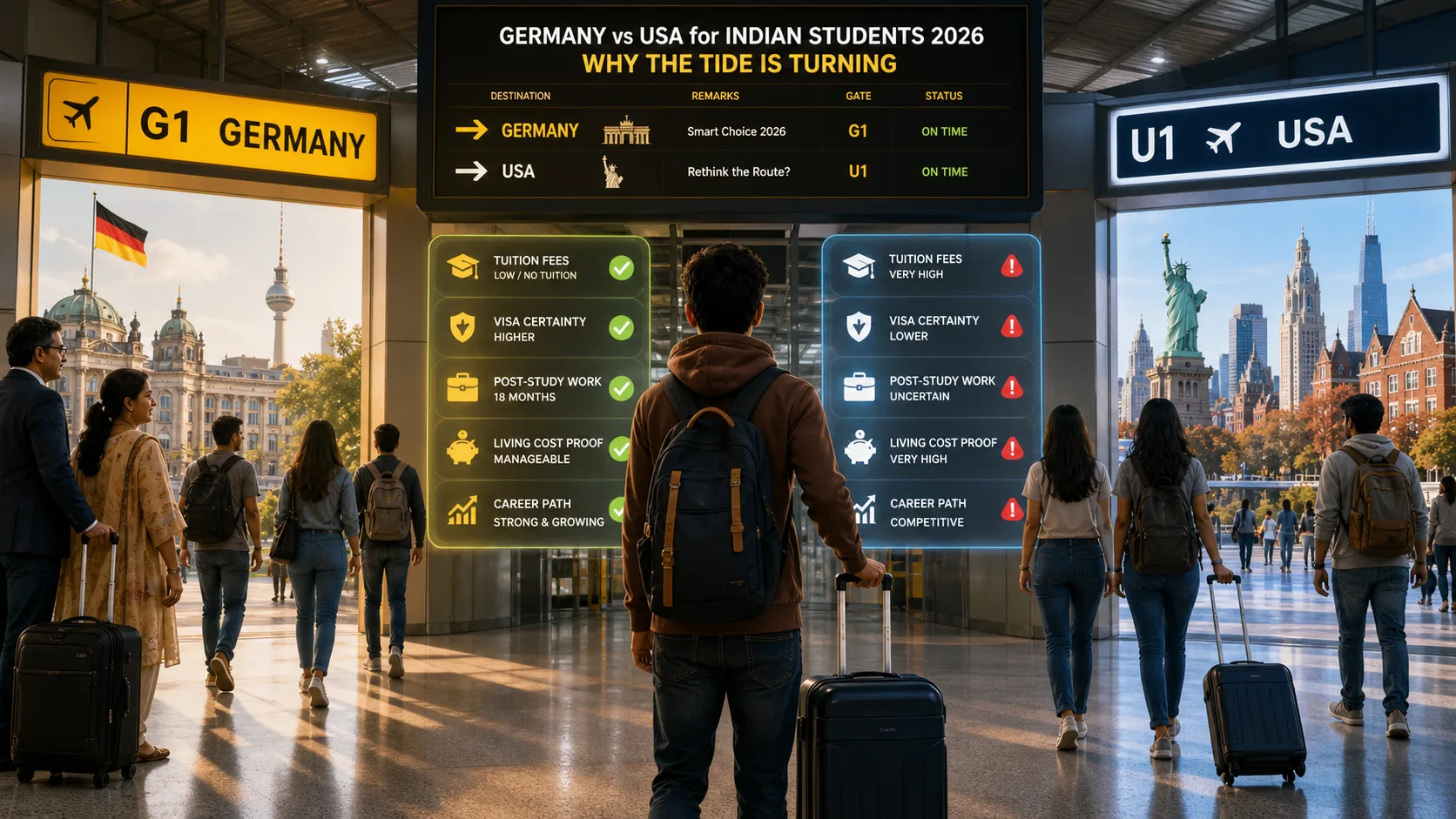
TL;DR: In 2026, Germany approves roughly 90 to 95% of complete student visa applications from Indian students, while US rejections have climbed sharply. Add zero tuition at German public universities versus high US fees, a €75 visa fee, and an 18-month post-study work window, and the cost-and-certainty maths increasingly favours Germany for many Indian students.
At a glance
| Factor | Germany | USA |
|---|---|---|
| Tuition (public) | Free at most public unis | High, varies widely |
| Visa fee | ~€75 | Higher, plus SEVIS |
| Approval climate (2026) | ~90 to 95% complete apps | Rejections rising |
| Post-study work | 18 months | OPT, with uncertainty |
| Living-cost proof | €11,904 blocked account | Varies by school |
For a decade, the US was the default dream for Indian students. In 2026 that default is being questioned, and the numbers explain why. This is not anti-US; it is a clear-eyed look at how the two stack up right now.
The visa-certainty gap
The headline shift is approval certainty. Germany approves around 90 to 95% of complete applications from Indian students, a pattern covered in detail in Germany Student Visa Success Rate 2026. US student visa rejections, by contrast, have risen sharply, injecting real uncertainty into plans that families invest years in. When you are committing time and money, predictability has genuine value.
The cost equation
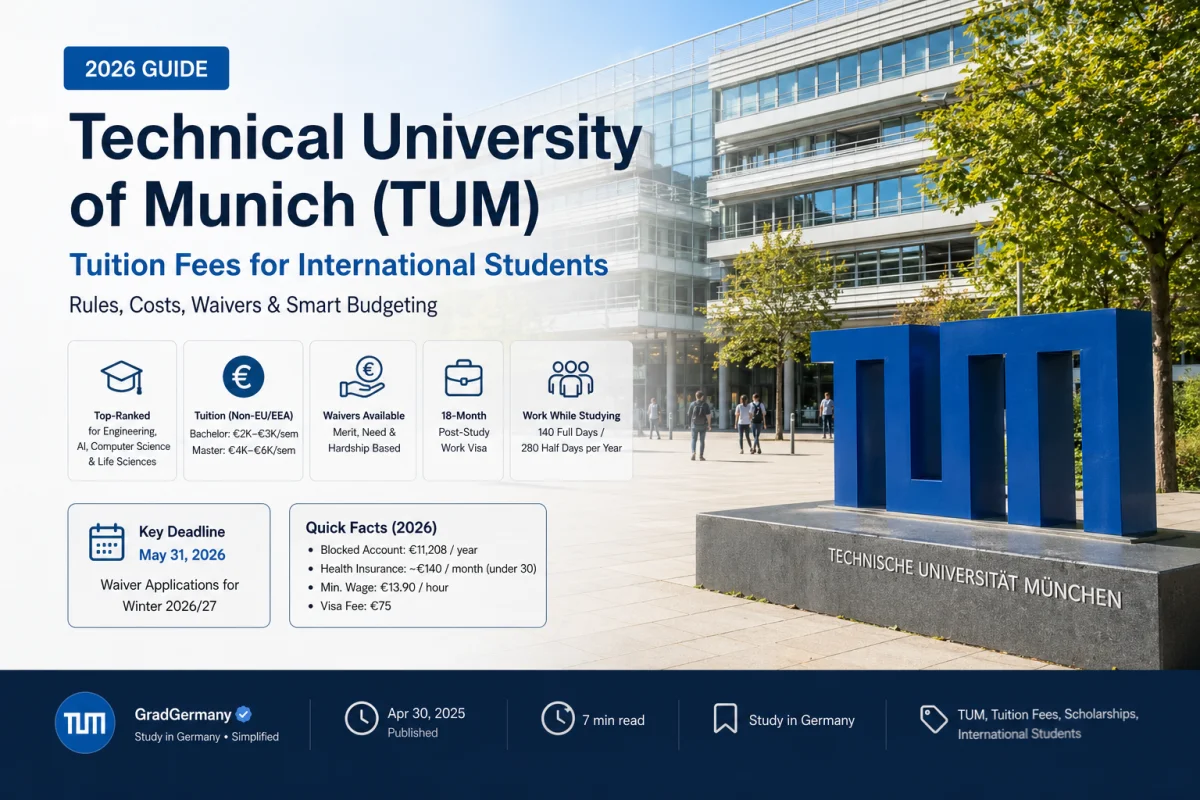
This is where Germany's case is strongest. Most German public universities charge no tuition, even for international students; you mainly fund living costs through a blocked account of €11,904 a year. The visa fee is about €75. US tuition, by contrast, can run to tens of thousands of dollars a year before living costs. Over a full degree, the difference is often six figures in rupees.
Post-study work and staying on
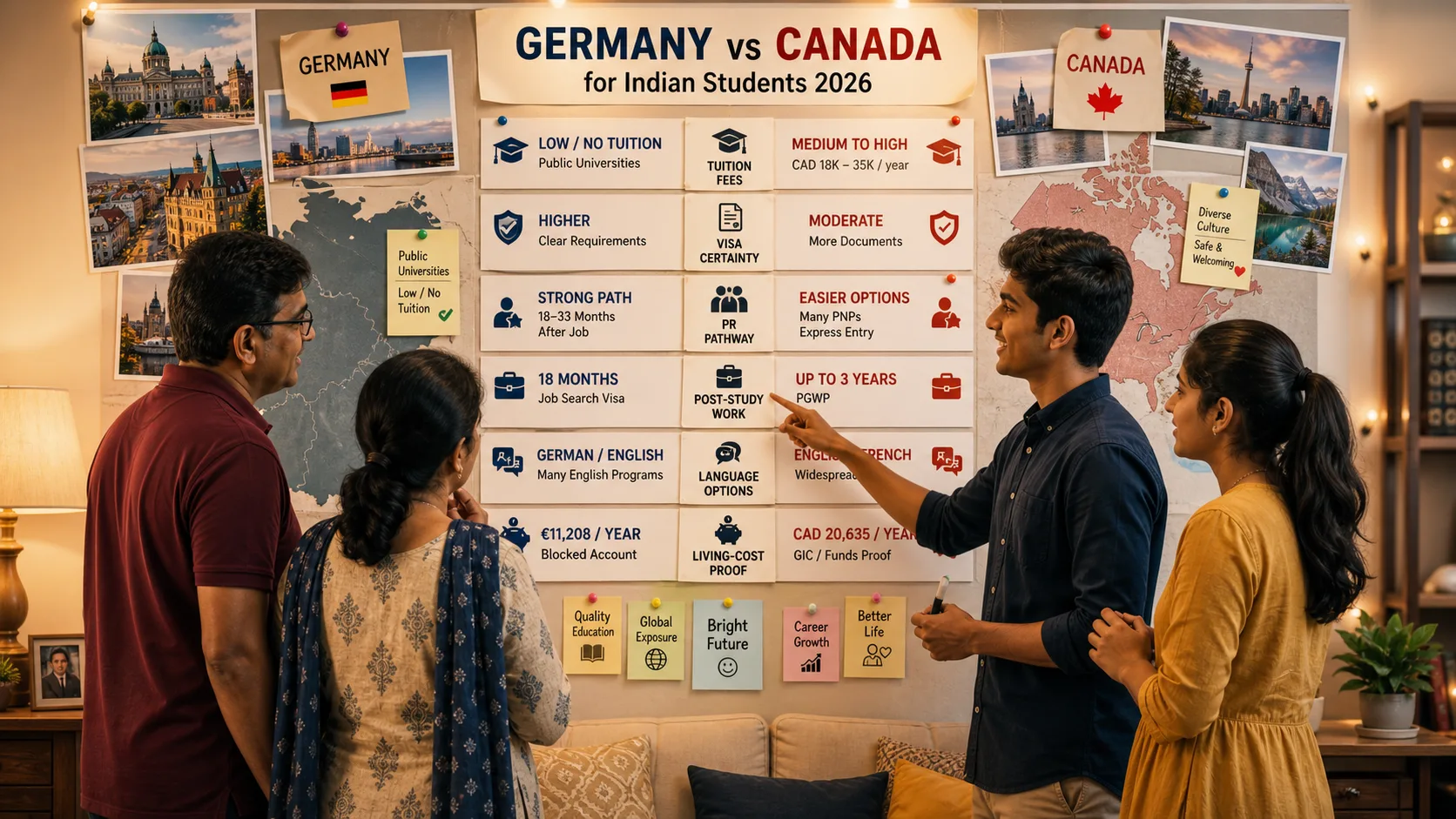
Both countries offer routes to work after graduation, but they feel different in 2026. Germany provides an 18-month post-study work visa and a clear path toward the EU Blue Card and permanent residence. The US route via OPT carries more uncertainty for many Indian graduates. For Germany's full settlement pipeline, see Volume 1's PR guide.
Where the USA still wins
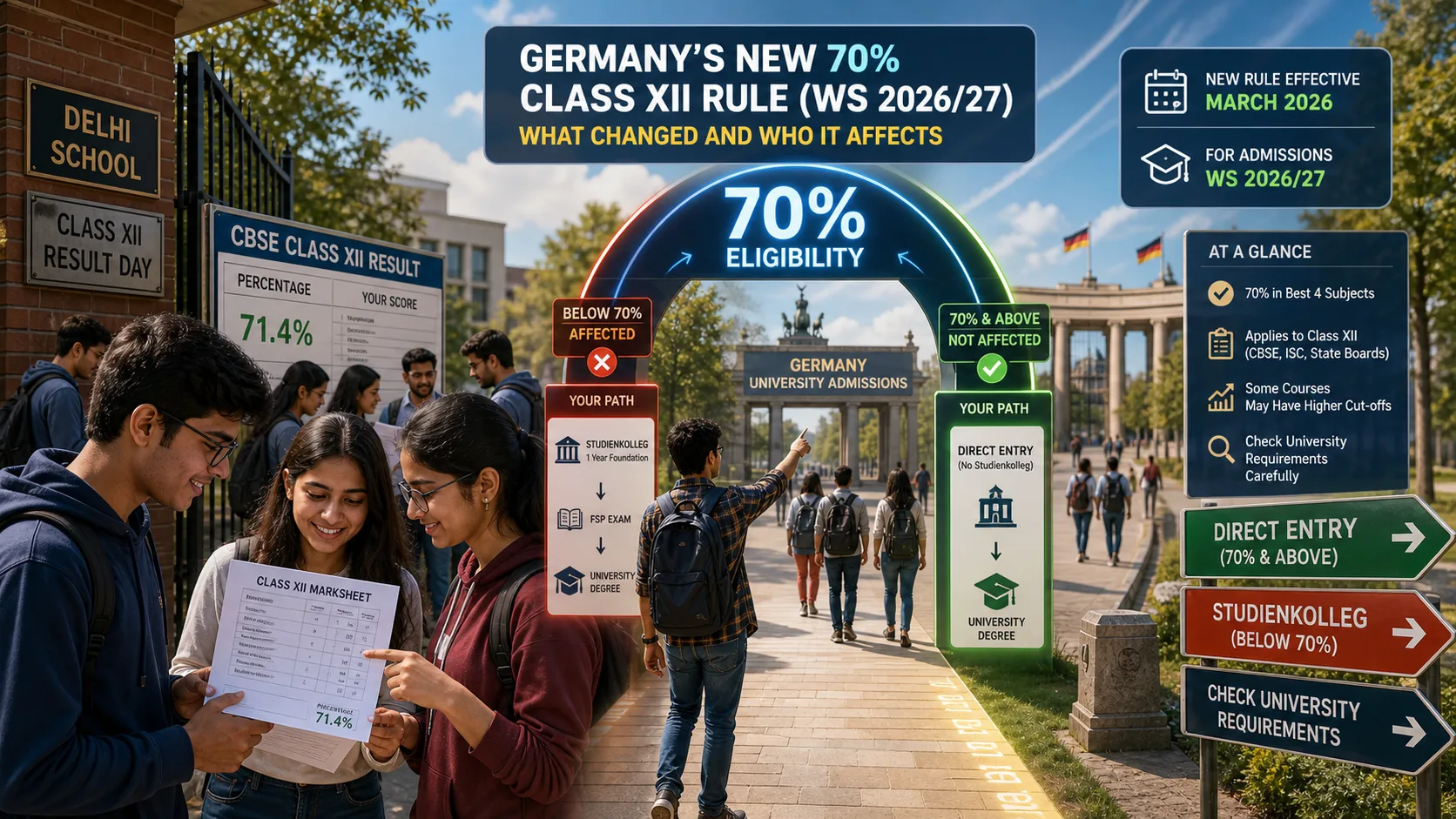
To be fair, the US retains real advantages: a deep concentration of top-ranked research universities, larger funding and assistantship opportunities in some fields, and an enormous tech and research job market. For specific research ambitions or fields where US institutions dominate, it can still be the right call. The point is not that Germany beats the US everywhere; it is that the gap has narrowed enough that Germany deserves serious consideration.
How to decide for your profile
Run the full calculation, not just tuition. Weigh total cost (tuition plus living plus fees), your field and where it is strongest, your funding situation, your risk tolerance on visas, and your long-term plans for work and residence. A student targeting tuition-free engineering with a view to settling in Europe leans Germany; a fully funded PhD applicant in a US-dominant field may lean US.
Decide with a clear, personalised comparison
The right answer depends on your field, budget, and goals, not on a generic ranking. GradGermany assesses your profile and tells you honestly whether Germany is the stronger bet for you.
Frequently Asked Questions
You probably qualify for more than you think.
Students who get evaluated find programmes they had no idea existed — at universities that charge nothing. 2 minutes, no cost. The only downside is not checking.
Want our guides higher up in Google?
Mark GradGermany as a preferred source and Google gives our pages more room when you search about studying in Germany. Takes one tap, and you can undo it any time from the same screen.
Living this, or on your way to it? Tell your story.
If you are already in Germany and finding it hard, or still fighting to get here, other students need to hear it from someone real. Share your honest journey. We help shape it, and nothing goes live until you approve it.
Free German Quiz · No Login
Can you score 10/10 on today's German challenge?
10 new words every day · 4,500+ words from A1 to C1 · takes about a minute.