India-Germany Student Mobility: Gratis Visas and What Was Agreed
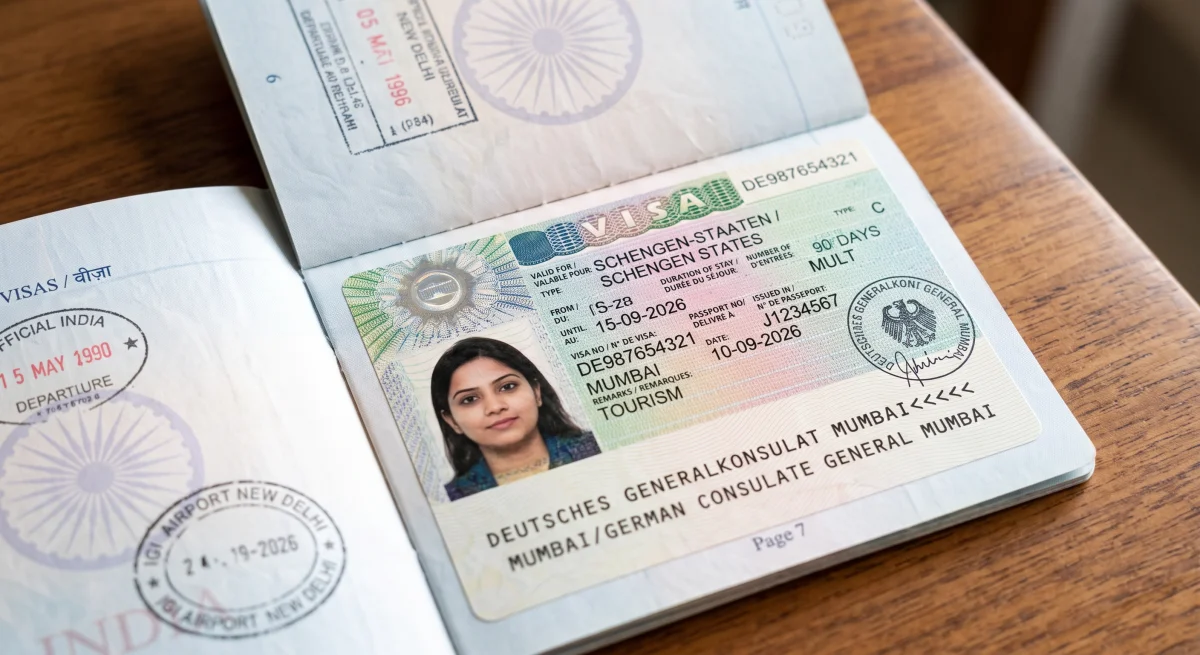
TL;DR: At the Delhi press conference on 3 September 2025, India and Germany agreed on gratis visas for short-term school and college visits, confirmed that Indian nationals are now the largest group of international students in Germany, and named the Skilled Labour Strategy as the framework for what comes after graduation. Germany also said it wants to grow its Indian partner schools from 58 to 1,000.
Most coverage of that day focused on trade and Ukraine. The part that matters if you are planning a degree in Germany was the seventh point in the External Affairs Minister's opening remarks, and it ran to five sentences. Short, but it contained the only concrete new commitment of the day for students, plus an official statement of where Indian applicants now sit in Germany's intake.
What point seven actually said
Dr S. Jaishankar listed education and mobility as the seventh of eight areas covered in the talks. He said progress had been good, stated that "the largest number of foreign students in Germany are now from India", described the German government's Skilled Labour Strategy as "a very good framework for mutual benefit", and then announced the agreement: "gratis Visas for short-term school and college visits to further promote student exchanges."
Gratis means free of charge. It applies to short-term school and college visits, which is the exchange-trip end of the system, not the degree route. If you are applying for a place at a German university, you are still filing a national visa and still paying for it. What changed is the cost of the short school or college exchange that often comes years earlier, and which is how a lot of students first see the country they later apply to.
The numbers the German side put on the record
Read Also: The Study Shift: What You’ll Pay in 2026
Foreign Minister Johann Wadephul supplied the figures in the same press conference, which is what makes this transcript worth reading rather than the summaries of it.
| What was stated | Figure |
|---|---|
| Indian students in Germany (WS 2024/25) | almost 60,000, the largest international group |
| Long-stay visas issued by the Bengaluru visa centre | 36,000 in the previous year |
| Share of all German student visas issued in India | almost one third, in 2024 |
| German partner schools in India | 58 now, target 1,000 |
Two figures for Indian enrolment circulate and they are a year apart, which is worth pinning down before you quote either. Wadephul's almost 60,000 was the winter semester 2024/25 count; DAAD put that year at just under 59,000. The current figure is 69,816 for winter semester 2025/26, a rise of 17.5 per cent, or roughly 10,400 more Indian students in twelve months. Indians are the largest international group on both counts, and we break the newer number down in what the 2025/26 enrolment record means for applicants.
The one-third figure deserves a second read. Almost a third of every German student visa issued anywhere in the world in 2024 was issued in India. That is not a country being courted at the margins. It explains why a foreign minister spends part of a press conference on visa processing throughput, and it is the reason the queue at your nearest centre is long.
Why Germany is saying this out loud
Wadephul was blunt about the motive: "Many of them choose to stay, because we urgently need highly skilled and highly qualified labor." He went on to say Indian skilled workers in Germany "earn above average income, and show above average integration", and called the pipeline "a genuine success story".
Read that as a hiring economy talking, not a courtesy. Germany is short of skilled workers, it has decided that Indian graduates are a reliable answer, and the policy machinery follows from there. That is worth knowing when you weigh Germany against destinations where the post-study route is being narrowed rather than widened. The route itself is unchanged: an 18-month job seeker visa after graduation, and the Opportunity Card for those coming without an offer in hand.
The language commitment is the part to act on
The most practical line in the whole transcript is Wadephul's admission that Germany has "to improve and enhance the language training on offer", followed by the partner-school target: 58 schools teaching German in India today, with an aim of 1,000.
Two things follow. First, if you are still at school, German at school is becoming easier to reach and it compounds: a student who starts at 15 arrives with B1 rather than scrambling for A1 in a pre-departure crash course. Second, and less comfortably, a stated intention to expand from 58 to 1,000 is an intention. It was not given a date at that press conference, and none was published with it. Plan your German around what exists near you now, not around the target.
That matters because language is where most timelines actually break. Plenty of master's programmes are taught fully in English, and you can study in Germany without German, but the part-time job, the flat viewing and the Auslaenderbehoerde appointment are all conducted in German.
What this does and does not change for your application
| If you are | What point seven means |
|---|---|
| On a school or college exchange | The visa fee for the short-term visit is waived. Confirm scope with your mission. |
| Applying for a degree | Nothing changes. Same national visa, same fee, same documents. |
| Still at school | More German teaching is coming, but the 1,000-school target has no date. |
| Graduating soon | The Skilled Labour Strategy is the named framework for staying on. |
The honest summary is that this was a direction-of-travel announcement with one concrete deliverable attached. It does not shorten your APS wait, lower your blocked account, or widen admission. Your timeline is still governed by the same three things it was before: the APS certificate, your university's own deadline, and the visa appointment queue.
What it does tell you is that the political weather is favourable and is being restated at ministerial level. That is not nothing when you are choosing where to spend two years and the price of a degree.
Sources
Planning a German degree around this? A free profile evaluation maps your APS, admission and visa dates onto a timeline that works backwards from the intake you want.
Frequently Asked Questions
You probably qualify for more than you think.
Students who get evaluated find programmes they had no idea existed — at universities that charge nothing. 2 minutes, no cost. The only downside is not checking.
Want our guides higher up in Google?
Mark GradGermany as a preferred source and Google gives our pages more room when you search about studying in Germany. Takes one tap, and you can undo it any time from the same screen.
Living this, or on your way to it? Tell your story.
If you are already in Germany and finding it hard, or still fighting to get here, other students need to hear it from someone real. Share your honest journey. We help shape it, and nothing goes live until you approve it.
Related Guides
Free German Quiz · No Login
Can you score 10/10 on today's German challenge?
10 new words every day · 4,500+ words from A1 to C1 · takes about a minute.
Related Articles


Study in Germany
Tourism & Event Management, B.A.
ISM International School of Management GmbH
Dortmund, Berlin, München, Stuttgart, Hamburg, Köln, Frankfurt
M.A.Raumstrategien, M.A.
weißensee kunsthochschule berlin
Berlin
B.Sc.Berufsbegleitender Bachelor Betriebswirtschaftslehre, B.Sc.
Technische Hochschule Brandenburg
Brandenburg an der Havel