Study in English, Learn German Later: Free German University Courses
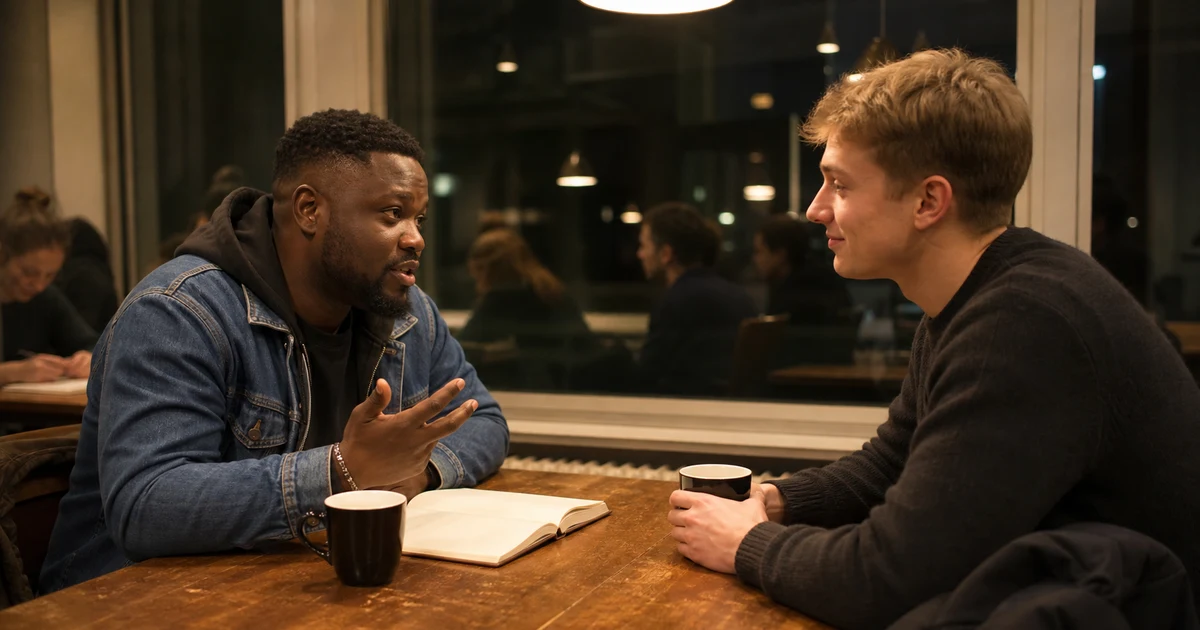
TL;DR: You can start a German university in English and learn German afterward. Campus language centres are the cheap route, though "free" varies: TU Berlin charges from 80 euros for a 6-ECTS semester course, FAU guarantees fee-paying internationals a German course at no cost, and tandems cost nothing anywhere. It is the normal road to B1-B2 for jobs.
No German, no problem at admission. No German at graduation is a different story, because that is when the job market starts asking. Which is why almost every international student here ends up doing the same thing: enrol in English, learn German alongside the degree, and arrive at the job hunt with something on your CV. For the entry requirements themselves, see how much German you need to study in Germany.
Starting in English is the normal route
Your lectures, your exams and your thesis are in English, so nothing in the degree waits for your German to catch up. That is what makes the parallel approach work: the language is a side project you can be bad at for a year without consequences. The English-taught programmes available in Germany shows how much choice you have.
The language centre is the cheapest thing on campus, but check the fee
Almost every German university runs a language centre teaching German from A1 upward, and the price is set locally rather than nationally. Two real examples show the range.
TU Berlin's Modern Language Center runs semester-long German courses at every level from A1 to C1. Each is worth 6 ECTS, needs 80 per cent attendance to sit the exam, and ends in a portfolio assessment split half oral and half written. The published fee is 80/160/160 euros depending on which category of participant you fall into, from winter semester 25/26. That is not free, but for a graded, credit-bearing course over a whole semester it is a fraction of what a private school charges.
At the other end, FAU in Erlangen guarantees a place in a German course free of charge to the international students it bills tuition to. Where a university charges you a fee, look for what it hands back before you sign up for a paid course elsewhere.
Registration is the real bottleneck, not the money
Language-centre places go first come, first served, and the popular levels empty in hours. TU Berlin's own FAQ has an entry titled, roughly, "registration has hardly started and all places are already taken", and the answer is to be at the keyboard when it opens. Its winter semester registration opened at 9 a.m. on 12 October, and the summer round on 7 April.
Four rules that shape what you can actually book. If you have prior knowledge of German, a placement test is compulsory before you register, and it can only be taken once per semester. If your placement result sits two or more levels away from the course's entry level, you cannot take that course. Groups usually run between 15 and 22 students, which is why they fill. And you may enrol in at most two language courses per semester, in two different languages. Put the registration date in your calendar the week you arrive.
The pre-semester intensive is a different product with a different price
Several universities run an intensive course in the weeks before term. TU Berlin's is 80 lessons across 20 days, four lessons a day, covering A1 to B2.2 with no C1 option, in classes of about 15. It carries 6 ECTS and a certificate if you attend at least 80 per cent, and it costs 400 euros, with registration running through July for a September start. Priority goes to students already admitted to the university, so it is not a way in for outsiders.
Whether that is worth it depends on your start date. Four weeks of daily German before your first lecture is the fastest jump you will get, and it is also four weeks you might spend finding a flat.
What genuinely costs nothing
The tandem is the free option that actually makes you speak. TU Berlin runs its tandem scheme through the ENHANCE university network, which links it with RWTH Aachen, Warsaw University of Technology, the Universitat Politecnica de Valencia, Politecnico di Milano, Chalmers in Gothenburg and NTNU in Trondheim, and it is free of charge for TU members. Most other universities run something equivalent through their language centre or student union.
Add Deutsche Welle's free course material and the Goethe self-study exercises, and between a campus course, a weekly tandem partner and daily reading you can reach B1 without paying for a private school at all.
| Option | Cost | Best for |
|---|---|---|
| Semester course at the language centre | Free to about 160 euros, plus ECTS | Structured A1-C1 |
| Pre-semester intensive | 400 euros at TU Berlin | A fast start before term |
| Online platforms | Free | Daily practice |
| Tandem | Free | Speaking |
| Goethe/private | Paid | Formal certificate |
How much German you need, by purpose
For an English-taught degree, none at entry. For daily life, A2 to B1 is where things stop being exhausting: the letters from the immigration office, the flat viewings, the doctor. For work, B1 to B2 is the level that widens the list of employers, especially outside the big international firms. What no German really costs you in the job market spells out the difference.
One thing worth knowing before you assume English is enough on the academic side too: even at universities with large English-taught catalogues, some programmes ask for German at application. FU Berlin's Interdisciplinary Latin American Studies master's wants B2, and its Biology and Biodiversity master's ask for A1, in programmes otherwise taught in English. Read the language line on the programme page, not the language of instruction.
Start in semester one, not in your final year
German rewards consistency more than intensity, and your first semester is when you have the most spare energy and the fewest commitments. Students who postpone the language until the last year almost always stall, because thesis deadlines, exams and applications leave nothing behind. Book it like a course you are graded on, and at a language centre that is literal: the ECTS land on your transcript. A fixed weekly slot from week one, a couple of hours, plus the semester breaks when the intensive courses run. Two years of that puts B1 comfortably in reach by graduation.
What it costs
Little enough to plan around. A semester course at a campus language centre runs from nothing to a couple of hundred euros depending on the university and your status, and the rest of your language learning sits inside the living budget you already proved with the 11,904 euros in your blocked account. See how the blocked account works.
A part-time job is language practice you get paid for
A Werkstudent role or a service job puts you in German conversation several times a week, which no app replicates. Plenty of students take one partly for that reason, and the format allows up to 20 hours a week during the lecture period. The hour limits and the rules are in the guide to working while you study.
Sources
- TU Berlin ZEMS: German courses in the semester
- TU Berlin ZEMS: pre-semester intensive course
- TU Berlin ZEMS: language tandems
- FAU: free German course for fee-paying students
- FU Berlin: German language requirements
Want German built into your plan? A free profile evaluation matches you with universities that have strong language support.
Frequently Asked Questions
You probably qualify for more than you think.
Students who get evaluated find programmes they had no idea existed — at universities that charge nothing. 2 minutes, no cost. The only downside is not checking.
Want our guides higher up in Google?
Mark GradGermany as a preferred source and Google gives our pages more room when you search about studying in Germany. Takes one tap, and you can undo it any time from the same screen.
Living this, or on your way to it? Tell your story.
If you are already in Germany and finding it hard, or still fighting to get here, other students need to hear it from someone real. Share your honest journey. We help shape it, and nothing goes live until you approve it.
Free German Quiz · No Login
Can you score 10/10 on today's German challenge?
10 new words every day · 4,500+ words from A1 to C1 · takes about a minute.
Related Articles

Study in Germany
Medieninformatik, M.Sc.
Hochschule Furtwangen - Informatik, Technik, Wirtschaft, Medien, Gesundheit
Furtwangen
M.Sc.Digital Business Management, M.Sc.
Hochschule für Angewandte Wissenschaften Hof
Hof
B.Ed.Lehramtsbezogener Bachelorstudiengang Grundschule, B.Ed.
Universität Koblenz-Landau (jetzt: Universität Koblenz/RPTU)
Koblenz