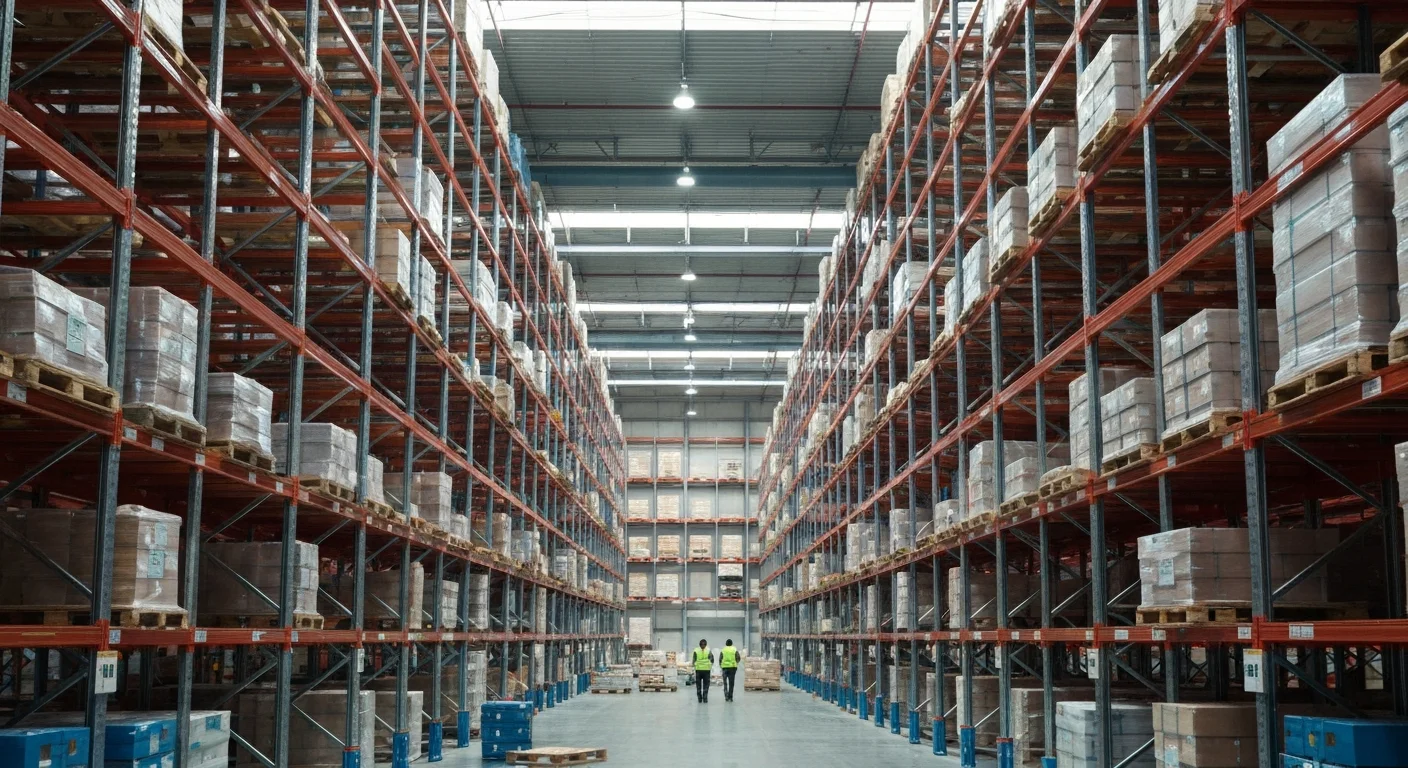
Production & Manufacturing in Germany
"Made in Germany" is the global hallmark of manufacturing excellence. Study production engineering at leading universities — access Industry 4.0 smart factories, digital twins, and additive manufacturing. Zero tuition, 18-month post-study work visa.
Leading Universities in Germany
World-class education with strong industry ties and international recognition.
Technische Hochschule Deggendorf
Deggendorf, Bayern
Smart factory labs & applied production engineering.
RWTH Aachen
Aachen, Nordrhein-Westfalen
WZL & Fraunhofer IPT - production technology leaders.
Technische Universität München
München, Bayern
iwb institute - digital manufacturing research.
Universität Stuttgart
Stuttgart, Baden-Württemberg
ISW - manufacturing automation and Industry 4.0.
Gottfried Wilhelm Leibniz Universität Hannover
Hannover, Niedersachsen
Production engineering & additive manufacturing.
Technische Universität Dresden
Dresden, Sachsen
Smart production systems research.
Showing 481–504 of 694 programmes
Wirtschaftsingenieurwesen Logistik, B.Sc.
SRH University of Applied Sciences Heidelberg · Münster, Hamm +1
Wirtschaftsingenieurwesen Management, B.Eng.
IU Internationale Hochschule · Dortmund, Berlin +6
Wirtschaftsingenieurwesen Maritime Wissenschaften, B.Sc.
Hochschule Emden/Leer · Leer
Wirtschaftsingenieurwesen Maschinenbau im Praxisverbund, B.Eng.
Hochschule Braunschweig/Wolfenbüttel, Ostfalia Hochschule für angewandte Wissenschaften · Wolfenbüttel
Wirtschaftsingenieurwesen Maschinenbau, B.Eng.
Hochschule Düsseldorf · Düsseldorf
Wirtschaftsingenieurwesen Maschinenbau, B.Eng.
Hochschule Braunschweig/Wolfenbüttel, Ostfalia Hochschule für angewandte Wissenschaften · Wolfenbüttel
Wirtschaftsingenieurwesen Maschinenbau, B.Eng.
IU Internationale Hochschule · Dortmund, Berlin +15
Wirtschaftsingenieurwesen Maschinenbau, B.Eng.
Wilhelm Büchner Hochschule · Darmstadt
Wirtschaftsingenieurwesen Maschinenbau, B.Eng.
Hochschule Konstanz Technik, Wirtschaft und Gestaltung · Konstanz
Wirtschaftsingenieurwesen Maschinenbau, B.Eng.
Hochschule für Technik, Wirtschaft und Kultur Leipzig · Leipzig
Wirtschaftsingenieurwesen Maschinenbau, B.Eng.
IU Internationale Hochschule · Bad Reichenhall
Wirtschaftsingenieurwesen Maschinenbau, B.Sc.
Hochschule Bochum · Bochum
Wirtschaftsingenieurwesen Maschinenbau/Energietechnik, M.Sc.
Hochschule für Technik, Wirtschaft und Kultur Leipzig · Leipzig
Wirtschaftsingenieurwesen Materialwissenschaft, B.Sc.
Christian-Albrechts-Universität zu Kiel · Kiel
Wirtschaftsingenieurwesen Medien, B.Sc.
Hochschule der Medien Stuttgart · Stuttgart
Wirtschaftsingenieurwesen Medizintechnik, B.Eng.
IU Internationale Hochschule · Bad Reichenhall
Wirtschaftsingenieurwesen mit Schwerpunkt Energie, B.Eng.
Hochschule Bremen · Bremen
Wirtschaftsingenieurwesen mit Schwerpunkt Nachhaltigkeit, M.Eng.
DIPLOMA Hochschule - Private Fachhochschule Nordhessen · Bad Sooden-Allendorf
Wirtschaftsingenieurwesen Online, B.Eng.
Jade Hochschule - Wilhelmshaven/Oldenburg/Elsfleth · Wilhelmshaven
Wirtschaftsingenieurwesen online, B.Eng.
Berliner Hochschule für Technik · Berlin
Apply by 15 DecWirtschaftsingenieurwesen online, B.Eng.
Frankfurt University of Applied Sciences · Frankfurt am Main
Apply by 30 Sep · 14d leftWirtschaftsingenieurwesen Produktion und Fertigung, B.Eng.
Hochschule Fresenius · Idstein
Wirtschaftsingenieurwesen Produktion, B.Eng.
Wilhelm Büchner Hochschule · Darmstadt
Wirtschaftsingenieurwesen Produktionstechnik, B.Sc.
Universität Bremen · Bremen
Check My Fit
3 quick questions — every result gets a fit tag based on your budget and languages. Stored only on this device.
Tags are an indication based on tuition and teaching language — for a real assessment, get a free profile evaluation.
What You'll Study — Core Subjects & Specializations
Production & Manufacturing Engineering sits at the intersection of mechanical engineering, materials science, and digital systems. A German Master's typically opens with a shared foundation before you branch into a specialization track. The exact module list varies by university, so always check the official programme page — but most curricula share a common core.
Typical core subjects
- Manufacturing & production processes (machining, forming, casting, joining)
- Production systems, planning & factory operations management
- Materials science, metrology & quality engineering
- CAD/CAM, simulation & the digital twin
- Automation, robotics & control engineering
- Lean production, industrial engineering & cost management
Common specialization tracks
- Smart / digital manufacturing — Industry 4.0, IoT, data-driven production
- Additive manufacturing — 3D printing & new production methods
- Automation & robotics — mechatronics for the production line
- Production management — supply chain, logistics & operations
- Quality engineering — metrology, reliability & process control
- Sustainable production — energy-efficient & circular manufacturing
Most programmes finish with an industry project or a Master's thesis, often carried out in cooperation with a manufacturer or a Fraunhofer research institute — a strong route into your first job. Not sure which track fits your background? A free profile evaluation can help you shortlist.
Entry Requirements for International Students
Requirements differ by university and programme, so treat the points below as a general guide and confirm each detail on the official admissions page. For most international applicants the picture looks like this.
Academic background
A Master's usually requires a relevant Bachelor's degree — typically in mechanical, production, industrial, or a closely related engineering field — with a solid grade average. The qualification generally needs to be recognised for German higher-education access; many German universities check this through the anabin database, and applications often run via uni-assist. A GRE is usually not required at German public universities, though a few programmes may ask for it.
Language requirements
For English-taught Master's programmes you'll generally need to prove English proficiency — commonly an IELTS score around 6.5 or an equivalent TOEFL result, with exact minimums set per programme. German-taught programmes typically require proof such as TestDaF or DSH. Even on an English track, learning German strongly improves your day-to-day life and job prospects in the manufacturing sector.
APS certificate
Applicants from India, China, and Vietnam generally need an APS certificate (Akademische Prüfstelle) verifying their academic documents. It's a standard, one-off step — once issued it can be reused across applications — but it takes time, so start early. The German student visa for these countries normally cannot be issued without it.
Other documents
Expect to provide transcripts, your degree certificate, a CV, a statement of purpose, and sometimes letters of recommendation. Some programmes value relevant internships or industry experience. Intakes and deadlines vary — many Master's programmes have a main winter intake — so check each university's calendar and apply well ahead.
Careers & Salaries in Germany
As Europe's largest manufacturing economy, Germany offers production engineers a deep and stable job market across automotive, industrial machinery, electronics, and process industries. Employers range from global names like Volkswagen, BMW, Siemens, and Bosch to the country's many specialised Mittelstand manufacturers.
Typical roles
- Production / manufacturing engineer
- Process & industrialisation engineer
- Quality & reliability engineer
- Automation / robotics engineer
- Production planner & operations / plant manager
- Industrial / continuous-improvement (lean) engineer
Approximate salary ranges
Figures are typical, approximate, and vary widely by employer, region, and experience — always treat them as a rough guide rather than a promise.
- Entry-level roles typically pay around €48,000–€58,000 per year
- Mid-career engineers often earn roughly €60,000–€80,000
- Senior / management roles can go well beyond €90,000
Staying to work after graduation
After completing your degree, international graduates can generally apply for an 18-month post-study job-seeker residence permit to look for work related to their qualification. Once you secure a qualifying role, you can usually move on to a work permit or an EU Blue Card, which over time can open a path toward permanent residence. Manufacturing is among Germany's recognised shortage fields, which can make the transition smoother for engineering graduates.
Want help mapping programmes to your career goals? Start with a free profile evaluation, or explore more options from the GradGermany homepage.
Frequently Asked Questions About Production & Manufacturing Engineering in Germany
Germany is the largest manufacturer in Europe and the fourth-largest globally, with a manufacturing sector that contributes over 20% of GDP — far higher than any other major Western economy. The country is the birthplace of Industry 4.0, the concept of integrating IoT, AI, robotics, and cyber-physical systems into factory production. Home to world-leading manufacturers like Volkswagen, BMW, Siemens, Bosch, BASF, thyssenkrupp, and Trumpf, Germany offers unmatched exposure to advanced production processes, precision engineering, and smart factory technology. Programmes at RWTH Aachen, TU Munich, and the University of Stuttgart consistently rank among the world's best. With zero tuition fees at public universities, starting salaries of €49,000–€54,000, and an 18-month post-study work visa, Germany is the premier destination for production engineers globally.
Yes. The vast majority of public universities charge no tuition fees for Production & Manufacturing Engineering programmes, even for international students. Students pay only a nominal semester contribution of approximately €150–€350, which typically includes a public transport pass valid across the state. This applies at institutions like RWTH Aachen, TU Munich, University of Stuttgart, TU Darmstadt, and Leibniz Universität Hannover. The sole exception is Baden-Württemberg, where non-EU students pay €1,500 per semester — still far below comparable programmes in the US ($30,000–$60,000 per year) or UK (£20,000+). For your student visa, you will need to open a blocked account with €11,904 to cover annual living expenses. This makes world-class production engineering education dramatically more affordable than comparable programmes globally.
Yes, several German universities offer Production Engineering and Manufacturing Technology Master's programmes taught entirely in English, with specialisations in Smart Manufacturing, Production Systems Engineering, Additive Manufacturing, and Quality Management. English-taught options are available at RWTH Aachen, TU Munich, University of Stuttgart, and Leibniz Universität Hannover. Application deadlines typically fall in July for the winter semester and January for the summer intake. English proficiency requirements include IELTS 6.5+ or TOEFL 90+. Some programmes are bilingual (English and German). Indian applicants should prepare their APS certificate early. Learning German alongside your studies enhances career prospects at manufacturers like Volkswagen, BMW, Siemens, and Bosch, where German is the primary working language.
Industry 4.0 (Industrie 4.0) is a German-coined concept describing the fourth industrial revolution — the integration of smart sensors, IoT, digital twins, AI-driven quality control, collaborative robots (cobots), and cloud-connected production lines into manufacturing. Germany is where this revolution started, and its universities are at the forefront of related research. RWTH Aachen operates the Aachen Center for Integrative Lightweight Production, TU Munich hosts the iwb Application Centre for smart manufacturing, and University of Stuttgart runs the Arena2036 research campus with Daimler and Bosch. Students gain hands-on experience with pilot smart factories, Fraunhofer institute partnerships (particularly Fraunhofer IPT and IPA), and industry-funded research projects. Graduates with Industry 4.0 expertise command starting salaries of €49,000–€54,000, among the highest for production engineers in Europe.
Career prospects are excellent. Germany faces a significant shortage of qualified production engineers across the automotive, aerospace, chemical, pharmaceutical, and machinery sectors. Starting salaries average €49,000–€54,000 per year, with experienced professionals earning €65,000–€90,000 or more. Top employers include Volkswagen (Wolfsburg), BMW (Munich), Bosch (Stuttgart), Siemens (Munich), BASF (Ludwigshafen), Trumpf (Ditzingen), DMG Mori (Bielefeld), and Schaeffler (Herzogenaurach). Engineers in southern Germany (Bavaria, Baden-Württemberg) typically earn 10–15% above the national average due to dense manufacturing clusters. Germany's 18-month post-study job seeker visa provides ample time to secure employment and transition to an EU Blue Card, with a clear pathway to permanent residency after 21–33 months.
Admission typically requires a Bachelor's degree in Production Engineering, Manufacturing Engineering, Mechanical Engineering, Industrial Engineering, or a closely related discipline with a minimum GPA equivalent to the German grade of 2.5 or better. English proficiency must be at B2/C1 level (IELTS 6.5+ or TOEFL 90+), and strong academic transcripts are expected. Some programmes may require coursework in manufacturing processes, materials science, or production planning. GRE scores are generally not required by German universities, removing a significant barrier compared to US admissions. Application deadlines are typically July 15 for the winter semester and January 15 for the summer intake. Most international applicants apply through the uni-assist portal (€75 fee). Indian students must also obtain an APS certificate and open a blocked account with €11,904 for the visa.
The leading institutions include RWTH Aachen (home to the renowned WZL machine tool laboratory, the Fraunhofer IPT, and the Aachen Center for Integrative Lightweight Production), TU Munich (excellence in production systems, additive manufacturing, and the iwb Application Centre), University of Stuttgart (leading research in manufacturing technology and the Arena2036 research campus), TU Darmstadt (pioneering work in digital manufacturing and process optimisation), TU Dresden (strong focus on lightweight construction and smart systems), and Leibniz Universität Hannover (home to the IFW Institute of Production Engineering and Machine Tools, and co-host of the annual Hannover Messe — the world's largest industrial trade fair). All maintain deep partnerships with Fraunhofer institutes and industry leaders like Siemens, Bosch, and Trumpf.
Explore More Programmes in Germany
Ready to Study Production & Manufacturing
in Germany?
Get a free profile evaluation from our experts. We will assess your academic background, recommend the best Production & Manufacturing Engineering programmes for your profile, and guide you through the entire application process.