Renewable Energy
Programmes in Germany
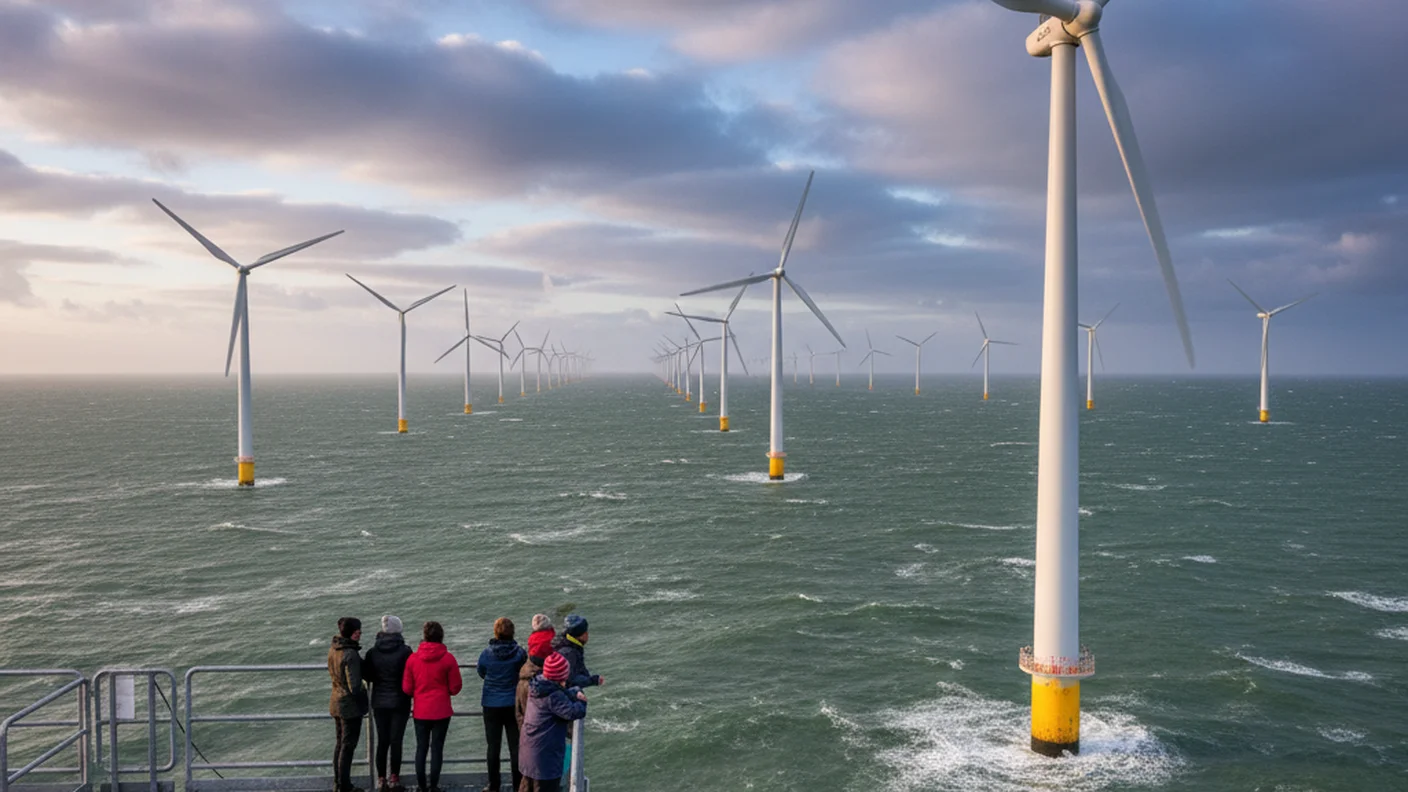
Germany's Energiewende is the world's most ambitious energy transition. Study renewable energy at universities driving solar, wind, and hydrogen innovation — with free tuition at public universities.
Energy Programmes
Tuition at Public Universities
Renewable Grid
Energiewende Pioneer
Showing 97–120 of 167 programmes
Nachhaltige Ingenieurwissenschaft, B.Eng.
Hochschule Bonn-Rhein-Sieg, University of Applied Sciences · Sankt Augustin
Nachhaltige Ingenieurwissenschaft, B.Sc.
Gottfried Wilhelm Leibniz Universität Hannover · Hannover
Nachhaltige Ingenieurwissenschaft, M.Eng.
Hochschule Bonn-Rhein-Sieg, University of Applied Sciences · Sankt Augustin
Nachhaltige Ingenieurwissenschaft, M.Sc.
Gottfried Wilhelm Leibniz Universität Hannover · Hannover
Nachhaltige Ingenieurwissenschaften: Regenerative Energie, Klima, Gebäudetechnik, B.Sc.
Hochschule für Technik und Wirtschaft Dresden · Dresden
Apply by 15 Nov · 60d leftNachhaltiges Energie- und Immobilienmanagement (vormals: Energiemanagement Gebäude und Quartiere), B.Sc.
EBZ Business School - University of Applied Sciences · Bochum
Nachhaltiges Energie-Design, M.Eng.
Hochschule Hannover · Hannover
Nachwachsende Rohstoffe und Bioenergie, B.Sc.
Universität Hohenheim · Stuttgart-Hohenheim
Apply by 30 Sep · 14d leftNachwachsende Rohstoffe und erneuerbare Energien, M.Sc.
Brandenburgische Technische Universität Cottbus-Senftenberg · Cottbus
Offshore Wind Energy, MBA
Hochschule Bremerhaven · Bremerhaven
Physik grüner Technologien, B.Sc.
Philipps-Universität Marburg · Marburg
Physik grüner Technologien, M.Sc.
Philipps-Universität Marburg · Marburg
Physikalische Technik, B.Eng.
Westsächsische Hochschule Zwickau · Zwickau
Apply by 30 NovPower Engineering, M.Sc.
Brandenburgische Technische Universität Cottbus-Senftenberg · Cottbus
Regenerative Energien Online, B.Eng.
Hochschule Emden/Leer · Emden
Apply by 30 Sep · 14d leftRegenerative Energien, B.Sc.
Hochschule für Technik und Wirtschaft Berlin · Berlin
Apply by 1 DecRegenerative Energien, B.Sc.
Hochschule Stralsund · Stralsund
Regenerative Energien, M.Sc.
Hochschule für Technik und Wirtschaft Berlin · Berlin
Apply by 1 DecRegenerative Energiesysteme und Energiemanagement - Elektro- und Informationstechnik, B.Sc.
HAW Hamburg · Hamburg
Regenerative Energiesysteme, B.Sc.
Hochschule Bochum · Bochum
Regenerative Energiesysteme, Diplom
Technische Universität Dresden · Dresden
Regenerative Energiesysteme, M.Sc.
Hochschule Bochum · Bochum
Apply by 30 Sep · 14d leftRegenerative Energietechnik und Energieeffizienz, B.Eng.
Ostbayerische Technische Hochschule Regensburg · Regensburg
Regenerative Energietechnik, B.Eng.
Hochschule Nordhausen · Nordhausen
Check My Fit
3 quick questions — every result gets a fit tag based on your budget and languages. Stored only on this device.
Tags are an indication based on tuition and teaching language — for a real assessment, get a free profile evaluation.
What You'll Study & Specialisation Tracks
A renewable energy master's in Germany usually blends engineering fundamentals with energy systems and policy. Most programmes are a mix of taught modules, lab and project work, and a research thesis — typically spread over four semesters of full-time study.
Core foundations
Common building blocks across most programmes include thermodynamics and heat transfer, electrical engineering and power electronics, fluid mechanics, energy economics, and modelling or simulation of energy systems. Many courses also cover project management and the regulatory framework behind the German Energiewende.
Specialisation tracks
As you progress, you generally choose a focus area such as solar photovoltaics, onshore and offshore wind, green hydrogen and fuel cells, energy storage, smart grids and power systems, sustainable buildings, or energy economics and policy. The exact tracks vary by university, so it is worth comparing module catalogues before you apply.
Not sure which specialisation matches your background? A free profile evaluation can map your degree and interests to the right programmes.
Entry Requirements for Renewable Energy Programmes
Requirements differ by university and programme, but most renewable energy master's courses look for a similar profile. Always confirm the details on the official programme page before applying.
Academic background
A recognised bachelor's degree in a relevant field — typically mechanical, electrical, energy, environmental or process engineering, or a related natural science. Your university should generally hold an H+ recognition status on the anabin database for direct master's eligibility.
Language proof
Most renewable energy master's programmes are English-taught and generally ask for IELTS around 6.5 or an equivalent TOEFL score. German-taught programmes typically require proof such as TestDaF or DSH. A basic level of German is still useful for daily life and internships.
Application steps
Applicants from India, China and Vietnam normally need an APS certificate before applying or before the visa stage. Many universities process applications through uni-assist. A GRE is usually not required for renewable energy programmes, though a few may request it — check each programme.
Careers & Salaries in Renewable Energy
Germany's energy transition has created sustained demand for engineers and energy specialists across manufacturers, utilities, consultancies, and research institutes. Graduates move into roles in design, operations, project development, and analysis.
Typical roles
Common graduate paths include solar or wind project engineer, energy systems analyst, grid integration engineer, energy consultant, R&D engineer, and sustainability or energy manager. Larger employers in the sector include companies such as Siemens Energy, E.ON, RWE, EnBW, and SMA Solar, alongside many smaller clean-energy firms and startups.
Salary ranges & staying on
Salaries vary by role, employer, and region, but entry-level positions in the field typically pay around €45,000–€55,000 per year, with experienced engineers and specialists generally earning more. After graduating, international students can usually apply for an 18-month post-study residence permit to look for relevant work in Germany.
Explore more pathways on our study-in-Germany guides, or start with a free assessment of your profile.
Frequently Asked Questions About Renewable Energy Studies in Germany
Germany's Energiewende (energy transition) is the world's most ambitious clean energy programme. The country generates over 50% of its electricity from renewables and leads globally in solar, wind, and hydrogen technology. The German government has committed over €500 billion to the energy transition, creating massive career opportunities for engineers and scientists. Companies like Siemens Energy, E.ON, RWE, and EnBW are hiring at scale. Public universities charge €0 tuition (except Baden-Württemberg, which charges €1,500/semester for non-EU students), and international students need a blocked account of €11,904 for the visa. Starting salaries for renewable energy engineers range from €45,000–€55,000. Germany's 18-month post-study work visa gives graduates ample time to secure employment in this rapidly growing sector.
German universities offer a wide range of specializations across the renewable energy field. These include Solar Energy (photovoltaics, concentrated solar, solar thermal engineering), Wind Energy (onshore and offshore turbine design, site assessment), Hydrogen Technology (green hydrogen production via electrolysis, storage, and fuel cells), Energy Storage (lithium-ion batteries, solid-state systems, power-to-gas), Smart Grids (intelligent energy distribution and demand-side management), Sustainable Building (Passivhaus design, energy-efficient retrofitting), Energy Economics (carbon markets, energy policy, regulatory frameworks), and Environmental Engineering. Leading programmes include the M.Sc. in Renewable Energy at University of Oldenburg, Energy Science at TU Munich, and Sustainable Energy Systems at University of Freiburg. Most Master's programmes run 4 semesters and include a thesis project.
Yes. Several universities offer English-taught Renewable Energy and Sustainable Engineering programmes at the Master's level. The University of Oldenburg offers a well-established M.Sc. in Renewable Energy (PPRE) that has been running since 1987 and attracts students from over 70 countries. TU Berlin runs an M.Sc. in Energy Engineering with English-medium tracks. University of Freiburg offers an M.Sc. in Renewable Energy Engineering and Management taught entirely in English. RWTH Aachen and University of Stuttgart provide English-taught energy engineering specializations. Admission typically requires a Bachelor's in engineering or natural sciences, IELTS 6.5 or TOEFL 90+, and an APS certificate for Indian applicants. Application deadlines for winter semester generally fall between March 15 and July 15.
Germany's renewable energy sector employs over 350,000 people, and demand continues to grow. Siemens Gamesa and Vestas hire wind turbine engineers for their German manufacturing and R&D centres. SMA Solar (world leader in inverter technology) and Enercon recruit solar and wind specialists. Major utilities like E.ON, RWE, and EnBW are investing billions in offshore wind, green hydrogen, and grid expansion. Hundreds of clean energy startups in Berlin, Munich, and Hamburg also actively recruit graduates. Additionally, automotive companies like BMW and Volkswagen hire for electric vehicle battery and charging infrastructure development. Starting salaries range from €45,000–€55,000, rising to €65,000–€80,000 with 3–5 years of experience. Germany's 18-month post-study work visa supports graduates in transitioning to full-time employment.
Yes, Germany is one of the world's top funders of renewable energy research. Fraunhofer ISE in Freiburg is Europe's largest solar energy research institute with an annual budget exceeding €100 million. Fraunhofer IWES (wind energy and energy system technology) and the Helmholtz-Zentrum Berlin (materials for solar cells) focus on next-generation clean energy technologies. The DFG (German Research Foundation) and DAAD fund doctoral and postdoctoral positions, while industry partnerships with Siemens Energy, BASF, and Evonik provide additional research grants. Many Master's programmes at KIT, TU Munich, and RWTH Aachen include direct collaboration with Fraunhofer and Helmholtz labs through thesis projects and HiWi (research assistant) positions. These paid positions typically offer €12–€15 per hour and provide invaluable research experience.
Germany has legally committed to achieving climate neutrality by 2045 under its Climate Protection Act. Key milestones include reaching 80% renewable electricity by 2030 and completely decarbonising the power sector by 2035. This requires massive expansion of wind capacity (onshore and offshore), solar installations (targeting 215 GW by 2030), green hydrogen infrastructure, battery storage systems, and energy efficiency improvements across buildings, transport, and industry. The government is investing heavily in a national hydrogen strategy with €9 billion allocated for hydrogen projects alone. For engineering graduates, this translates into sustained demand for decades across utilities, equipment manufacturers, grid operators, consulting firms, and public agencies. Renewable energy is one of the most future-proof career paths available in Germany, with job growth projected at 5–8% annually through 2035.
Explore More Programmes in Germany
Power the Energy Transition
from Germany
Get a free profile evaluation from our experts. We'll assess your academic background, recommend the best Renewable Energy and Sustainable Engineering programmes, and guide you through the entire application process.