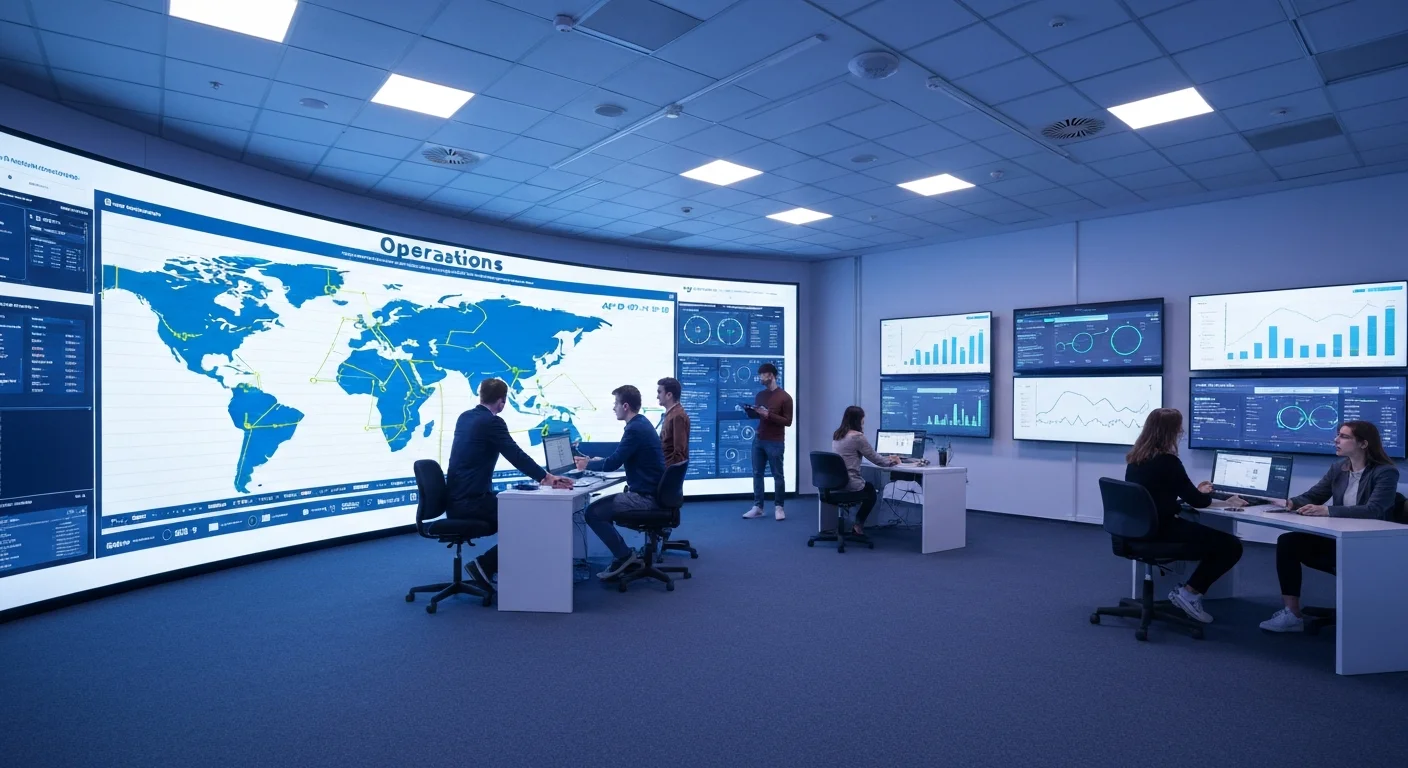
Supply Chain Management
in Germany
Germany is Europe's logistics powerhouse — home to DHL, DB Schenker, and the continent's busiest freight networks. Master supply chain management at the heart of global trade.
SCM Programmes
Tuition at Public Universities
EU Logistics
Companies
Showing 49–72 of 230 programmes
E-Commerce & Logistics, M.Sc.
Hochschule Fresenius · Köln
Einkauf und Logistik/Supply Chain Management, M.A.
Technische Hochschule Nürnberg Georg Simon Ohm · Nürnberg
Einkauf und Supply Management, M.A.
Technische Hochschule Nürnberg Georg Simon Ohm · Nürnberg
Elektrische Verkehrssysteme, M.Sc.
Technische Universität Dresden · Dresden
Energie- Betriebsmanagement, M.Eng.
Technische Hochschule Bingen · Bingen
Europäische Bahnsysteme, M.Sc.
Fachhochschule Erfurt · Erfurt
Finanz- und Wirtschaftsmathematik, B.Sc.
Technische Universität Chemnitz · Chemnitz
Global Logistics and Supply Chain Management, M.Sc.
Kühne Logistics University - Wissenschaftliche Hochschule für Logistik und Unternehmensführung · Hamburg
Global Supply Chain and Operations Management, M.A.
Hochschule für Wirtschaft und Recht Berlin · Berlin
Global Supply Chain Management, M.Sc.
CBS University of Applied Sciences · Mainz
Globale Logistik - Global Logistics, M.Sc.
Frankfurt University of Applied Sciences · Frankfurt am Main
Industrial Engineering and Management, B.Sc.
Constructor University · Bremen
Industrial Engineering and Management, B.Sc.
Constructor University · Bremen
Information Engineering and Computer Science, M.Sc.
Hochschule Rhein-Waal - University of Applied Sciences · Kamp-Lintfort
Infrastrukturingenieurwesen, B.Eng.
Hochschule Bielefeld - University of Applied Sciences and Arts (HSBI) · Minden
International Aviation Management, M.A.
IU Internationale Hochschule · Berlin, Bad Honnef
International Business Administration - Supply Chain Management, B.A.
SRH University of Applied Sciences Heidelberg · Berlin, Leipzig +2
International Business mit Logistik und Außenwirtschaft - dual, B.A.
Hochschule Worms, University of Applied Sciences · Worms
International Business mit Logistik und Außenwirtschaft, B.A.
Hochschule Worms, University of Applied Sciences · Worms
International Logistics & Supply Chain Management, M.Sc.
ISM International School of Management GmbH · Dortmund, Hamburg +1
Apply by 15 DecInternational Logistics & Transportation Management, M.Sc.
University of Europe for Applied Sciences · Hamburg
International Logistics and Trade online, MBA
Hochschule Wismar - University of Applied Sciences: Technology, Business and Design · Wismar
International Logistics Management, M.Sc.
Technische Hochschule Ostwestfalen-Lippe · Lemgo
International Management Logistics, B.A.
Hochschule für Technik, Wirtschaft und Medien Offenburg · Gengenbach
Check My Fit
3 quick questions — every result gets a fit tag based on your budget and languages. Stored only on this device.
Tags are an indication based on tuition and teaching language — for a real assessment, get a free profile evaluation.
What You'll Study in a German SCM Programme
Supply chain and logistics degrees in Germany blend quantitative operations management with practical, industry-facing modules. The exact module list varies by university and whether the programme sits in a business school or an engineering faculty, but most cover a common core before branching into specializations.
Core Subjects
- · Procurement & strategic sourcing
- · Inventory & demand planning
- · Transportation & distribution logistics
- · Operations & production management
- · Supply chain analytics & optimization
- · Global trade, customs & compliance
Common Specialization Tracks
- · Digital supply chains & Industry 4.0
- · Sustainable & green logistics
- · Supply chain analytics & data science
- · Procurement & supplier management
- · Transport, freight & maritime logistics
- · Operations research & modelling
Many programmes embed a mandatory internship or an applied project with an industry partner, which is one reason German degrees translate so directly into employment. If you're unsure which track suits your background, our team can map your profile to the right specialization during a free profile evaluation.
Entry Requirements for SCM & Logistics in Germany
Requirements differ between universities and between research universities and universities of applied sciences (Fachhochschulen). The points below are typical — always confirm against the specific programme page before you apply.
Academic Background
For a Master's, a recognised Bachelor's in business, engineering, economics, logistics, or a related quantitative field is generally expected, often with a solid grade average. Whether your degree is recognised can be checked via the anabin database.
Language
English-taught programmes typically ask for IELTS (around 6.5) or TOEFL. German-taught programmes require proof such as TestDaF or DSH. Even on English tracks, some German (around B1) helps with internships and daily life.
APS Certificate
Applicants with qualifications from India, China, and Vietnam generally need an APS certificate before applying or before the student visa. It verifies your academic documents and is reused across multiple applications once issued.
uni-assist
Many universities process international applications through uni-assist, which checks documents and converts grades. A handling fee usually applies per application.
GRE / GMAT
The GRE is usually not required for SCM and logistics Master's in Germany. A handful of MBA-style or business-school programmes may request the GMAT — check the individual programme.
Work Experience
Most consecutive Master's accept applicants straight from a Bachelor's. Some professional or MBA-style SCM programmes prefer one to two years of relevant work experience.
Careers & Salaries in Supply Chain Management
Germany is Europe's largest logistics market and a manufacturing powerhouse, so demand for supply chain talent spans automotive, pharmaceuticals, retail, e-commerce, and dedicated logistics providers. The figures below are approximate gross annual ranges and vary by employer, region, and experience.
Supply Chain Analyst
~ €45,000 — €58,000
Entry-level analytics, planning, and reporting roles.
Logistics / Procurement Specialist
~ €48,000 — €62,000
Operational sourcing, transport, and warehousing roles.
Supply Chain / Operations Manager
~ €65,000 — €90,000+
Mid-to-senior roles with team and budget responsibility.
Where Graduates Work
Major employers include global logistics groups such as DHL, DB Schenker, and Kuehne+Nagel, alongside manufacturers and retailers like Siemens, BMW, BASF, and large e-commerce operators. Germany's central EU location keeps its distribution and freight networks among the busiest on the continent.
Staying After Graduation
Non-EU graduates of a German university can generally apply for an 18-month post-study residence permit to look for a job related to their qualification. Once employed at the required salary level, many graduates transition to an EU Blue Card and a longer-term path to permanent residence.
Want help shortlisting programmes that match your career goals? Start with a free profile evaluation, or browse more study options with GradGermany.
Frequently Asked Questions About Supply Chain Management in Germany
Germany is Europe's #1 logistics market and the world's third-largest exporter, handling over €280 billion in logistics revenue annually. DHL (world's largest logistics company, headquartered in Bonn), DB Schenker (Essen), and Kuehne+Nagel all operate major hubs here. The country's central location makes it the EU's primary trade and distribution hub, with Frankfurt Airport handling the most air cargo in Europe and Hamburg operating the continent's third-largest container port. Germany also leads in Industry 4.0 smart logistics, integrating IoT sensors, AI-driven demand forecasting, and autonomous warehouse robotics. Studying SCM here gives you direct access to companies like Siemens, BMW, BASF, Amazon Europe, and Volkswagen, all of which recruit from German university programmes. The Fraunhofer Institute for Material Flow and Logistics (IML) in Dortmund is a world leader in logistics research.
SCM programmes in Germany cover Procurement and Sourcing Strategy, Inventory Management, Demand Forecasting (using SAP, Oracle, and machine learning tools), Warehouse Optimization, Transportation and Distribution Logistics, Global Trade Compliance, Industry 4.0 Supply Chains (IoT, digital twins, blockchain), and Sustainable Logistics (green supply chains, carbon footprint reduction). Many programmes integrate digital transformation concepts including SAP S/4HANA supply chain modules, which are widely used by German industry. Universities like TU Dortmund and Kühne Logistics University Hamburg offer specializations in port logistics and maritime supply chains. WHU Otto Beisheim covers strategic operations management. Students typically complete case studies with real industry partners, simulation exercises using supply chain modelling software, and capstone projects addressing actual operational challenges faced by German companies.
Yes. Several universities offer English-taught Supply Chain and Logistics programmes, particularly at Master's level. Kühne Logistics University (KLU) in Hamburg offers a dedicated MSc in Global Logistics and Supply Chain Management entirely in English. Jacobs University Bremen (Constructor University) provides English-taught supply chain courses within its management programmes. WHU Otto Beisheim School of Management in Vallendar offers English-medium MSc in Management with SCM specialization. Public universities like TU Dortmund, University of Mannheim, and TU Berlin offer logistics-focused programmes with English instruction. These programmes attract a diverse international student body and include industry partnerships with major logistics companies such as DHL, Kuehne+Nagel, Amazon, and Hellmann Worldwide Logistics. Admission typically requires IELTS 6.0–6.5 or TOEFL 80–90.
Graduates pursue roles as Supply Chain Managers, Logistics Analysts, Procurement Specialists, Operations Managers, Demand Planning Analysts, and Transportation Coordinators. Major employers include DHL (600,000+ employees worldwide), Siemens, BMW, Amazon Europe, BASF, Volkswagen, Bosch, and Continental. Starting salaries typically range €45,000–€55,000 for Master's graduates, with experienced SCM professionals earning €70,000–€90,000+. SAP supply chain consultants can earn €60,000–€80,000 at entry level. The 18-month post-study work visa allows international graduates to job-search in Germany without employer sponsorship. Germany's logistics sector employs over 3.3 million people, making it the country's third-largest employment sector. EU Blue Card eligibility starts at €45,300 annual salary for SCM professionals.
Yes, at public universities. There are no tuition fees for Supply Chain Management programmes at public institutions, regardless of nationality. The only cost is a semester contribution of approximately €150–€350, which typically includes a Semesterticket for unlimited regional public transport. Public universities offering excellent SCM-related programmes include TU Dortmund, TU Berlin, University of Mannheim, University of Hamburg, and TU Dresden. The exception is Baden-Württemberg, which charges €1,500/semester for non-EU students. Private institutions like Kühne Logistics University charge €15,000–€25,000 per year. For your student visa, you need a blocked account with €11,904 per year as proof of financial capability. Indian applicants also require an APS certificate (€150 fee) from the German Embassy in New Delhi before applying.
Most Bachelor's programmes don't require work experience for admission. Some MBA-style SCM Master's programmes may require 1–3 years of professional experience, particularly at WHU, ESMT Berlin, and Mannheim Business School. Standard MSc programmes at public universities typically do not require work experience but value relevant internships. Many programmes include mandatory internships of 12–20 weeks, providing practical exposure to real supply chain operations at companies like DHL, Siemens, BMW, or Amazon. As a student in Germany, you can work 120 full days or 240 half days per year, allowing you to gain logistics experience alongside your studies. Working student (Werkstudent) positions in supply chain roles pay €14–€20 per hour and are widely available in major logistics hubs like Hamburg, Frankfurt, Munich, and Dortmund.
Explore More Programmes in Germany
Start Your Supply Chain Career
in Germany
Get a free profile evaluation from our experts. We'll assess your academic background, recommend the best Supply Chain Management programmes, and guide you through the entire application process.