Engineering Master's: Admission Criteria, NC, TU9 Advantage
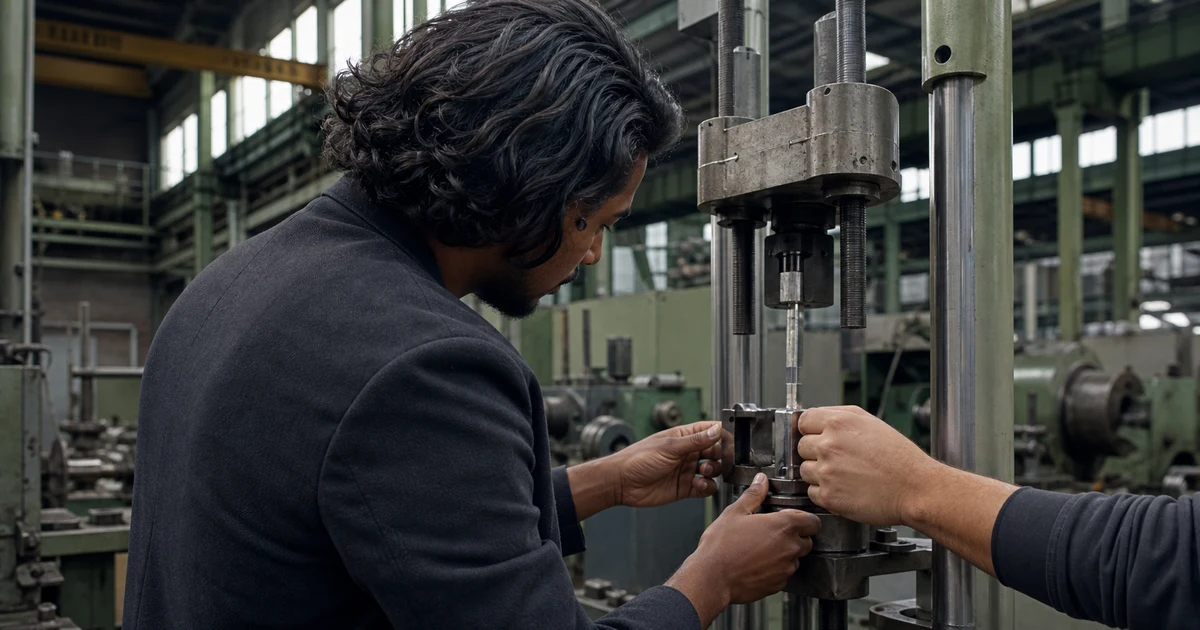
TL;DR: Most German engineering master's admit everyone who meets the criteria: a relevant bachelor's, language proof and module fit. Selection usually happens through an aptitude assessment rather than a grade cutoff, and some of the biggest programmes have no seat limit at all. A TU9 degree buys career value, not easier entry. Budget EUR 75 for the first uni-assist application and EUR 30 for each further one, and check tuition: TUM charges non-EU master's students up to EUR 6,000 a semester.
Engineering is the easiest field in Germany for an international applicant to get into, and the hardest one to get into carelessly. The criteria are published and mostly generous. The filter that removes people is quieter than a grade cutoff, and it is worth understanding before you shortlist anything.
Module fit is what actually rejects people
Admissions puts your transcript next to the programme's prerequisite list and compares module by module. A missing core module in mechanics, electrical engineering or mathematics ends the application, and it ends it regardless of how good your overall grade was. That is the top rejection reason in the field, above everything else in this guide.
TUM's mechanical engineering master's shows how the machinery works. Selection runs as a two-stage aptitude assessment. Stage one scores your specialist knowledge, your average grade in the relevant modules, and any vocational training or internships. Applicants who do not reach full marks in a subject area at stage one are called to a written subject test in exactly that area at stage two. So a gap in your transcript does not quietly lower your ranking; it produces an exam.
The fix is dull and effective: pull the prerequisite list for each programme you are serious about, before you write a word of a motivation letter. Several of the application mistakes that cost German offers come back to skipping that step.
Open admission, and where it stops
Many engineering master's are genuinely open. Meet the criteria and you are in, with no ranking and no cutoff. TUM states it plainly for mechanical engineering: everyone who proves their suitability in the assessment is awarded a place, and the number of places is not limited. That is a different world from medicine or a selective business programme, as the comparison of open and competitive German master's lays out.
Do not read "no seat limit" as "no filter", though. Uncapped and unselective are different things: the aptitude assessment is the filter, and it is a real one. Where a genuine NC does apply, the university ranks applicants on grades and modules and draws a line where the seats end. Applied programmes at a Hochschule fuer angewandte Wissenschaften are the least likely to be capped. If you are unclear on the mechanism, how numerus clausus works explains it.
| Factor | Weight | Why |
|---|---|---|
| Module fit | High | Top rejection reason, and what the aptitude test examines |
| Grades in relevant modules | Medium to high | Scored directly at stage one, and used to rank on NC programmes |
| Internships, vocational training | Medium | Explicitly scored in some aptitude procedures |
| English or German certificate | Required | Pass or fail gate, no credit for exceeding it |
| TU9 brand | Career only | Employer recognition, not admission weight |
The nine universities behind the TU9 label
The alliance, which marked its twentieth anniversary in January 2026, has exactly nine members: RWTH Aachen, TU Berlin, TU Braunschweig, TU Darmstadt, TUD Dresden, Leibniz University Hannover, KIT, TU Muenchen and the University of Stuttgart. German employers know all nine names without being told.
Where the label pays is the graduate job market and the alumni network, not the admissions office. A TU9 application is judged on the same module fit as any other, sometimes more strictly because more people apply. The nine universities and what each is strongest at is worth reading before you assume they are interchangeable.
Language: read the programme page, not the university page
English-taught engineering programmes typically want IELTS 6.0-6.5 or an equivalent TOEFL. TUM's floor is IELTS 6.5 or TOEFL iBT 88; RWTH Aachen's electrical engineering master's asks IELTS 6 or TOEFL 90. German-taught ones want DSH-2 or TestDaF, and plenty of technical master's, TUM's mechanical engineering among them, are taught in both languages and accept either certificate.
Here is where applicants get caught. The university publishes a general minimum; the individual programme sets its own, which can be higher or lower. Only the programme page is authoritative. And in a competitive intake, score a little above the stated minimum rather than exactly on it, because the first round of filtering is mechanical. Current thresholds are collected in the IELTS and TOEFL minimums by university.
What applying actually costs
Most engineering applications from outside the EU run through uni-assist, and its handling fees are fixed: EUR 75 for the first course of study you choose in a semester and EUR 30 for each further one. The rate is the same whether you are making a full application or requesting a VPD, and the money buys the evaluation, not an outcome. Nothing comes back if you are rejected.
Two consequences worth planning around. Six programmes in one semester cost EUR 225, not six times EUR 75, so cluster your applications into a single cycle rather than spreading them across two. And because the fee is charged per chosen course rather than per document set, adding a well-matched fallback programme at a university you have already applied to is the cheapest risk reduction available to you.
Tuition is free in most of Germany, and not at TUM
Most public universities charge non-EU students no tuition, only a semester contribution. Two exceptions matter for engineering applicants.
- Baden-Wuerttemberg charges non-EU students EUR 1,500 a semester across its public universities, which includes KIT and Stuttgart, two of the TU9.
- TUM has charged newly enrolling non-EU students since winter semester 2024/25: usually EUR 2,000 or EUR 3,000 a semester for a bachelor's and EUR 4,000 or EUR 6,000 for a master's, set per programme. The mechanical engineering master's sits at the top of that range, at EUR 6,000 a semester. On top of that everyone pays the student fee, EUR 97.00 in Munich, Garching and Weihenstephan.
The exemptions are worth knowing before you rule TUM out. Applicants who obtained their higher education entrance qualification within the German school system, who already completed a degree at a German university, or who hold EU or EEA citizenship do not pay, and neither do doctoral candidates or exchange students. Bavaria is not uniform on this either: TUM, FAU, HM Munich and THI Ingolstadt charge, while LMU, Wuerzburg and Passau do not.
Deadlines run earlier than you expect
TUM's application windows for mechanical engineering are 1 April to 31 May for the winter semester and 1 October to 30 November for the summer semester. Read that against the uni-assist processing time and the APS timeline and the real starting gun is months earlier than the published date. A file that arrives complete on the last day beats one that arrives incomplete a month early, and both beat the file that was still waiting on an APS certificate.
APS, documents, money
Applicants from India, China, Vietnam and Mongolia need the APS certificate before applying, along with transcripts, the degree certificate and certified translations. See the APS process for the four countries and which application route you fall under.
Living costs run 900-1,200 euros/month, and the visa needs 11,904 euros in a blocked account first. Afterwards, the 18-month job-seeker visa carries you to a contract, a work permit and eventually permanent residence. See the year priced out in rupees and the post-study work visa guide.
Sources
- TU9 - alliance of leading technical universities
- TUM - Mechanical Engineering MSc, aptitude assessment
- TUM - tuition fees for international students
- uni-assist - handling fees
- DAAD
- Hochschulkompass
Planning an engineering application? The free profile evaluation checks your modules against the prerequisite lists at your target universities.
Frequently Asked Questions
You probably qualify for more than you think.
Students who get evaluated find programmes they had no idea existed — at universities that charge nothing. 2 minutes, no cost. The only downside is not checking.
Want our guides higher up in Google?
Mark GradGermany as a preferred source and Google gives our pages more room when you search about studying in Germany. Takes one tap, and you can undo it any time from the same screen.
Living this, or on your way to it? Tell your story.
If you are already in Germany and finding it hard, or still fighting to get here, other students need to hear it from someone real. Share your honest journey. We help shape it, and nothing goes live until you approve it.
Free German Quiz · No Login
Can you score 10/10 on today's German challenge?
10 new words every day · 4,500+ words from A1 to C1 · takes about a minute.
Related Articles


Study in Germany
Bionik: Mobile Systeme, M.Sc.
Hochschule Bremen
Bremen
M.A.Osteuropastudien, M.A.
Universität Regensburg
Regensburg
M.Ed.Philosophie - Lehramt für die allgemeinbildenden Fächer der Sekundarstufe II und das Gymnasium (auch Gesamtschulen), M.Ed.
Ruprecht-Karls-Universität Heidelberg
Heidelberg