Engineering in Germany: What Every Nepali Student Should Know
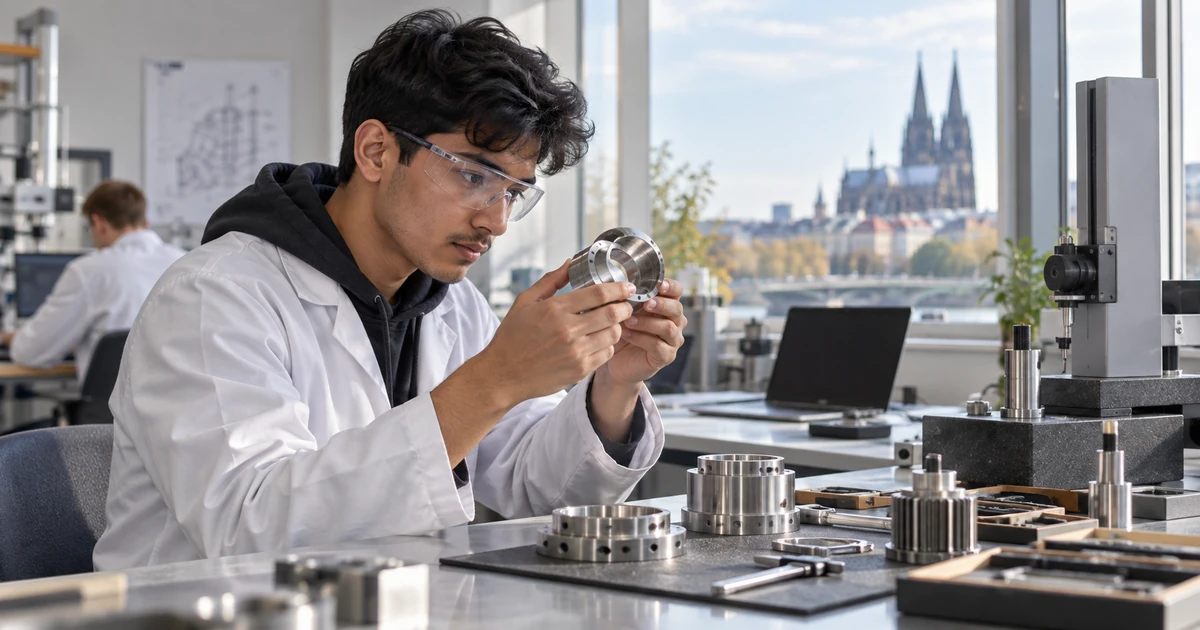
If you hold a four-year BE from a Nepali university, Germany treats it as a full bachelor's degree, and you can apply straight to a master's. If you have just finished NEB Class XII in science, the road is longer and runs through a German-taught foundation year. Most of what goes wrong for Nepali engineering applicants comes from mixing up those two routes, so start by finding yours.
Your route depends on where you are now
| Where you are | What Germany allows | Source |
|---|---|---|
| NEB Class XII, no university study | A Studienkolleg (technical "T" course) and its final exam, then a bachelor's | DAAD admission database |
| Class XII plus at least one successful year of BE in Nepal | Direct admission to a bachelor's in the same or a related subject | DAAD admission database |
| Four-year BE or B.Tech from Nepal | Master's programmes; anabin rates the degree as equivalent to a German bachelor's | anabin |
| Three-year BSc from Nepal | Master's only where the programme accepts it; anabin rates it as conditionally comparable | anabin |
The admission rules come from the DAAD admission database and the degree ratings from anabin. If you are on the first row, read our Studienkolleg guide before anything else. If you are unsure how your degree is rated, the anabin guide shows you how to check.
University or university of applied sciences
Germany has two kinds of institution that teach engineering, and the difference matters more than rankings. The official description in the German Diploma Supplement template puts it plainly. Universities "focus in particular on basic research", so advanced study is mainly theoretical and research-oriented. Universities of applied sciences (Fachhochschulen, often now called Hochschulen or Technische Hochschulen) concentrate on engineering, technical subjects, business and design, with "integrated and supervised work assignments in industry".
In practice: if you want a PhD or a research job, a university is the natural route. If you want to design, build and run things in industry, an applied sciences master's with a project or internship in a company can get you there faster. Both award the same kinds of degrees, and both count the same for a German work permit. The large technical universities are covered in our TU9 guide.
Internships are part of the degree
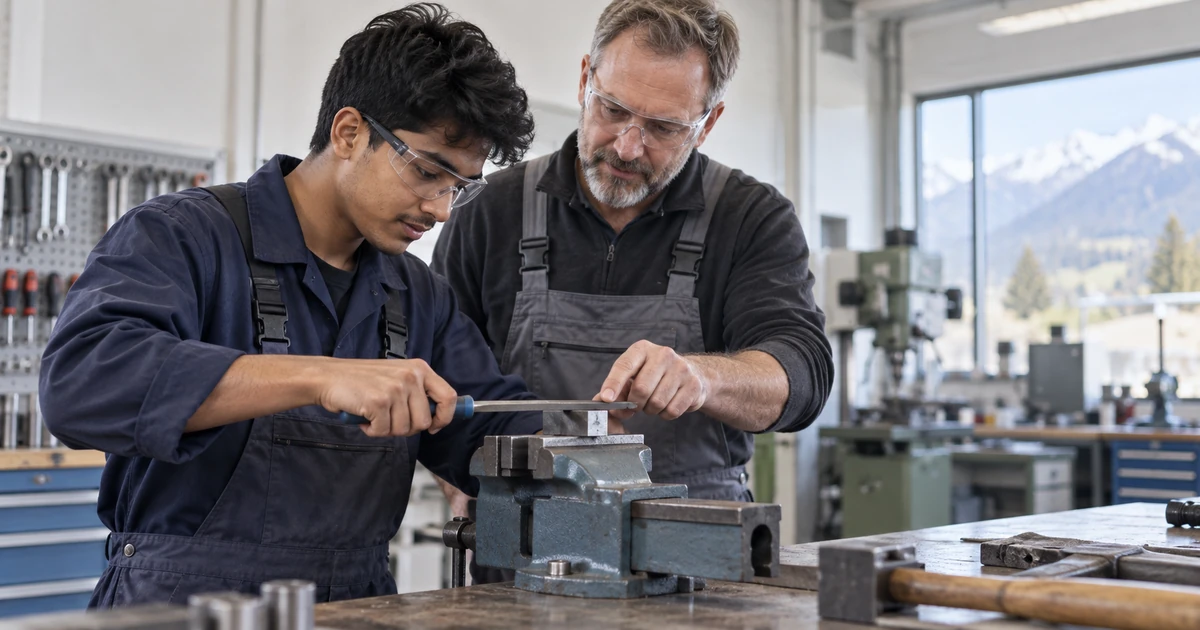
Many German engineering bachelor's programmes require practical training in a company, and some want part of it done before you start. TU Braunschweig's mechanical engineering faculty is a typical example. Its internship rules split training into a basic internship and an engineering internship, with part of it (the Vorpraktikum) expected before studies begin. Two details from those rules matter for Nepali applicants:
- Internships done in your home country can be recognised, but you need certified translations of the internship certificates.
- The faculty strongly recommends doing at least half of the internship at companies in German-speaking countries.
So a few weeks in a workshop or factory in Nepal before you leave, with a proper certificate, can count. Ask each university's internship office (Praktikantenamt) what it accepts before you arrange anything.
Some master's programmes, especially at universities of applied sciences, include a compulsory internship as well. The Residence Act treats a compulsory internship as part of your study purpose (Section 16b(1)), so it does not need separate permission. A voluntary internship is ordinary work and counts toward your 140-day yearly limit.
Language: German for bachelor's, more choice at master's
The Studienkolleg route and most engineering bachelor's programmes are taught in German, so plan for German to at least B2 if you are coming after +2. At master's level the choice is wider. Many engineering master's are offered in English, and our guide to English-taught programmes explains how to find them. Even then, internships and jobs in German engineering firms often expect some German, so do not stop at A1.
Can you call yourself an engineer?
In Germany the job title "Ingenieur" is protected by state law, and holders of a foreign engineering qualification apply for a licence to use it (Recognition in Germany portal). The portal's result for Bavaria spells out the practical effect: in most cases you may work as an engineer without recognition, but you may not use the title. The state authority compares your qualification with a German engineering degree; in Bavaria the procedure costs EUR 300 to EUR 800, and the decision comes within three months of a complete application. This matters most if you apply for engineering jobs in Germany with your Nepali BE alone.
Pay and work after graduation
Engineering pays well in Germany. In the Federal Employment Agency's Entgeltatlas, the median gross monthly pay for full-time "expert" level staff, the level that usually requires a degree, was EUR 7,084 in mechanical engineering and operations technology and EUR 7,238 in electrical engineering, as shown in October 2026. For mechanical engineers under 25, closer to a graduate's starting point, it was EUR 4,759.
Engineers are on the shortage list for the EU Blue Card in Section 18g of the Residence Act, which brings a lower salary threshold. Our skilled worker visa guide sets out the numbers and the route to permanent residence. If you plan to return home instead, your German degree generally needs an equivalence certificate from the University Grants Commission before you can register professionally in Nepal; the steps are in our guide to verifying a German degree in Nepal.
Frequently Asked Questions
You probably qualify for more than you think.
Students who get evaluated find programmes they had no idea existed — at universities that charge nothing. 2 minutes, no cost. The only downside is not checking.
Want our guides higher up in Google?
Mark GradGermany as a preferred source and Google gives our pages more room when you search about studying in Germany. Takes one tap, and you can undo it any time from the same screen.
Get new guides as soon as they go live
Add our feed to Feedly, Inoreader or any RSS reader and every new guide on studying in Germany shows up there by itself. No email, no sign-up.
Living this, or on your way to it? Tell your story.
If you are already in Germany and finding it hard, or still fighting to get here, other students need to hear it from someone real. Share your honest journey. We help shape it, and nothing goes live until you approve it.
Free German Quiz · No Login
Can you score 10/10 on today's German challenge?
10 new words every day · 4,500+ words from A1 to C1 · takes about a minute.