Nursing in Germany for Nepali Students: Training, Degrees and Recognition
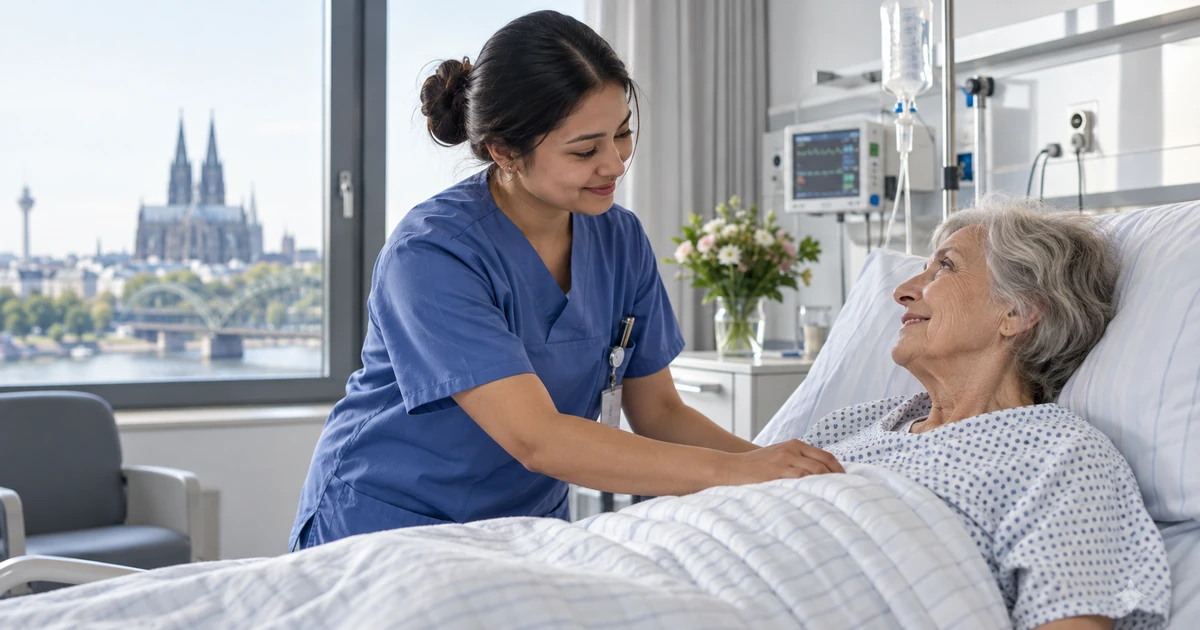
Germany has one general nursing qualification, Pflegefachfrau or Pflegefachmann, and three ways for a Nepali to reach it: paid vocational training, a nursing degree, or recognition of a nursing qualification you already hold from Nepal. Before choosing any of them, you need to know one rule about recruiters, because it affects Nepal directly.
First: the rule on recruiting nurses from Nepal
Germany's Employment Ordinance lists countries where private recruitment of health workers is restricted, following WHO guidance on health worker shortages, and Nepal is on that list. For listed countries, Section 38 allows only the Federal Employment Agency (Bundesagentur fuer Arbeit) to recruit or place people into health and care jobs.
The Agency's own guidance for private agencies spells out what that covers: placement into nursing training as well as into jobs, job advertisements in listed countries, and active recruiting abroad by employers themselves. Breaches can be fined up to EUR 30,000.
So a private agency in Kathmandu that charges you to place you in a German nursing job or nursing Ausbildung is offering something German law reserves for a public body. The ordinance regulates recruiters and placement; it is not a visa ban on Nepali nurses, and applying on your own to a German school, university or recognition authority is not placement.
Route 1: Nursing training (Ausbildung)
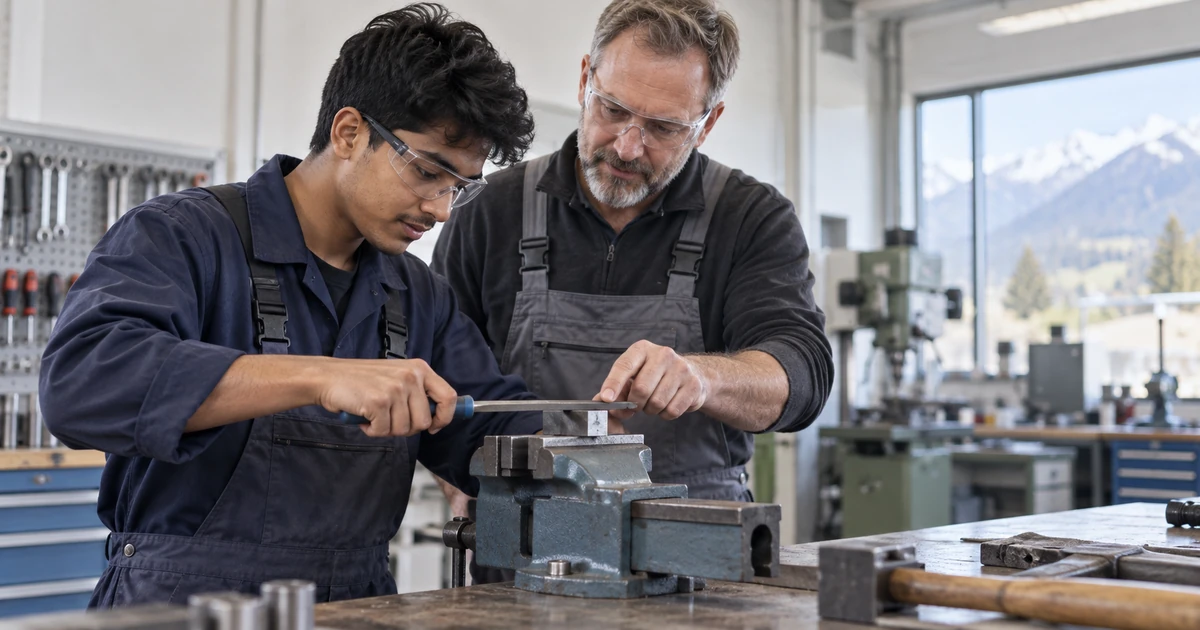
The training takes three years full time, or up to five years part time, under the Nursing Professions Act. Most of it is practical work in hospitals and care homes, with blocks of classes at a nursing school. You sign a training contract with a care provider, and the provider pays a monthly training allowance.
How much depends on the employer. Under the public-sector collective agreement for nursing trainees (TVAoeD-Pflege), the allowance from 1 May 2026 is:
| Training year | Monthly allowance, public sector, from 1 May 2026 |
|---|---|
| First year | EUR 1,490.69 |
| Second year | EUR 1,552.07 |
| Third year | EUR 1,653.38 |
Church and private providers use their own pay scales, so compare offers line by line. Schools and employers set the school certificate and German level they want, and you should get both in writing before paying for a language course. The visa for this route is the vocational training visa, which the German Embassy in Kathmandu handles as its own category. The general rules for training in Germany are in our Ausbildung guide.
Route 2: A nursing degree
Some German universities offer a bachelor's degree that leads to the same nursing licence plus an academic title. These students used to study without pay. Under the Nursing Studies Strengthening Act, in force since December 2023, nursing students now receive appropriate pay for the whole duration of the degree, through a contract with a care provider. The same law also set out to simplify recognition for nurses trained abroad.
A degree needs a university entrance qualification. With Nepali Class 12 alone, that normally means a Studienkolleg first; our Studienkolleg guide explains the route. Clinical placements happen on German wards, so plan for strong German.
Route 3: You are already a nurse in Nepal
A PCL or BSc Nursing and Nepal Nursing Council registration do not let you work as a nurse in Germany straight away. Nursing is a regulated profession, so a state authority compares your training with the German one. In Berlin, the State Office for Health and Social Affairs (LAGeSo):
- requires German at B2 level;
- charges EUR 164 for the procedure;
- takes about 3 to 4 months once the file is complete;
- accepts applications from abroad;
- lets you close any gaps it finds through an adaptation course of up to three years or a knowledge test (Kenntnispruefung).
Other states have their own authorities and fees, so check the one where you plan to work. While gaps are being closed, two residence permits can help. A permit for a qualification measure under Section 16d(1) of the Residence Act runs for up to 24 months, can be extended to a maximum of three years, normally needs A2 German and allows up to 20 hours a week of other work. The recognition partnership under Section 16d(3) lets you work for a German employer while recognition runs, if your qualification is state-recognised in Nepal and took at least two years, you have a concrete job offer and you speak at least A2 German.
Which route fits whom
| Your situation | Most direct route | German you need |
|---|---|---|
| SEE or +2, no nursing training yet | Nursing Ausbildung | As set by the school and employer |
| +2 and you want a degree | Studienkolleg, then a nursing degree | Enough for German-taught study, commonly B2 or above |
| PCL or BSc Nursing with Nepal registration | Recognition, possibly on a 16d permit | B2 for the licence in Berlin; A2 to enter on a 16d permit |
On every route, German takes the most preparation time. Start in Nepal; our guides on learning German before you move and on German language requirements show realistic timelines.
Frequently Asked Questions
You probably qualify for more than you think.
Students who get evaluated find programmes they had no idea existed — at universities that charge nothing. 2 minutes, no cost. The only downside is not checking.
Want our guides higher up in Google?
Mark GradGermany as a preferred source and Google gives our pages more room when you search about studying in Germany. Takes one tap, and you can undo it any time from the same screen.
Get new guides as soon as they go live
Add our feed to Feedly, Inoreader or any RSS reader and every new guide on studying in Germany shows up there by itself. No email, no sign-up.
Living this, or on your way to it? Tell your story.
If you are already in Germany and finding it hard, or still fighting to get here, other students need to hear it from someone real. Share your honest journey. We help shape it, and nothing goes live until you approve it.
Free German Quiz · No Login
Can you score 10/10 on today's German challenge?
10 new words every day · 4,500+ words from A1 to C1 · takes about a minute.