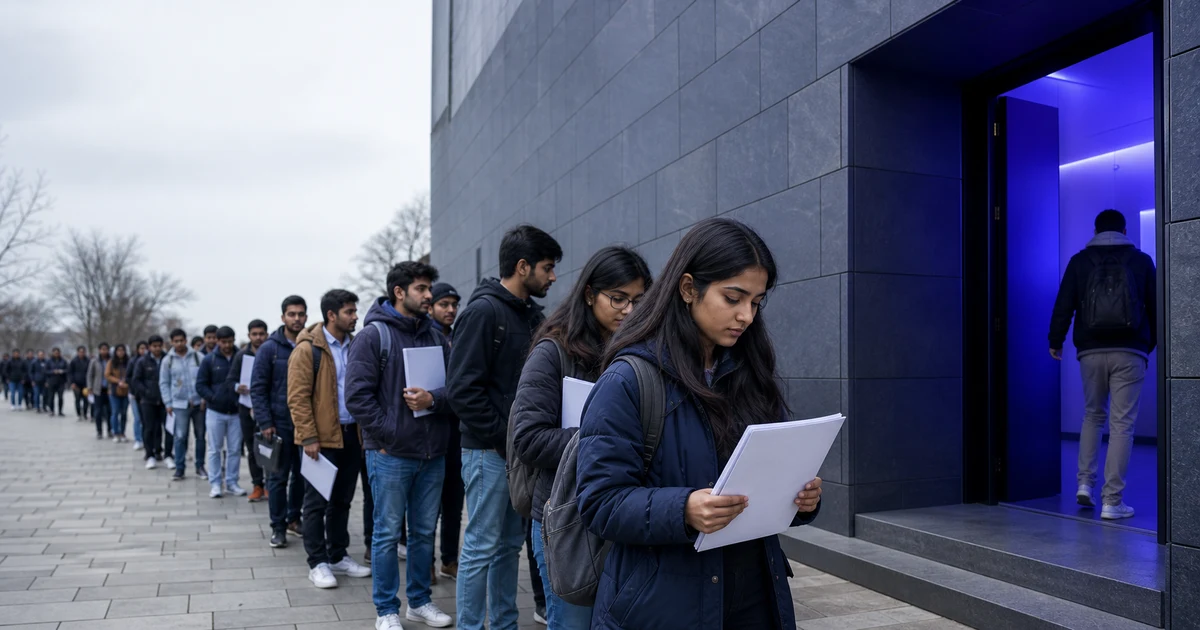
German Universities Are Cutting Budgets in 2026: What It Actually Means for Your Application
TL;DR: Universities in North Rhine-Westphalia face cuts of around 150 million euros a year from 2026, and ten of them, RWTH Aachen included, formally warned about the consequences. Hesse's higher education pact for 2026 to 2031 carries a shortfall of roughly 1 billion euros, with 455 study places already scheduled to go from winter semester 2026/27. Tuition at public universities is not affected. Capacity, staffing and course choice are.
Germany's pitch to international students has been consistent for a decade: strong public universities, no tuition fees, funded by the state. The first two parts still hold. The third is under real pressure in 2026, and it is being reported as a crisis. It is not one, but it does change how you should build a shortlist.
North Rhine-Westphalia: ten universities put it in writing
NRW is Germany's most populous state and home to several of the universities Indian applicants target most. Its universities are facing a reduction in basic funding of around 150 million euros per year from 2026.
In October 2025 the senates of ten NRW universities passed a joint resolution warning about the consequences. The signatories, published by the University of Wuppertal, were:
- RWTH Aachen University
- Bielefeld University
- Ruhr University Bochum
- TU Dortmund
- University of Duisburg-Essen
- FernUniversitaet in Hagen
- German Sport University Cologne
- University of Cologne
- University of Siegen
- University of Wuppertal
Their stated concerns: worsening student-to-teacher ratios, which in NRW are already among the weakest in Germany, higher dropout rates, reduced research capacity, fewer spin-outs and less external research funding.
Note who is on that list. RWTH Aachen is a TU9 member and one of the most applied-to universities in the country for Indian engineering applicants.
Hesse: a billion-euro gap and 455 study places
The Hesse Higher Education Pact governs university funding from 2026 to 2031. It carries a 30 million euro reduction for the first year and a cumulative shortfall of roughly 1 billion euros across the period.
The consequences are already concrete. Goethe University Frankfurt must save more than 10 percent of its budget from 2026. At Justus Liebig University Giessen, where the annual cut is 25 million euros, more than 100 full-time positions have already been eliminated. And 455 study places in restricted-admission degree programmes are scheduled to disappear from winter semester 2026/27, with appointments and position-filling suspended.
Baden-Wuerttemberg is in a similar argument. The University of Mannheim has publicly warned about the state's future viability as a research location.
What this does not mean
Before anyone rewrites their shortlist, three things are not happening.
Tuition fees are not returning at public universities. Nothing in these budget decisions reintroduces tuition for international students at public institutions. That is set at state level through separate legislation and is not on the table in NRW or Hesse. Our guide to tuition-free universities still stands.
Degrees are not losing value. RWTH Aachen with a tighter budget is still RWTH Aachen. German engineering credentials are not repriced by a state budget line.
This is not Germany closing its doors. Enrolment of international students hit a record in the same period these cuts were announced, with 69,816 Indian students in winter semester 2025/26. Germany wants the students. The states are arguing about who pays for the buildings and the staff.
What it does mean for you
Four practical effects, in the order you will feel them.
| Effect | What to do about it |
|---|---|
| Fewer seats in restricted programmes | 455 places going in Hesse alone. Apply to more programmes than you think you need, and include universities in states that are not cutting. |
| Programmes quietly discontinued | Confirm your exact course is running for your intake, on the university's own page, before you build an application around it. |
| Larger classes, less supervision | Matters most for research-heavy master's. Ask about supervision load if you are choosing between offers. |
| Hiring freezes | Affects Werkstudent and HiWi jobs on campus. If you were counting on university employment, widen your search early. See our Werkstudent guide. |
The sensible response
Spread your applications across states. Bavaria, Saxony and Lower Saxony are not in the same position as NRW and Hesse this cycle, and universities in Dresden, Ilmenau, Magdeburg and Braunschweig are strong and a lot cheaper to live in, and they get nowhere near the applications Munich and Aachen do.
Then do the boring verification. Open the programme page for every course on your list and check it is admitting for your intake. Budget decisions get announced in a press release. Programme closures show up as a quiet edit to a course page in February.
Sources
Frequently Asked Questions
You probably qualify for more than you think.
Students who get evaluated find programmes they had no idea existed — at universities that charge nothing. 2 minutes, no cost. The only downside is not checking.
Want our guides higher up in Google?
Mark GradGermany as a preferred source and Google gives our pages more room when you search about studying in Germany. Takes one tap, and you can undo it any time from the same screen.
Living this, or on your way to it? Tell your story.
If you are already in Germany and finding it hard, or still fighting to get here, other students need to hear it from someone real. Share your honest journey. We help shape it, and nothing goes live until you approve it.
Free German Quiz · No Login
Can you score 10/10 on today's German challenge?
10 new words every day · 4,500+ words from A1 to C1 · takes about a minute.