Germany vs UK for Masters: Cost, Duration and Careers

TL;DR: The UK is faster, with many one-year master's finishing quicker, but it is costly at roughly 15,000 to 25,000 GBP in tuition. Germany is cheaper (mostly free) but takes two years. For staying and working after graduation, Germany now offers a clearer and more affordable long-term route, while the UK's two-year Graduate Route has been tightened.
The real question is not which country is better. It is whether you are buying a credential or buying a career. A UK master's is a fast, expensive certificate. A German master's is a slow, nearly free one that comes with a job market attached. Below is what each actually costs, how long it takes, what you can earn on the side, and what happens on the day you graduate.
What the two degrees actually cost
A UK master's costs 15,000 to 25,000 GBP in tuition alone, before you have paid rent in London or anywhere else. A German master's at a public university is tuition-free outside Baden-Wuerttemberg and TU Munich, where it runs 1,500 to 6,000 euros a semester. What you pay elsewhere is a semester fee, plus 11,904 euros parked in a blocked account for the visa, which is your own money and comes back monthly. Over two years the German route lands 2 to 3 times cheaper in total, and that gap is tuition, not lifestyle.
| Factor | Germany | UK |
|---|---|---|
| Duration | About 2 years | Usually 1 year |
| Tuition | Free at most publics | 15,000-25,000 GBP |
| Part-time work | 20 h/week, no cap in breaks | 20 h/week term time |
| Post-study stay | 18 months | Graduate Route (2 years, tightened) |
| Language for study | English masters available | English |
One year against two, and what the extra year buys
Most UK taught master's run one year, compressed and hard. German master's run two years, four semesters and a thesis. The UK course puts you in a salary a year sooner, which is a genuine advantage and the main thing its price buys. The German year you appear to lose is the year you spend interning, holding a Werkstudent contract, getting your German to a usable level and meeting the people who later hire you. Whether that trade is worth it depends entirely on where you want to be working three years from now.
What you can earn while you study
Read Also: Best Public Universities in Germany 2026: Top 10 Ranking for International Students
Both countries cap you near 20 hours a week in term time. Germany sets a national minimum wage of 13.90 euros an hour and lifts the hour limit entirely during the semester break, which is when most students bank their money. The UK holds you to 20 hours in term, and its minimum wage converts to less than the German floor. The day-counting rules on the German side are less obvious than they look, so read how student work days are counted in Germany before you sign a contract.
The day after graduation
Germany gives non-EU graduates up to 18 months to find qualified work, then a route into an EU Blue Card or a skilled-worker permit, with permanent residence and citizenship reachable after a few years. The UK's Graduate Route gives two years of work rights but leads nowhere on its own: to settle you have to switch to a Skilled Worker visa, and that needs an employer willing to sponsor you. For engineering, IT and the technical fields, the German combination of demand and cost is hard to argue with. For finance, consulting, media and anything anchored to London, the UK still wins.
Getting in: flexible against filtered
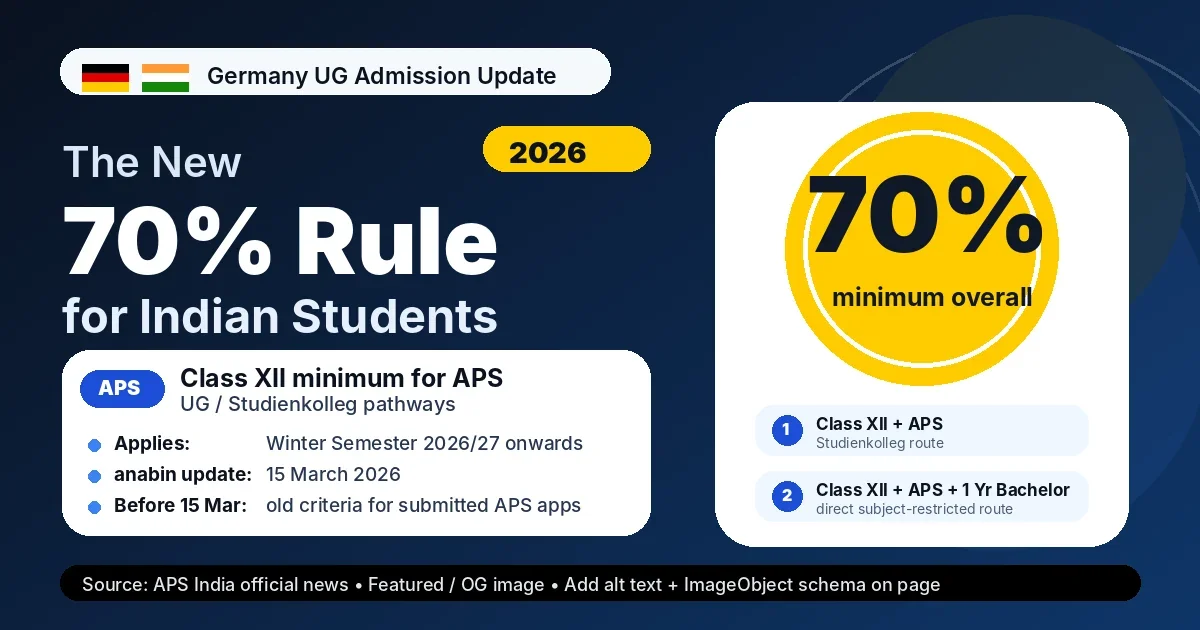
The UK admits a wider range of backgrounds and decides quickly. Germany filters on subject match, usually wants the APS certificate that Indian applicants have to clear first, routes most files through uni-assist, and runs points-based selection on some programmes. It takes longer. It also means you rarely land in a course you cannot follow.
Who should pick which
- Pick Germany if you want the cheapest strong degree, you are heading into engineering or IT, you plan to stay in Europe, and you can give it two years.
- Pick the UK if you want the credential in twelve months, you are targeting London finance or consulting, and the tuition is funded.
Sources
- DAAD - Studying in Germany
- Make it in Germany - Prospects after graduation
- UK Government - Graduate Route visa
Want the numbers for your own shortlist? Get a free profile evaluation and we will tell you which German programmes your degree qualifies for before you compare anything else.
Frequently Asked Questions
You probably qualify for more than you think.
Students who get evaluated find programmes they had no idea existed — at universities that charge nothing. 2 minutes, no cost. The only downside is not checking.
Want our guides higher up in Google?
Mark GradGermany as a preferred source and Google gives our pages more room when you search about studying in Germany. Takes one tap, and you can undo it any time from the same screen.
Living this, or on your way to it? Tell your story.
If you are already in Germany and finding it hard, or still fighting to get here, other students need to hear it from someone real. Share your honest journey. We help shape it, and nothing goes live until you approve it.
Related Guides
Free German Quiz · No Login
Can you score 10/10 on today's German challenge?
10 new words every day · 4,500+ words from A1 to C1 · takes about a minute.
Related Articles
Study in Germany
Kunst Haupt-, Real-, Sekundar- und Gesamtschulen - Lehramt der Sekundarstufe I an allen Schulformen, M.Ed.
Technische Universität Dortmund
Dortmund
B.Ed.Berufspädagogik (Elektrotechnik oder Metalltechnik) - Lehramt für die beruflichen Fächer der Sekundarstufe II, B.Ed.
Universität Kassel
Kassel
M.Sc.Entrepreneurship and Digital Business, M.Sc.
Technische Hochschule Ingolstadt
Ingolstadt