Automotive Engineering Degrees in Germany: Bachelor's to Master's (RWTH, TUM)
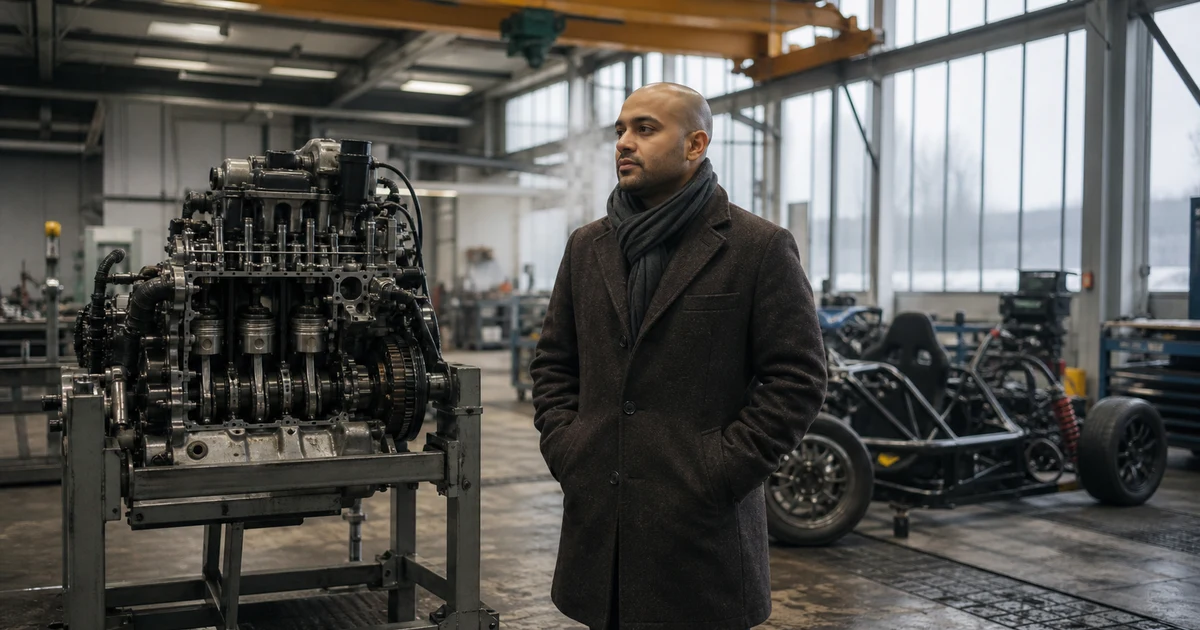
TL;DR: RWTH Aachen runs a three-semester, 90-ECTS Automotive Engineering M.Sc. taught in English with no tuition, but it demands a GRE from non-EU applicants and closes on 1 March for an October start. TUM's four-semester version costs non-EU students EUR 6,000 a semester, opens for winter applications only between 1 April and 31 May, and also wants a GRE from Indian, Chinese, Pakistani, Bangladeshi and Iranian applicants.
Programs labeled "automotive engineering" are rarer than the industry's size suggests. Most international students get there by taking mechanical or mechatronics and specializing, which works perfectly well and widens your options if the sector cools. What you should choose deliberately is where you study, because in this field geography is career strategy. And before any of that, check the two things that quietly disqualify most applicants: the language the degree is actually taught in, and a deadline that is months earlier than the one you have in your head.
Two RWTH master's share a name and only one is in English
RWTH lists Automotive Engineering M.Sc. and Automotive Engineering and Transport M.Sc. side by side. The first is taught in English. The second, the translation of Fahrzeugtechnik und Transport, is taught in German and requires DSH-2, TestDaF 4 in all four sections, Goethe C1 or an equivalent from RWTH's accepted list. They are not variants of one another and applying to the wrong one wastes a cycle.
The same trap sits at bachelor's level. RWTH's Mechanical Engineering B.Sc. and its Transport Engineering and Mobility B.Sc. are both German-taught. If you are looking for an English-taught automotive bachelor's in Germany, this is where the search usually ends. See which universities make up TU9 for the technical university context.
What RWTH's English-taught master actually asks for
The program runs 3 semesters and 90 ECTS, with the master's thesis usually attached to a live project run with an industrial or publicly funded partner. Content spans chassis, body, drivetrain, safety, driver assistance, thermal management, electronics and connected and automated driving, with a heavy weighting toward autonomous driving.
Three admission details decide most applications:
- A GRE, if you are not from the EU or EEA. The institute is blunt about it: applicants from outside the EU or EEA need the test as a formal requirement, and without it the application is rejected on formal grounds before anyone reads your transcript. EU and EEA applicants, including German ones, do not need it.
- An industrial internship, completed before you apply. It is an admission requirement, not something you slot in during the degree, which is why there is no internship semester in the curriculum.
- English at B2. RWTH accepts TOEFL iBT with at least 90 points, IELTS 6.0, PTE Academic 60, Cambridge B2 First at grade B or better, or UNIcert II. It does not accept TOEFL MyBest scores, so the minimum has to come from a single sitting. A degree completed in the UK, Ireland, the US, Canada, Australia or New Zealand exempts you; holding a passport from one of those countries does not.
One quiet requirement that surprises people who chose the program precisely because it is in English: you need basic German to register the master's thesis. Start the language early rather than three months before the thesis.
The deadline that ends most RWTH applications
RWTH's Automotive Engineering M.Sc. is open admission, no NC. That sounds like good news and is actually the catch, because RWTH gives non-EU/EEA applicants to open-admission master's a much earlier cut-off than the July date everyone quotes.
| Applicant and program type | Winter start | Summer start |
|---|---|---|
| RWTH, non-EU/EEA, open admission | 1 March | 1 September |
| RWTH, non-EU/EEA, restricted admission | 15 July | 15 January |
| RWTH, EU/EEA, either type | 15 July | 15 January |
| TUM, all applicants | 1 April to 31 May | 1 October to 30 November |
Read that top row again. A non-EU applicant who wants to start at RWTH in October has to be finished by 1 March, and RWTH calls these final deadlines: late applications are not considered. Working backwards, your GRE score, your English certificate and your APS all have to be in hand by February. See how RWTH admission works for Indian applicants.
TU Munich: the brand with a bill
TUM's Automotive Engineering M.Sc. is a different shape: 4 semesters, 120 ECTS, taught in German and English, and it can be completed entirely in English although not every module runs in both. Non-EU students pay EUR 6,000 per semester in tuition, which is EUR 24,000 across the degree, plus the Munich semester fee of EUR 97. Munich rent sits on top of that. See what TU Munich charges international students.
TUM's tuition applies to non-EU students newly enrolling from the winter semester 2024/25 onward. Bachelor's programs run at EUR 2,000 or 3,000 a semester and master's at EUR 4,000 or 6,000, set per program. Several exemptions are worth checking before you assume you owe it: EU and EEA citizens, doctoral candidates, exchange students, and anyone who took their bachelor's at a German university or gained their entrance qualification inside the German system.
Admission runs through a two-stage aptitude assessment. Stage one scores your bachelor's grade, module content and internship or training experience, and produces an admission, a rejection, or an invitation to stage two: an interview in German or English lasting at least 20 and at most 30 minutes, testing motivation and subject aptitude. Applying with an unfinished bachelor's is allowed if you have 140 credits from a six-semester program, 170 from a seven-semester one, or 200 from an eight-semester one.
The test requirement at TUM is narrower and stricter than RWTH's. TUM makes the GRE mandatory for applicants from Bangladesh, China, India, Iran and Pakistan, with a Quantitative Reasoning minimum of 164 and Analytical Writing of 4.0. Verbal Reasoning has no minimum. Indian applicants can substitute the GATE qualifying score for that year. More on which German programs actually ask: is the GRE or GMAT required for a German master's.
| University | Tuition | Entry |
|---|---|---|
| RWTH Aachen | No fee, EUR 375.19 semester contribution | GRE, internship, IELTS 6.0 |
| TUM | EUR 6,000 a semester plus EUR 97 | Aptitude assessment, GRE or GATE |
Where the industry actually sits
Automotive is a localized business. The biggest employers cluster around Stuttgart, Wolfsburg, Ingolstadt and Munich, with suppliers spread through the south and west. Pick a university with clear links into one of those regions, then spend your internships and Werkstudent placements inside it, and you graduate with contacts a student on the other side of the country simply does not have. This is the most underrated part of the decision.
It also cuts the other way. Aachen sits on the Dutch and Belgian border rather than in the southern industrial belt, which is why RWTH's own thesis model matters so much: the degree pushes you into an industrial project instead of leaving you to find one.
At bachelor's level the door is narrower
English-taught automotive bachelor's barely exist, and RWTH's own list confirms why: mechanical engineering and transport engineering are both German-taught. Most international students arrive at master's level, or take mechanical engineering first and specialize later. If you are coming straight from school, you may also need a Studienkolleg before any bachelor's, depending on whether your certificate is recognized. See eligibility straight after 12th and how a Studienkolleg year works.
What you need to apply
- A mechanical, mechatronics or automotive bachelor's with strong grades and module content that lines up. This is where applications quietly fail.
- IELTS 6.0 or TOEFL iBT 90 for RWTH's English-taught master, from a single test sitting.
- A GRE if you are outside the EU or EEA for RWTH, or from Bangladesh, China, India, Iran or Pakistan for TUM. GATE works instead at TUM.
- A completed industrial internship for RWTH, evidenced at application.
- APS if your documents come from India, China, Vietnam or Mongolia. See the APS process.
What it costs
RWTH charges no tuition. What you do pay is the semester contribution, which for winter 2026/27 is EUR 375.19: EUR 128.00 to Studierendenwerk Aachen, EUR 12.62 to the student body, and EUR 234.57 for mobility, of which EUR 226.80 is the Deutschlandticket-based semester ticket and EUR 7.77 is the Dutch Zuid-Limburg add-on. That last item is the reason Aachen students can commute into Maastricht on the same ticket.
TUM is the other end: EUR 6,000 a semester plus EUR 97, so EUR 24,388 over four semesters before you have paid rent. Beyond tuition, budget living costs and the EUR 11,904 blocked-account deposit for the visa. Full breakdown in what a year in Germany actually costs.
Why German matters more in this sector
Automotive firms and their suppliers run on German more than software companies do. An English-taught program gets you the degree; it does not get you through an interview at a Tier 1 supplier in Swabia. RWTH makes the point for you by requiring basic German just to register your thesis. Reach B1 to B2 while you are still studying. The sector breakdown is in how far English alone gets you in the German job market.
Careers after the degree
German automakers and suppliers hire mechanical and automotive graduates continuously, and a Werkstudent role inside the industry during your studies is the surest route to an offer. After graduation the 18-month job-seeker visa leads into a work permit and permanent residence. See the student work rules and the post-study visa.
Sources
- RWTH ika, Automotive Engineering M.Sc.
- RWTH ika admission FAQ
- RWTH language requirements
- RWTH semester contribution
- TUM Automotive Engineering M.Sc.
- TUM tuition fees for non-EU students
Keen on the automotive route? Get a free profile evaluation to match your engineering background to the right program.
Frequently Asked Questions
You probably qualify for more than you think.
Students who get evaluated find programmes they had no idea existed — at universities that charge nothing. 2 minutes, no cost. The only downside is not checking.
Want our guides higher up in Google?
Mark GradGermany as a preferred source and Google gives our pages more room when you search about studying in Germany. Takes one tap, and you can undo it any time from the same screen.
Living this, or on your way to it? Tell your story.
If you are already in Germany and finding it hard, or still fighting to get here, other students need to hear it from someone real. Share your honest journey. We help shape it, and nothing goes live until you approve it.
Related Guides
Free German Quiz · No Login
Can you score 10/10 on today's German challenge?
10 new words every day · 4,500+ words from A1 to C1 · takes about a minute.
Related Articles
Study in Germany
Global Business and Economics with Elective Semester, B.Sc.
FH Aachen
Aachen
M.Ed.Bildungswissenschaften - Integrierte Sonderpädagogik (SPF) - Grundschulen, Sonderpädagogische Lehrämter, M.Ed.
Universität Bielefeld
Bielefeld
M.A.Marken- und Medienmanagement, M.A.
Technische Hochschule Würzburg-Schweinfurt
Würzburg