HTW Berlin for international students: programmes, English options, how to apply
TL;DR: HTW Berlin is one of the largest universities of applied sciences in Germany, with 80 Bachelor, Master and MBA programmes across business, engineering, computer science, design, culture, health, energy and environment, law and construction. Some run in English, and exchange students have a dedicated English-taught track.
What HTW Berlin is
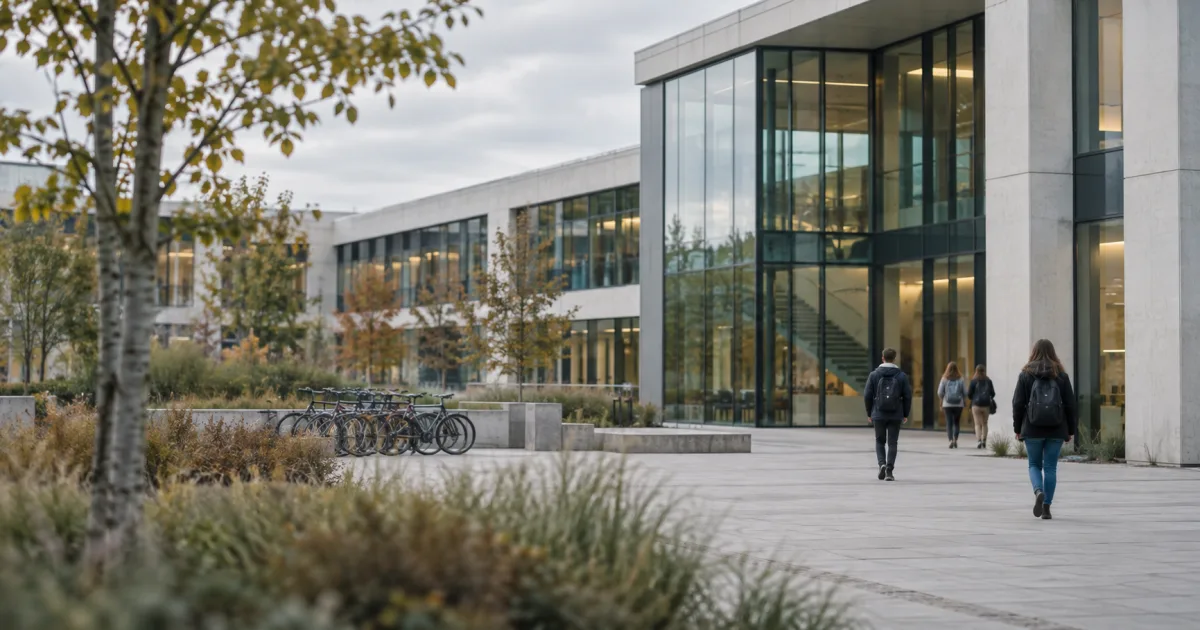
HTW Berlin is a Hochschule fuer Technik und Wirtschaft, a university of applied sciences, and one of the largest of its kind in Germany. Applied sciences matters here: teaching is practice-oriented, projects sit closer to industry, and the campus culture is different from a research university like the ones in our university directory.
Its subject range is wider than the name suggests: business, engineering, computer science, design, culture, health, energy and environment, law, and construction and real estate, across 80 Bachelor, Master and MBA programmes.
Studying there in English
HTW Berlin offers English-language degree programmes, and it runs a separate English-taught track called HORIZON for incoming exchange students. That is a useful distinction to get right before you apply:
| You are | What applies to you |
|---|---|
| A degree seeker | Check the individual programme page for the language of instruction. English options exist but are not the default. |
| An exchange student | The HORIZON programme offers courses taught in English |
If you want a full degree in English and HTW's English list does not match your field, widen the search with our programme directory rather than forcing the fit.
Why Berlin changes the calculation
Read Also: Best Public Universities in Germany 2026: Top 10 Ranking for International Students
Berlin is the cheapest of Germany's big four cities for students and the best supplied with part-time work. That combination is why applications from abroad concentrate here, and why housing is the hard part rather than admission. Read our guide to student housing before you accept an offer, not after.
What to check before you apply
- Your university's recognition. Look it up in Anabin first. Everything else is wasted effort if that fails.
- The application route. Some programmes go through uni-assist, others direct. The programme page says which.
- Language proof. English test for English programmes, TestDaF or DSH for German ones.
- Deadlines. Applied sciences universities often close earlier than you expect for the winter intake.
What "applied sciences" changes about your week
The label is not marketing. It changes the shape of a semester. Expect project work assessed as a deliverable rather than an exam, timetables built around lab and studio blocks, and coursework that arrives with an industry partner attached. Lecturers at a Hochschule are required to bring professional experience, so the person teaching supply chain has usually run one.
Two consequences follow for international students. The first is good: the portfolio you graduate with is something an employer can read, which shortens the job hunt during your 18-month job-seeker permit. The second is a warning: group work is heavy, and it happens in the language the group shares. In a mixed cohort that is usually English, in a German-taught cohort it is not.
Cost, and what Berlin actually asks of you
Tuition is not the line that hurts. Public universities in Berlin do not charge international students tuition, and what you pay each semester is the contribution that covers student services and, usefully, a transport pass. The real budget is rent, and Berlin has stopped being the bargain it was a decade ago.
Work the numbers before you accept: a room, health insurance, the semester contribution, and the blocked account the visa requires. Our complete guide has the full breakdown, and you can offset part of it with the work allowance explained in our student work hours guide.
Applied sciences or research university?
Neither is better. They are different products. A university of applied sciences suits you if you want project work, industry contact and a straight line to a job. A research university suits you if you are heading for a doctorate. Both give you the same residence rights afterwards, including the two-year route to permanent residence that a German degree unlocks.
Sources
Frequently Asked Questions
You probably qualify for more than you think.
Students who get evaluated find programmes they had no idea existed — at universities that charge nothing. 2 minutes, no cost. The only downside is not checking.
Want our guides higher up in Google?
Mark GradGermany as a preferred source and Google gives our pages more room when you search about studying in Germany. Takes one tap, and you can undo it any time from the same screen.
Living this, or on your way to it? Tell your story.
If you are already in Germany and finding it hard, or still fighting to get here, other students need to hear it from someone real. Share your honest journey. We help shape it, and nothing goes live until you approve it.
Free German Quiz · No Login
Can you score 10/10 on today's German challenge?
10 new words every day · 4,500+ words from A1 to C1 · takes about a minute.