NC vs Admission-Free Programs: What's Easier to Get Into?
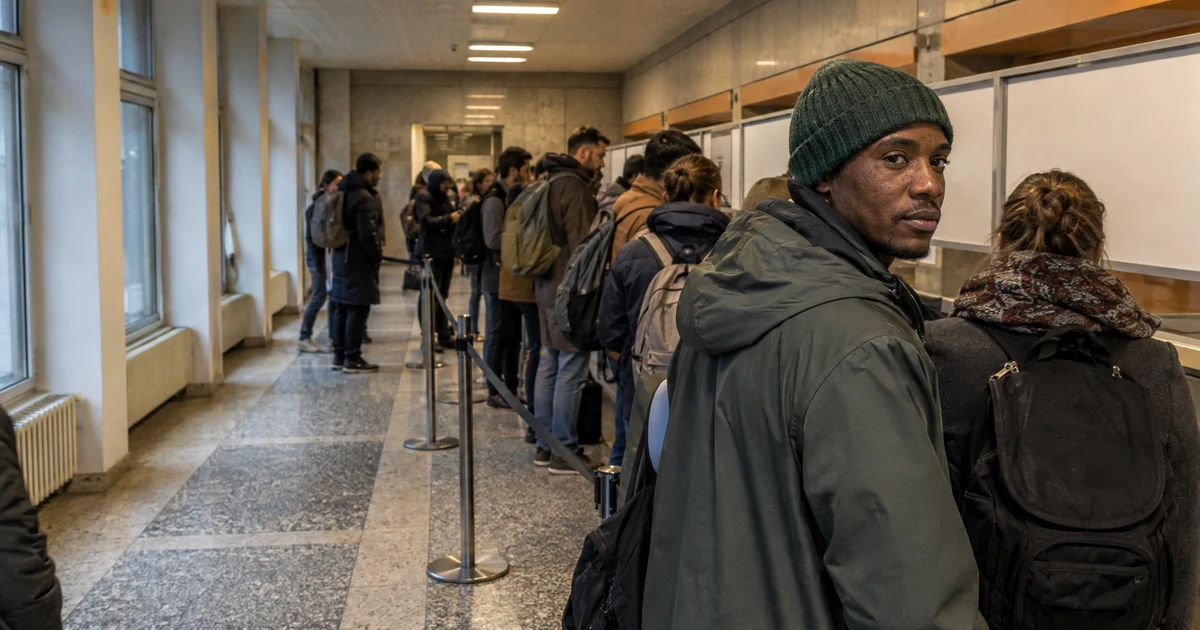
TL;DR: NC programmes cap seats and rank applicants by grades. Admission-free programmes take everyone who meets the criteria, with no cutoff. Roughly two thirds of German degree programmes are admission-free. Build your list from both, and treat the open ones as real choices rather than spares.
Every degree in Germany falls into one of two buckets, and which bucket it is in tells you more about your chances than any ranking does. Get this distinction straight and your application list stops being a guess.
NC: capped seats, ranked applicants
A Numerus Clausus programme has a fixed number of places and more applicants than places, so the university ranks them. Grades do most of the work, with quotas taking a slice and, in some subjects, a test or interview on top. The cutoff is not a published standard; it is whatever grade the last admitted applicant happened to have that year. High demand pushes it up, and it moves between intakes. The mechanics are in how numerus clausus cutoffs are set.
Two flavours exist and they behave differently. Local NC means one university capped one programme, and you apply to that university directly. Nationwide NC covers four subjects only, and the whole country competes in a single pool.
The four subjects where the whole country competes at once
Human medicine, dentistry, veterinary medicine and pharmacy are allocated centrally through hochschulstart.de, not by the universities. Places are split across three quotas that add up to the full intake:
- 30 percent in the Abiturbestenquote, decided purely on school-leaving results, ranked within each state.
- 10 percent in the Zusaetzliche Eignungsquote, where the school grade counts for nothing and only other evidence counts, such as an aptitude test or a completed medical vocational training.
- 60 percent in the Auswahlverfahren der Hochschulen, where each university sets its own mix, and at least one criterion has to be something other than the grade.
The calendar is fixed and unusually early. For a winter start the portal opened in late April, applicants who finished school in an earlier year had to apply by May 31, and school-leavers of the current year by July 15. The coordination phase then ran through to late August, and a clearing round for leftover places ran from late August to the end of September. Miss May 31 as an earlier-year school-leaver and you are not late by a few days, you are out of that cycle. See how this plays out for dentistry applicants.
Admission-free: meet the criteria, get the place
An admission-free programme has no cap and no ranking. Bring the relevant degree, the language proof and, at master's level, the module fit, and you are admitted. Nobody is comparing your average against a stranger's. Engineering, technical and applied programmes make up much of this category.
Most German programmes are not NC at all
This surprises applicants who have read too many forum threads. CHE, which counts admission restrictions every year using the HRK's Hochschulkompass database, put the share of restricted programmes at 31.6 percent for winter semester 2026/27. That is down from 42.4 percent in winter 2017/18, and it has fallen almost every year since. Restrictions cluster in Berlin and Baden-Wuerttemberg and thin out elsewhere.
So roughly two out of three programmes on the German market do not rank you against anyone. If your search keeps returning cutoffs, the search is aimed at the crowded end of the market, not at the market.
| Type | Seats | Selection | Where you apply |
|---|---|---|---|
| Nationwide NC | Capped, one national pool | 30 / 10 / 60 quota split | hochschulstart.de |
| Local NC | Capped per university | Ranked by grades, sometimes a test | University portal or uni-assist |
| Admission-free | Open | Meets criteria | University portal or uni-assist |
The quota that quietly works in your favour
In a locally restricted programme you are usually not ranked against German school-leavers at all. Universities set aside a share of the seats for applicants with a foreign qualification and fill that share from the international pool only. The University of Hohenheim, to take a published example, reserves 8 percent of the places in its locally restricted programmes for non-EU and stateless applicants. Saxony's state rules allow up to the same 8 percent; Lower Saxony sets its figure much lower, at 2 percent.
Two consequences follow, and they point in opposite directions. The German cutoff you found online is not the number you have to beat, so a programme with a scary NC may still be reachable. But the international allocation is a small slice of a capped intake, so a programme with sixty seats may be offering you four or five. Treat any locally restricted programme as a stretch target no matter what the published cutoff says.
Open is easier, but not lenient
Open programmes are easier to enter for everyone, strong students included, because there is no other candidate to lose to. What they are not is soft. Module fit is often checked strictly, and a mismatched transcript fails an open programme just as it fails an NC one. Open describes the seat count, not the standard. See where German admission is genuinely difficult and what grade you actually need.
If the cutoff lands above you, two things happen automatically and one does not
Rejection from an NC programme is not always the end of that intake. Admitted applicants routinely decline, and the university then works down its ranked list in a Nachrueckverfahren. You are in that automatically; there is nothing to submit and nothing to chase.
What is not automatic is the Losverfahren, the lottery for seats still empty once the ranked list is exhausted. It needs a fresh, separate application, and the window is short. The University of Stuttgart's cycle is typical: it publishes which programmes have leftover seats in the second week of September, takes lottery applications for one week, and draws the places the following day. Bachelor first-semester places only, not master's. Applicants with a foreign qualification can enter, and at several universities, including the Freie Universitaet Berlin, they have to upload a uni-assist VPD with the lottery application.
The practical lesson is a diary entry. If you are rejected in August, do not close the file. Check your universities' lottery pages in early September, because a place you could not win on grades can still arrive by draw.
How to build the list
A few NC targets you genuinely want. Several open programmes whose criteria you clearly meet. That is the whole strategy, and it survives whatever the NC pool looks like this year. Our roundup of Germany's most competitive master's shows which of your targets belong in the first group.
The part most applicants get wrong is the attitude to the second group. An open programme with good module fit is not a consolation prize. It gets you into Germany, into German, and into a local network, and plenty of people use exactly that route before moving to a selective brand later if they still want one. Pair it with a plan for internships and part-time work during the degree and it is frequently the more practical way to the outcome you were after.
What both types demand identically
Correct language proof, and for applicants from India, China, Vietnam and Mongolia, the APS. Open admission does not soften either. Prepare exactly the same file for both. See the English score minimums and the APS process in the four countries.
Money is identical too. Same fees, and the same 11,904 euros in a blocked account before the visa. See blocked account costs and the student visa guide.
After you are in, the routes converge
Part-time work during study, then the 18-month job-seeker visa, then a work permit and permanent residence. Nothing about that sequence depends on which bucket admitted you. See the post-study work visa guide.
Sources
- hochschulstart.de, allocation quotas
- hochschulstart.de, dates and deadlines
- CHE, share of admission-restricted programmes
- University of Hohenheim, international applicant quota
- University of Stuttgart, Losverfahren
- Hochschulkompass
Want a list that balances NC targets with open backups? Start with a free profile evaluation.
Frequently Asked Questions
You probably qualify for more than you think.
Students who get evaluated find programmes they had no idea existed — at universities that charge nothing. 2 minutes, no cost. The only downside is not checking.
Want our guides higher up in Google?
Mark GradGermany as a preferred source and Google gives our pages more room when you search about studying in Germany. Takes one tap, and you can undo it any time from the same screen.
Living this, or on your way to it? Tell your story.
If you are already in Germany and finding it hard, or still fighting to get here, other students need to hear it from someone real. Share your honest journey. We help shape it, and nothing goes live until you approve it.
Related Guides
Free German Quiz · No Login
Can you score 10/10 on today's German challenge?
10 new words every day · 4,500+ words from A1 to C1 · takes about a minute.
Related Articles
Study in Germany
Angewandte Geowissenschaften - Georessourcen, Geoenergien, Geotechnologien, M.Sc.
Christian-Albrechts-Universität zu Kiel
Kiel
LL.M.Wirtschaftsrecht für die Unternehmenspraxis, LL.M.
Universität des Saarlandes
Saarbrücken
B.A.Theologische Diakonie und Missionarische Katechese, B.A.
Kölner Hochschule für Katholische Theologie (KHKT)
Köln