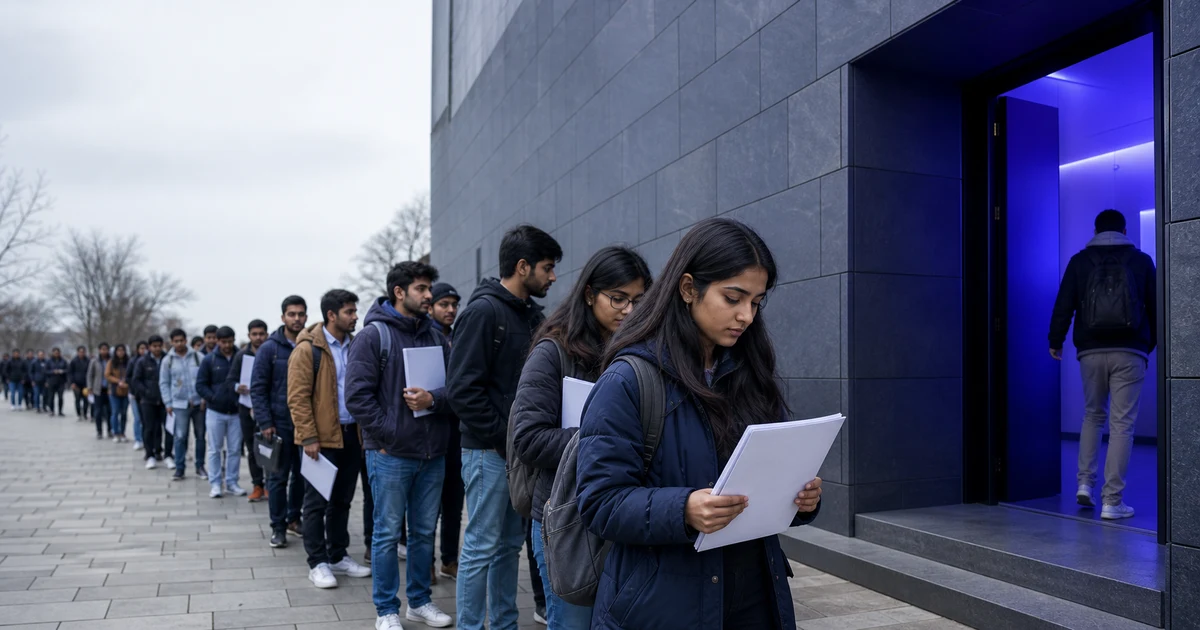
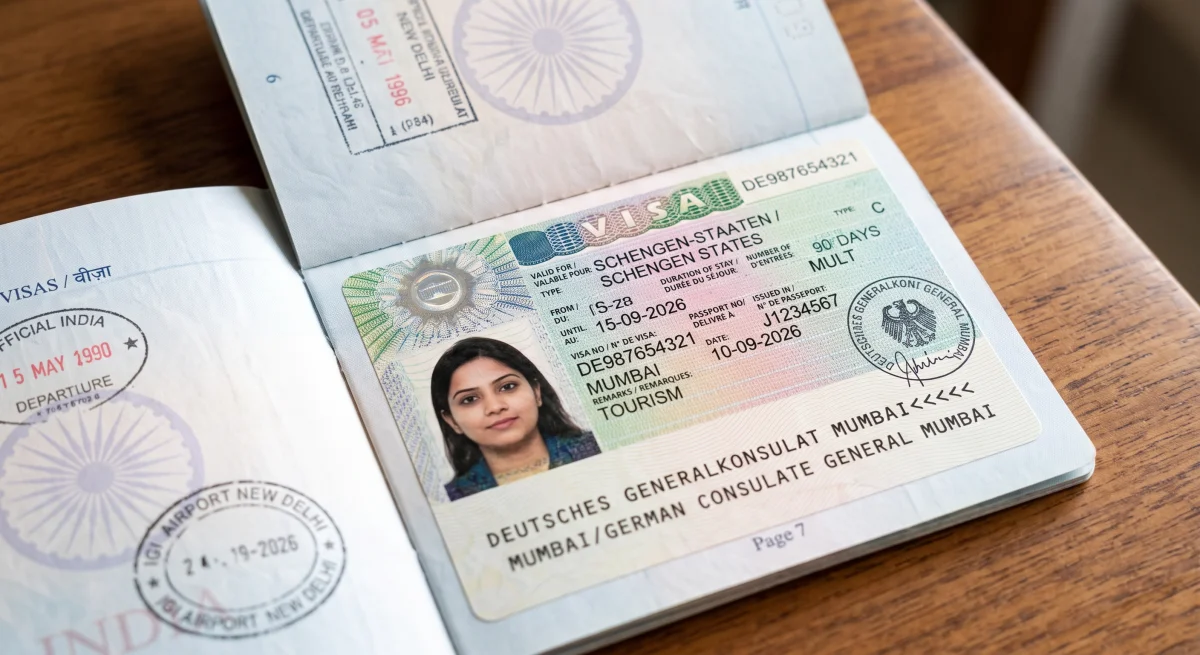
81% of Indian Study-Abroad Applicants Now Plan to Come Home. That Changes How You Should Choose Germany

TL;DR: Oxford International's third Student Global Mobility Index found that 81 percent of surveyed Indian applicants intend to return to India after their course. 88 percent would be the first in their family to study overseas, and the share describing the decision as largely their own rose from 29 percent in 2023/24 to 49 percent in 2025/26. A degree abroad is being bought as a career move, not as an emigration ticket.
The survey combined 17,925 responses to its core questions with roughly 2,400 additional responses on course preferences, family background and post-graduation plans. That is a large sample by study-abroad research standards, and the headline finding runs against the assumption almost every conversation about Indian students abroad starts from.
Four in five of these applicants plan to come home.
What the survey found
| Finding | Figure |
|---|---|
| Intend to return to India after their course | 81 percent |
| First in their family to study overseas | 88 percent |
| Say the decision was largely their own (2025/26) | 49 percent, up from 29 percent in 2023/24 |
| Say family was the primary driver (2025/26) | 36 percent, down from 59 percent in 2023/24 |
| Subject interest: business and management | 75 percent |
| Discovered an institution via Google / via agents | 39 percent / 35 percent |
Source: The PIE News, reporting Oxford International's Student Global Mobility Index.
The shift underneath the headline
The number that matters most is not the 81 percent. It is the move from 29 percent to 49 percent in two years on who is actually making the decision.
Two years ago this was largely a family decision, with 59 percent naming family as the primary driver. Now it is close to an even split, and falling fast on the family side. Combine that with 88 percent being first-generation and you get a specific kind of applicant: young, deciding for themselves, without a parent or sibling who has done it before, and researching mostly through Google.
That last detail explains a lot about how much bad information circulates. When 39 percent of people find their university through a search engine and 88 percent have nobody at home who has been through the process, whatever ranks well becomes the truth.
If you are coming back anyway, choose differently
Planning to return home is a perfectly good plan. It just means several of the criteria people optimise for are the wrong ones.
Brand recognition in India starts to matter more, not less. If you will be interviewing in Bengaluru or Pune in three years, an HR screener's recognition of your university is a real input. This is one of the few arguments that genuinely favours the TU9 group and the well known names.
Permanent residency timelines drop out of the calculation. A lot of Germany content, ours included, is written around the PR pathway. If you are leaving after two or three years, the PR route is not a factor in your decision at all. Stop weighting it.
Work experience beats the visa runway. Germany's 18-month post-study job-seeker permit is generous, but if you are returning, what you want from it is 12 to 24 months at a company an Indian employer has heard of. Siemens, Bosch, SAP, Continental, Zeiss, Infineon. That is the asset you are carrying home, more than the degree certificate.
German still matters. Counterintuitive, but German-speaking engineers are a scarce and well-paid category inside the India operations of German multinationals. The language is not wasted effort just because you leave.
Total cost decides whether the degree pays for itself. A returning graduate has a fixed window to recover the spend. This is where Germany simply wins: no tuition at public universities against roughly 40 to 60 lakh for a comparable US or UK master's. Our cost breakdown has the arithmetic.
The business-degree mismatch
Read Also: German Universities Are Cutting Budgets in 2026: What It Actually Means for Your Application
Business and management accounted for 75 percent of subject interest in the survey, with engineering at 1 percent. Germany's public university system is built the other way round: its global strength is engineering, computer science and the natural sciences, and most of its well-regarded business schools are private and charge real tuition.
So a large share of these applicants are pointed at destinations other than Germany, and that is the correct decision for them. Germany is not the answer to every study-abroad question. It is a very strong answer to a specific one: an affordable technical postgraduate degree with an employable outcome. If you want an MBA with no tuition, that combination does not exist here.
Sources
Frequently Asked Questions
You probably qualify for more than you think.
Students who get evaluated find programmes they had no idea existed — at universities that charge nothing. 2 minutes, no cost. The only downside is not checking.
Want our guides higher up in Google?
Mark GradGermany as a preferred source and Google gives our pages more room when you search about studying in Germany. Takes one tap, and you can undo it any time from the same screen.
Living this, or on your way to it? Tell your story.
If you are already in Germany and finding it hard, or still fighting to get here, other students need to hear it from someone real. Share your honest journey. We help shape it, and nothing goes live until you approve it.
Free German Quiz · No Login
Can you score 10/10 on today's German challenge?
10 new words every day · 4,500+ words from A1 to C1 · takes about a minute.