Studying Renewable Energy & Sustainability in Germany 2026
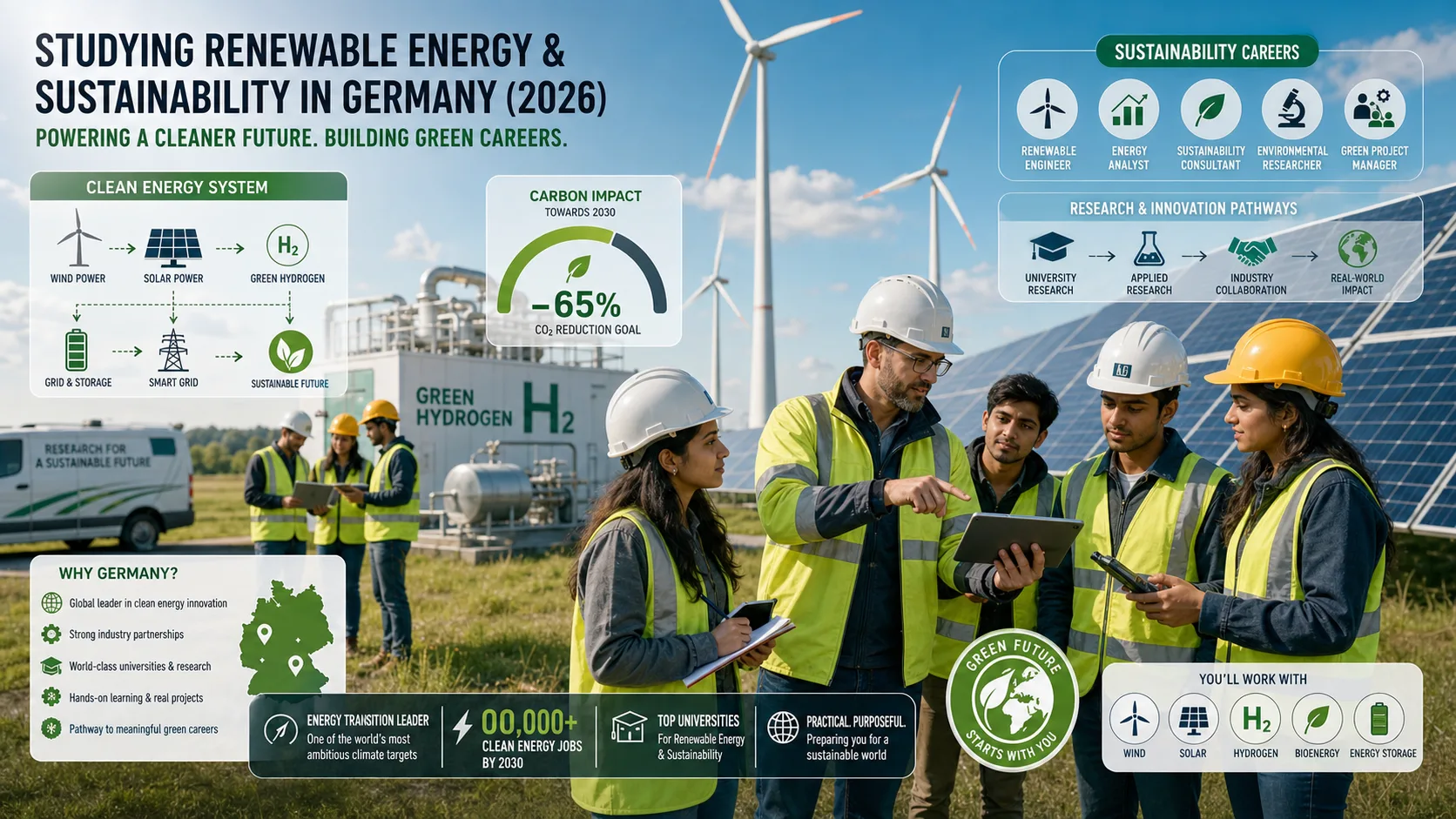
TL;DR: Germany's energy transition (the Energiewende) has created strong, lasting demand for specialists in solar, wind, hydrogen, and energy systems. You can study renewable energy and sustainability tuition-free at many public universities, with growing English-taught options, and step into a field on Germany's official shortage list, which speeds your route to work and residence.
Key facts at a glance
| Item | Detail |
|---|---|
| Driver | The Energiewende (energy transition) |
| In-demand specialisms | Solar, wind, hydrogen, energy systems |
| Tuition | Free at most public universities |
| Shortage status | Yes, aids visas and PR |
| Language | English-taught options growing |
If you want a degree aligned with where the world (and Germany specifically) is heading, renewable energy is about as future-proof as it gets. Germany is investing heavily in the transition, and it needs people to build it.
Why renewable energy in Germany?
Germany's Energiewende is one of the most ambitious energy transitions anywhere, shifting the economy toward solar, wind, and hydrogen. That national priority translates into sustained demand for renewable energy specialists, who appear consistently on shortage lists. Studying this field means aligning yourself with long-term, policy-backed demand, not a passing trend.
What you can study
Programmes span renewable energy engineering, energy systems, sustainability, environmental engineering, and related fields. Specialisms in solar, wind, hydrogen, and energy management map directly onto the roles Germany is hiring for. GradGermany's subject pages cover related areas like renewable energy, energy engineering, and environmental science.
Tuition and universities
As with other fields, most public universities charge no tuition (mind the Baden-Württemberg non-EU fee and TUM's fees for new non-EU students). Germany's strong engineering universities, including several TU9 institutions, offer relevant programmes, with English-taught options increasingly available.
Admission requirements
- A relevant Bachelor's (engineering, environmental science, physics, or related)
- APS certificate, mandatory for Indian students
- CGPA converted via the German Grade Converter
- English proof or an accepted alternative
- A strong SOP linking your background to the energy transition
Career outlook
Renewable energy specialists are in demand across solar, wind, and hydrogen, and the field's shortage status brings the usual advantages: faster visas and a quicker route to the EU Blue Card and permanent residence. It is a field with both purpose and security, a rare combination.
How to choose your programme
- Match the specialism (solar, wind, hydrogen, systems) to your interests.
- Confirm tuition status for your specific university and programme.
- Check English availability if you are not yet at German B2.
- Favour universities with strong industry and research links in energy.
Study the energy transition with the right programme
Renewable energy is future-proof, but the right programme and university make the difference. GradGermany helps Indian students target energy and sustainability degrees that lead to jobs.
Get a free profile evaluation or browse renewable energy programmes.
Frequently Asked Questions
You probably qualify for more than you think.
Students who get evaluated find programmes they had no idea existed — at universities that charge nothing. 2 minutes, no cost. The only downside is not checking.
Want our guides higher up in Google?
Mark GradGermany as a preferred source and Google gives our pages more room when you search about studying in Germany. Takes one tap, and you can undo it any time from the same screen.
Get new guides as soon as they go live
Add our feed to Feedly, Inoreader or any RSS reader and every new guide on studying in Germany shows up there by itself. No email, no sign-up.
Living this, or on your way to it? Tell your story.
If you are already in Germany and finding it hard, or still fighting to get here, other students need to hear it from someone real. Share your honest journey. We help shape it, and nothing goes live until you approve it.
Free German Quiz · No Login
Can you score 10/10 on today's German challenge?
10 new words every day · 4,500+ words from A1 to C1 · takes about a minute.