Why Study in Germany? The Honest Case for Nepali Students in 2026
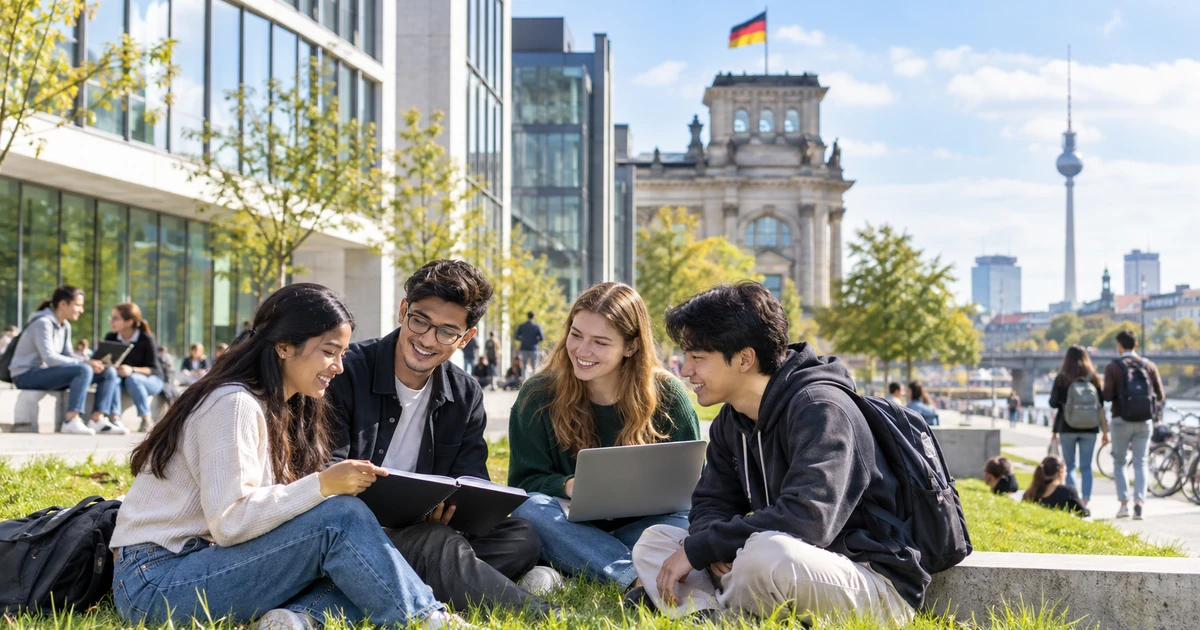
Is Germany good for Nepali students? For bachelor's holders who can fund the first year, yes. For school leavers the road is longer, because of the Studienkolleg year. The usual pitch for Germany fits on a poster: free tuition, strong engineering, good jobs. Parts of it are true. Other parts leave out what actually trips up Nepali applicants, such as the Studienkolleg year after +2, the German you need outside the lecture hall, and the wait for a visa appointment in Kathmandu. This guide makes the case for Germany and the case against it, so you and your family can decide with the full picture.
Germany is not a niche choice. In 2022 it hosted 403,473 international students and ranked third behind the US and the UK, according to Wissenschaft weltoffen 2025, the DAAD and DZHW data report. The same report counts 95,092 Nepali students abroad that year. Only a small share of them are in Germany: the Federal Foreign Office puts the number of Nepali students at German universities at over 2,000.
Five reasons that hold up
1. You pay for living, not for the degree
State universities generally charge no tuition for bachelor's or most master's courses, with Baden-Wuerttemberg and TUM as the big exceptions; our free tuition guide lists who charges what. For a family in Nepal this changes the arithmetic. Almost every rupee you plan for goes into rent, food and insurance, which you can cut, rather than into fees, which you can't.
2. The degree comes with time to find a job here
Finish a degree here and you are entitled to stay on for as long as 18 months while you hunt for work, taking any job in the meantime, as our post-study permit guide explains. In practice the degree doubles as your way into the German job market.
3. A big system, with real English options at master's level
The German Rectors' Conference counts 422 higher education institutions, and in winter 2025/26 it listed 1,944 English-taught postgraduate programmes, 18.2% of the total (HRK statistics). If you already hold a bachelor's from Nepal, an English-taught master's is a realistic plan.
4. You can earn while you study
Under the rules set out on the federal Make it in Germany portal, students may work up to 140 full days or 280 half days a year. Useful pocket money, and useful German practice. Not a way to pay for everything, as the next section shows.
5. Skilled workers are wanted, and the rules say so
An EU Blue Card in 2026 needs a salary of EUR 50,700, or EUR 45,934.20 for shortage occupations and for graduates whose degree is under three years old, according to the official notice. The rules are published and predictable, which matters when you are planning five years ahead from Nepal.
Three reasons that don't hold up on their own
"It's all free"
Tuition may be zero; living is not. The visa rules want proof of EUR 11,904 for the first year (EUR 992 per month), and DAAD's estimate of real spending runs from EUR 900 to EUR 1,200 monthly, varying by city. Our cost of studying guide adds up the full first year.
"I'll pay my way with a part-time job"
DAAD says plainly that a side job can raise your budget but that funding all your living costs this way is very hard.
"An English programme means I can skip German"
Only 439 of 11,767 undergraduate programmes, 3.7%, are taught in English, according to the HRK figures above. Even on an English master's, the part-time job, the landlord and the foreigners office usually operate in German. Our language requirements guide covers which level each route needs.
One more myth deserves a line of its own. The German Embassy in Kathmandu states that no visa agent can influence the outcome or speed up processing. Anyone promising otherwise is selling something.
The catch for +2 students
Check this before anything else. According to the DAAD admission database, Class 12 by itself leads to a Studienkolleg, not straight into a bachelor's programme. That preparatory year closes with an exam, the Feststellungspruefung. Add one successfully completed year at a Nepali university and direct entry opens, limited to that subject or a related one, and a Nepali bachelor of four to five years opens any undergraduate course. Public Studienkollegs are free apart from the semester fee, and our Studienkolleg guide explains how to get a place.
For bachelor's holders the question is different. On anabin a four-year Nepali degree counts as equivalent to a German bachelor while a three-year one is only conditionally comparable, which leaves each master's programme to decide whether three years is enough. You can look up your degree type on anabin.
Germany against Canada and Australia
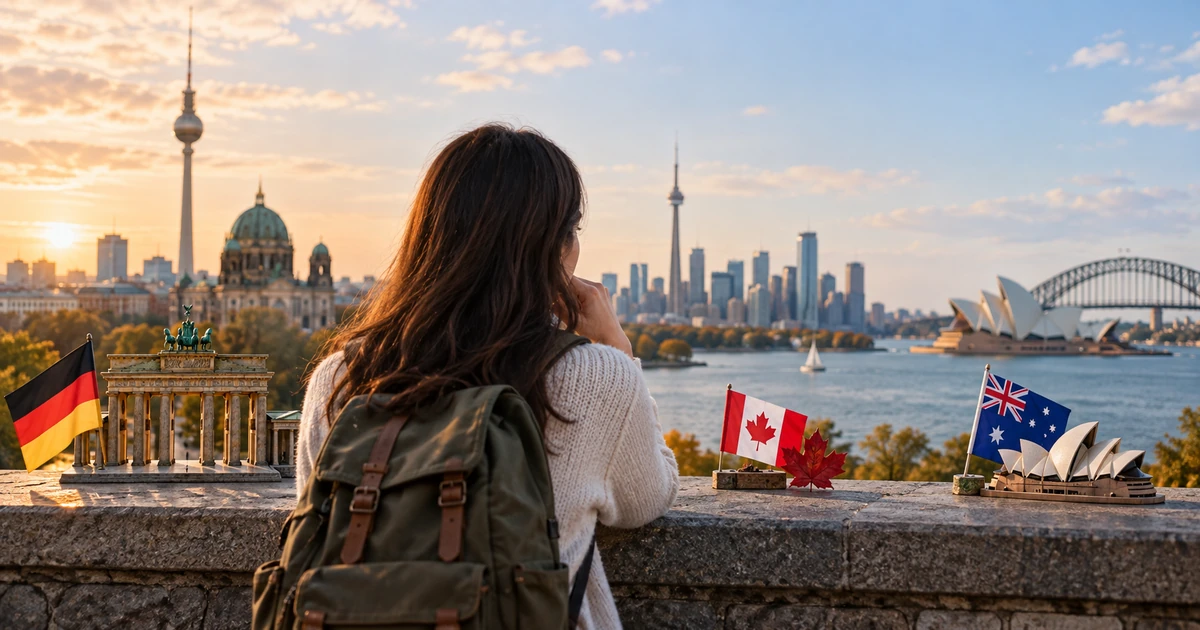
We put costs, work rights and settlement routes side by side in our Germany vs Canada vs Australia comparison. The short version: Germany asks more of you before you arrive, in language, document checks and a funded account, and in return most of what you spend goes on living rather than tuition.
Who Germany suits, and who it doesn't
Germany tends to work well if:
- you hold, or will soon hold, a 4-year bachelor's in engineering, IT, science or business and want a master's;
- you are willing to reach at least B1 German, even on an English programme;
- your family, a sponsor or a scholarship can cover EUR 11,904 for the first year;
- you can live with some uncertainty about your visa date.
It is a harder fit if you want an English-taught bachelor's straight after +2, need to earn your full living costs from the first month, or must start on one fixed date no matter what.
Not sure which side you fall on? Send us your marks and goals for a free profile evaluation, or browse the programme finder to see what your subject looks like in Germany.
Frequently Asked Questions
You probably qualify for more than you think.
Students who get evaluated find programmes they had no idea existed — at universities that charge nothing. 2 minutes, no cost. The only downside is not checking.
Want our guides higher up in Google?
Mark GradGermany as a preferred source and Google gives our pages more room when you search about studying in Germany. Takes one tap, and you can undo it any time from the same screen.
Get new guides as soon as they go live
Add our feed to Feedly, Inoreader or any RSS reader and every new guide on studying in Germany shows up there by itself. No email, no sign-up.
Living this, or on your way to it? Tell your story.
If you are already in Germany and finding it hard, or still fighting to get here, other students need to hear it from someone real. Share your honest journey. We help shape it, and nothing goes live until you approve it.
Free German Quiz · No Login
Can you score 10/10 on today's German challenge?
10 new words every day · 4,500+ words from A1 to C1 · takes about a minute.
Related Articles
Study in Germany
Kunstgeschichte, M.A.
Johann Wolfgang Goethe-Universität, Frankfurt am Main
Frankfurt am Main
M.Sc.Sozialwissenschaftliche Nachhaltigkeitsforschung, M.Sc.
Julius-Maximilians-Universität Würzburg
Würzburg
B.A.Bildung im Sekundarbereich (Bezug Lehramt Sekundarstufe I), B.A.
Pädagogische Hochschule Heidelberg
Heidelberg