Nursing in Germany for Indian Students: The Ausbildung Pathway (2026)
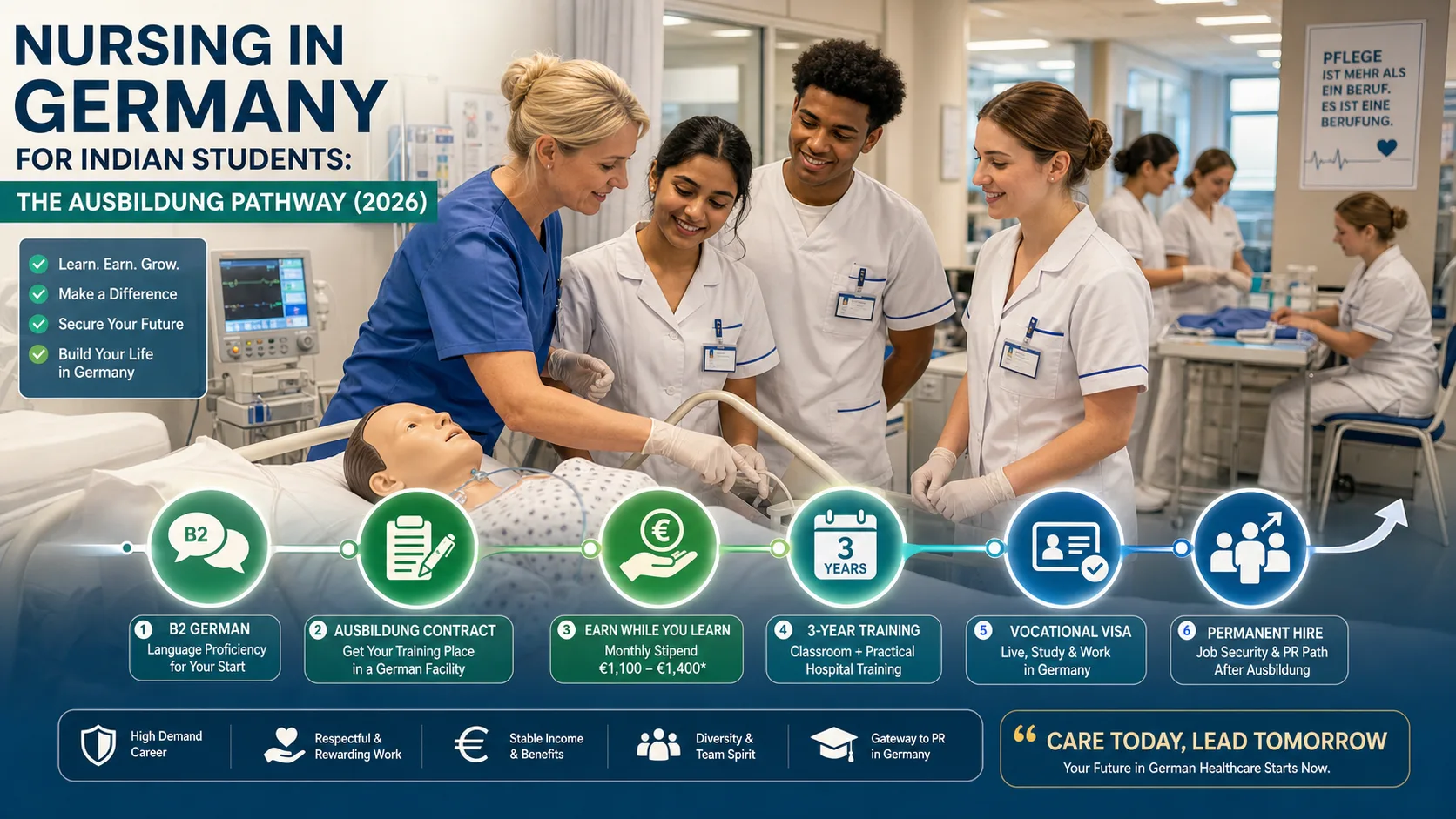
TL;DR: Indian students can become nurses in Germany through Ausbildung (paid vocational training), no university degree required. You need German at B2, earn a stipend of €1,000+/month while training (about 3 years), enter on the §16a vocational training visa, and are usually hired permanently afterward, making it one of the fastest legal routes to permanent residence.
Key facts at a glance
| Item | Detail |
|---|---|
| Route | Ausbildung (paid vocational training) |
| German level | B2 to start |
| Stipend | €1,000+/month (rises yearly) |
| Duration | ~3 years |
| Visa | §16a vocational training visa |
| Outcome | Permanent hire + fast route to PR |
Germany doesn't have enough nurses, and it knows it. For Indian students, that shortage has opened up one of the most realistic, lowest-cost routes into a European career, and just as importantly, into long-term residence. You don't need a university degree to take it. You need German, willingness to train, and a plan.
Why nursing in Germany?
Germany's healthcare system needs trained nurses and has built clear legal pathways to bring them in. Through Ausbildung you train on the job, earn a monthly stipend while you learn, and finish with a recognised qualification and strong job security. Most trainees are hired permanently, putting you on a fast track to permanent residence.
Two routes into German nursing
- Ausbildung (vocational training), train as a nurse in Germany from scratch, earning while you learn. Best if you don't already hold a nursing degree.
- Recognition of an existing qualification, if you hold a BSc Nursing from India, your qualification can be recognised, often after a German language requirement and an adaptation period.
This guide focuses on the Ausbildung route, the most common entry point.
Requirements for nursing Ausbildung
- Completed schooling (Class 12), and a BSc Nursing if you have one
- German at B1-B2 (B2 typically required to start nursing training)
- Translated and notarised school and degree certificates
- A German-style CV (Lebenslauf) and motivation letter (Motivationsschreiben)
- An Ausbildung contract with a hospital or care provider
Unlike English-taught Master's programmes, this route is built around German, there's no skipping the language. Our German courses from A1 to C1 are designed for it.
How much do you earn?
Nursing Ausbildung is paid training. Apprentices typically receive €1,000+/month, rising each year. After qualifying, nurses earn a full salary and the role is in high demand across Germany and the EU. For the wider salary picture, see Average Salary by Field.
The German language requirement
Let's be honest about the part that decides everything: the German. You'll usually need B1 for some early steps and B2 to actually begin the nursing Ausbildung. Starting from zero, reaching B2 realistically takes 8-10 months of consistent study (through Goethe, telc, or ÖSD). This is the longest single stretch of the whole journey, so it's the thing to start first, before the certificates, before the applications. Everything else moves faster once your German is in place.
The visa: §16a vocational training
Indian students enter on the §16a vocational training visa, specifically for Ausbildung. You apply once you have a signed contract. As with other routes, you'll prove financial means, though the stipend helps. For the general process, see German Student Visa from India.
Step-by-step pathway
- Reach B2 German (8-10 months).
- Translate and notarise your certificates.
- Prepare a German-style CV and motivation letter.
- Apply to 15-25 hospitals or care providers and complete video interviews.
- Sign your contract and apply for the §16a visa.
End to end, typically 9-14 months. GradGermany handles steps 2-5 under its Ausbildung programme.
The path to permanent residence
Nursing is one of the fastest legal routes to long-term residence: most trainees are hired permanently, building the work history needed for PR. See PR in Germany After Studies.
Ausbildung nursing vs a university nursing degree
| Ausbildung | University degree | |
|---|---|---|
| Cost | Free + paid stipend | Free tuition, you fund living |
| Language | German B2 | English options exist |
| Focus | Hands-on training | Academic theory |
| Best for | Fast work + residence | Advanced/management roles |
See the full comparison in Ausbildung vs University, or the university nursing route.
Start your German nursing journey
The hardest parts are the language and the application coordination, exactly what GradGermany manages through its Ausbildung programme.
Explore the Ausbildung pathway or get a free profile evaluation.
Frequently Asked Questions
You probably qualify for more than you think.
Students who get evaluated find programmes they had no idea existed — at universities that charge nothing. 2 minutes, no cost. The only downside is not checking.
Want our guides higher up in Google?
Mark GradGermany as a preferred source and Google gives our pages more room when you search about studying in Germany. Takes one tap, and you can undo it any time from the same screen.
Living this, or on your way to it? Tell your story.
If you are already in Germany and finding it hard, or still fighting to get here, other students need to hear it from someone real. Share your honest journey. We help shape it, and nothing goes live until you approve it.
Free German Quiz · No Login
Can you score 10/10 on today's German challenge?
10 new words every day · 4,500+ words from A1 to C1 · takes about a minute.