TL;DR: Aachen offers RWTH Aachen (TU9 elite) with private-market rent of EUR 380-480/month and a total budget of EUR 800-950/month. A Studierendenwerk single room starts at EUR 223, all bills included, which drops the whole month to about EUR 670. The blocked account (EUR 992/month) covers it comfortably. The semester contribution is EUR 375.19 and the travel pass inside it reaches Belgium and the Netherlands.
Germany's largest technical university sits in a city where a student room costs about the same as one in Leipzig. That combination should not exist, and it is the entire case for Aachen.
The maths that makes Aachen unusual
Rent here runs EUR 380-480/month on the private market. In Munich, for a comparable TU9 university, you would pay EUR 300-400 more every month. Over a two to three year degree that gap comes to EUR 7,000-14,000 in total, real money for a student funding the whole thing from a blocked account. You are not paying a premium for the name on the certificate. If you are weighing RWTH against TUM or KIT, that number belongs in the comparison alongside the rankings: where to study engineering in Germany.
What RWTH Aachen actually is
RWTH Aachen is the largest technical university in Germany and a TU9 member. In the winter semester 2025/26 it had 44,382 students, of whom 15,811 were international, from 141 countries. That is more than a third of the campus, which changes what daily life feels like: the administrative machinery is used to foreign paperwork and the English-taught master's catalogue is one of the broadest in the country.
Engineering, computer science, natural sciences and medicine are the strengths. Industry research centres sit on campus rather than adjacent to it, which is why thesis projects here tend to come with a company attached. Getting in is the hard part: how RWTH Aachen assesses Indian applicants covers grades, APS and deadlines.
What a Studierendenwerk room actually costs
Studierendenwerk Aachen houses more than 5,000 students across 24 residence halls, and its published rents are the single biggest lever on your monthly budget. These are the real prices, not a range someone estimated.
| Hall | Room | Monthly rent |
|---|---|---|
| Kastanienweg 4-6 | 446 single rooms, 14 sqm | EUR 223 |
| Bayernallee 7 | 116 single rooms, 12 sqm | EUR 262 |
| Ruetscher Strasse 121 | 242 single rooms, 12-14 sqm | EUR 262-272 |
| Kullenhofstrasse 56-66 | 321 single rooms, 14-17 sqm | EUR 272-303 |
| Kastanienweg 21-35 | 347 rooms in shared flats, 15 sqm | EUR 297 plus electricity |
| Halifaxstrasse 81-85 | 286 rooms in shared flats, 16 sqm | EUR 302 plus electricity |
| Hainbuchenstrasse 4, 8, 10 | 145 apartments, 23-35 sqm | EUR 491-695 |
Three things about that table matter more than the numbers themselves. First, most Studierendenwerk rents are all-inclusive: heating, water, electricity and TV are in the price and there is no annual Nebenkosten reckoning. Where a hall says "plus electricity", that is the exception, not the norm. Second, the cheapest option is not a token handful of rooms. Kastanienweg 4-6 has 446 of them at EUR 223, roughly 15 minutes from the faculties.
Third, the deposit is two months' rent, payable before you sign, and it lands in the same month as your flight and your first semester contribution. Budget for it separately.
The waiting list is the actual constraint
Studierendenwerk Aachen states the waiting period plainly: about six months if you accept the whole room offer, and a year or more if you insist on one room type such as a self-contained apartment. Read that as an instruction. Apply the week you accept your offer, tick every room type you could tolerate, and treat a private WG as the fallback rather than the plan. City-by-city figures are in where the blocked account stretches and where it does not.
The month, line by line
Two columns, because the housing decision is worth more than everything else on the list combined.
| Expense | Studierendenwerk room | Private WG room |
|---|---|---|
| Rent | EUR 223, bills included | EUR 380-480 |
| Food and groceries | EUR 190-240 | EUR 190-240 |
| Transport (semester ticket) | EUR 37.80 | EUR 37.80 |
| Health insurance | EUR 146.29 | EUR 146.29 |
| Phone, internet, leisure | EUR 70-100 | EUR 70-100 |
| Total | EUR 667-747 | EUR 824-1,004 |
Against EUR 992/month from the blocked account, the hall version leaves you genuinely comfortable and the private-market version leaves you fine. Neither is true of Munich or Hamburg.
Where the health insurance number comes from
The EUR 146.29 is not an estimate, and it is worth understanding because it is identical in every German city. Statutory student cover is calculated from a fixed base, not from your income. Under section 236 of SGB V that base is the BAfoeG monthly need rate for a student living away from home, which is EUR 855 a month. Section 245 sets the student contribution rate at seven tenths of the general rate of 14.6 percent, so 10.22 percent. That is EUR 87.38.
Your fund then adds its own additional contribution on the same base. TK's is 2.69 percent from 1 January 2026, so EUR 23.00. Long-term care insurance is 3.6 percent, rising to 4.20 percent for members without children from the month after they turn 23, which is EUR 35.91. Add them: EUR 146.29. Under 23, or with a child, the care portion drops to EUR 30.78 and the total to EUR 141.16. Compare funds on their additional contribution, because that is the only part that varies.
The semester contribution, itemised
RWTH charges no tuition. What you pay twice a year is the semester contribution, and for winter 2026/27 it is EUR 375.19, made up of EUR 128.00 to Studierendenwerk Aachen, EUR 12.62 to the student body, and EUR 234.57 for mobility.
That mobility line is the interesting one. EUR 226.80 of it is the Deutschlandticket-based semester ticket, which works out at EUR 37.80 a month against the EUR 63 a member of the public pays for the same national travel pass. The remaining EUR 7.77 is the Zuid-Limburg add-on that extends it into the Netherlands. You are being handed a nationwide travel pass at a 40 percent discount and a second country thrown in.
The three-country corner
Aachen sits where Germany, Belgium and the Netherlands meet, and the semester ticket takes the border seriously. It covers the AVV network, the regional trains, and the cross-border services into Dutch Limburg. No other German university town includes another country in its student travel pass by default. Maastricht is 15 minutes away, Liege 45 minutes, Cologne and Duesseldorf an hour each, Brussels 1.5 hours.
The Studierendenwerk itself sells the point in its housing listings: one hall advertises being "20 minutes to the Netherlands where the shops are open on Sundays". In Germany they are not, and after a term you will understand why that sentence is in a rent advert.
Working across a border pays more
Aachen's own job market is strong for a city this size, because Intel, Microsoft, Ford and Continental run research operations on or beside the RWTH campus, alongside a dense startup layer. Werkstudent rates here are EUR 14-18 an hour, above Leipzig or Dresden. Cross the border and Dutch or Belgian employers pay EUR 16-22 an hour.
Two rules to check before you take cross-border work. Your German residence permit sets what you may do in Germany, and a job in the Netherlands or Belgium sits outside it, so the host country's own rules apply. And a German job paying more than EUR 603 a month stops being a Minijob and moves you into a different contribution regime. See how Werkstudent rules and hour limits work.
Life in the Pontviertel
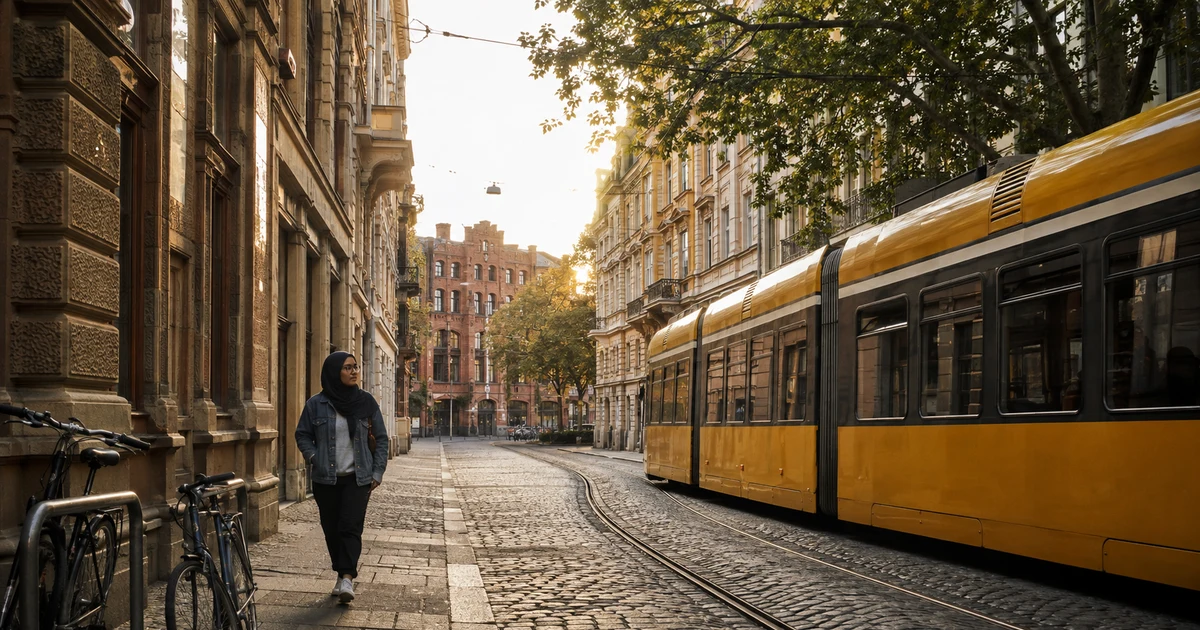
About 44,000 students share a city of roughly 250,000. The university sets the tone of the place. The Pontviertel is where that concentrates, in bars, cafes and clubs within walking distance of the lecture halls, and it is also where private rents run highest, because everyone wants the ten-minute walk. Kastanienweg and Ruetscher Strasse are the cheaper trade: a bit further out, and the semester ticket makes the distance irrelevant.
The city is compact and cycled rather than driven. Karneval, the CHIO equestrian championships and the Christmas market are the fixed points of the year. For how the cost compares with the alternatives, see Munich, Berlin and Leipzig side by side.
Sources
- Studierendenwerk Aachen residence halls and rents
- Studierendenwerk Aachen housing FAQ
- RWTH semester contribution breakdown
- RWTH Aachen facts and figures
- GKV-Spitzenverband, long-term care contribution rate
- Section 245 SGB V, student contribution rate
Aiming at RWTH? Our application support checks your profile against its entry bar before you spend a uni-assist fee.
Frequently Asked Questions
You probably qualify for more than you think.
Students who get evaluated find programmes they had no idea existed — at universities that charge nothing. 2 minutes, no cost. The only downside is not checking.
Want our guides higher up in Google?
Mark GradGermany as a preferred source and Google gives our pages more room when you search about studying in Germany. Takes one tap, and you can undo it any time from the same screen.
Get new guides as soon as they go live
Add our feed to Feedly, Inoreader or any RSS reader and every new guide on studying in Germany shows up there by itself. No email, no sign-up.
Living this, or on your way to it? Tell your story.
If you are already in Germany and finding it hard, or still fighting to get here, other students need to hear it from someone real. Share your honest journey. We help shape it, and nothing goes live until you approve it.
Free German Quiz · No Login
Can you score 10/10 on today's German challenge?
10 new words every day · 4,500+ words from A1 to C1 · takes about a minute.