Aachen vs Berlin vs Munich vs Hamburg: Where to Study Engineering
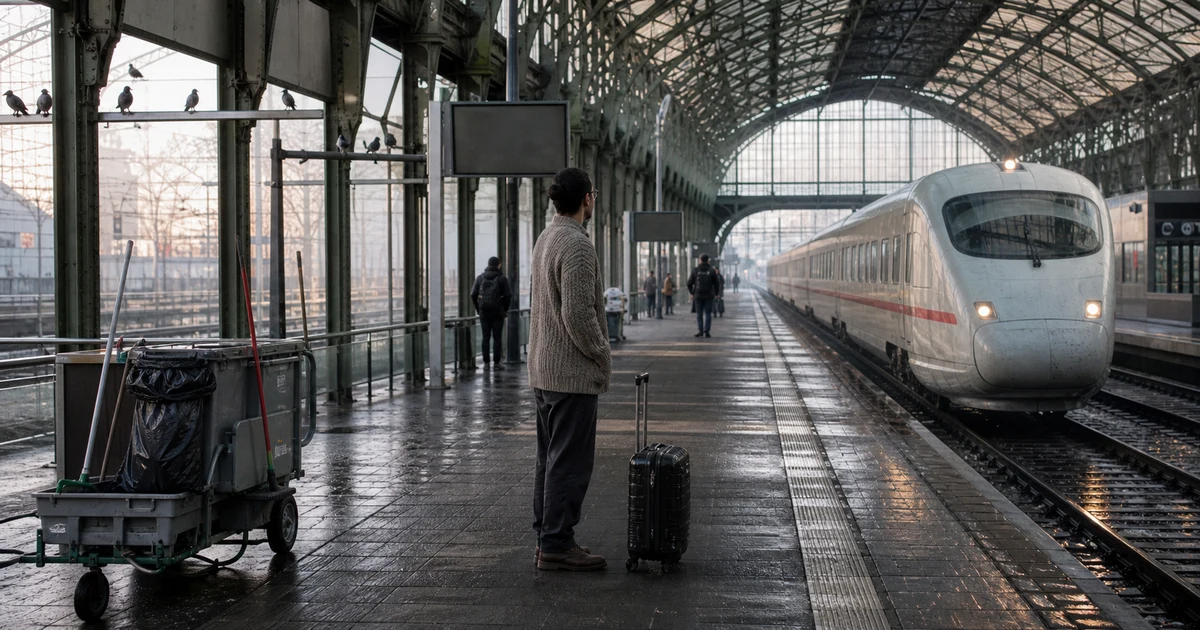
TL;DR: Aachen gives you a no-fee engineering brand in a small town. Munich charges tuition and the highest rent. Berlin is tech and startups. Hamburg is aerospace and the port. Pick on the industry you want to work in, then check whether you can afford the rent. Only Munich bills non-EU tuition, and it is the line that moves a budget by thousands.
Engineering jobs in Germany are regional. The automotive work is in the south, the software and startup work is in Berlin, aerospace and shipping are in the north. Where you study is where you do your Werkstudent job, where the campus recruiters come from, and where your first offer is likely to be. That makes the city choice as consequential as the university choice, sometimes more so.
| City | Living/mo | Strength | Tuition |
|---|---|---|---|
| Aachen | 850-1,000 | Mechanical brand | No fee |
| Berlin | 900-1,200 | Tech, startups | No fee |
| Munich | 1,000-1,400 | Top brand, auto | 2,000-6,000/sem |
| Hamburg | 900-1,100 | Aerospace, port | No fee |
Aachen: the brand without the bill
RWTH Aachen is the classic German engineering name and it charges no tuition. It is also bigger and more international than its small-town setting suggests: 44,382 students in winter semester 2025/26, of whom 15,811 are international, from 141 countries. That is more than a third of the campus, spread across ten faculties and some 260 institutes, and RWTH holds University of Excellence status with three clusters of excellence.
Living runs 850 to 1,000 euros a month, with solid links into the surrounding Rhineland industry. What you give up is the size of the place. Aachen is quiet, and if you want a big international city outside the lecture hall, you will notice. See the RWTH Aachen admission guide for Indian students.
Berlin: software, startups, no fee
TU Berlin gives you no-fee engineering in the middle of Germany's startup and software economy: 33,990 students in winter semester 2025/26, 10,386 of them foreign nationals. Living runs 900 to 1,200 euros a month. The advantage is the volume of tech and startup work, much of it hiring in English, which is why it suits CS and software-leaning engineers. It is the wrong city for classic heavy manufacturing.
Two practical notes. The semester fee is EUR 379.06 for winter 2026/27, of which 226.80 is the Deutschlandsemesterticket, a national travel pass rather than a Berlin one. And the English-taught master's programmes with restricted admission close on 15 May for a winter start, six weeks before the German-taught ones. See how to apply to TU Berlin through uni-assist.
Munich: the strongest brand, the biggest bill
TU Munich is the most recognised engineering name here, with automotive and technology employers on the doorstep, 51,954 students in winter semester 2025/26 and an international share of 45 per cent drawn from around 140 countries, across seven schools and 700 professors.
It also charges non-EU tuition, and the amounts are programme-specific: usually 2,000 or 3,000 euros a semester for a bachelor's and 4,000 or 6,000 for a master's. On top sits the most expensive city in the country at 1,000 to 1,400 euros a month. If you can fund it, the brand and the industry access are real. If funding it means arriving with nothing in reserve, one of the other three is the better call. Check the exemptions before you assume you owe it: a completed German bachelor's degree cancels the master's fee at TUM, if you prove it by the enrolment deadline. See the TUM admissions guide and which Bavarian universities actually charge.
Hamburg: aerospace and the port
TU Hamburg and HAW Hamburg sit next to aerospace, shipbuilding and port logistics, charge no tuition, and cost 900 to 1,100 euros a month. For mechanical, aerospace or logistics-adjacent engineering it is an underrated choice, and Hamburg is a genuinely international city rather than a campus town.
TUHH's semester contribution is EUR 400.00 for winter 2026/27, and the re-registration windows are strict: 1 August to 15 September for the winter semester, 1 February to 15 March for the summer. The money has to be credited to the university's account by the deadline, not merely sent, which matters if you are transferring from outside the EU, where a bank can sit on the payment for days. A late re-registration costs another 30 euros. Skip it entirely and you can be de-registered, which for an international student also puts the residence permit in question. TUHH also warns that transfers from abroad must cover the extra bank charges themselves, or the contribution arrives short and the payment does not count.
The fee line that is easy to misread
Do not read a semester fee as a cost-of-living signal. TUM's semester fee is EUR 97.00 in Munich, Garching and Weihenstephan, against 379.06 at TU Berlin and 400.00 at TUHH, and Munich is the most expensive of the four cities to live in by a wide margin. The gap is transport: Berlin and Hamburg bundle a national travel pass into the fee and Munich does not, so a Munich student buys the discounted Deutschlandticket separately. Compare tuition, semester fee and transport as three separate lines or the comparison inverts.
How to actually choose
Take Munich if the brand matters most and the fees are fundable. Take Aachen for classic mechanical engineering with no tuition. Take Berlin for software and startups. Take Hamburg for aerospace and maritime work on a moderate budget. Then check your grades honestly against the entry bar, because the shortlist that matters is the one you can get into: how competitive German master's admission really is.
What does not change with the city
The visa and the money. Wherever you go, you need a student visa with a 11,904 euros blocked-account deposit, and applicants who studied in India, China or Vietnam, the only three countries with an APS office, need an APS certificate. See the current student visa requirements and how the APS certificate works for Indian applicants.
Working during and after the degree
The work rules are national, so 140 full days or 280 half days a year applies in all four cities, as does the 18-month job-seeker visa after you graduate. A Werkstudent contract allows up to 20 hours a week during the lecture period anywhere in Germany. What differs is what you can find locally, which is the whole argument for choosing on industry. See the rules on working during your studies and what the 18-month job-seeker visa lets you do.
Sources
- RWTH Aachen: facts and figures
- TU Berlin: statistics
- TUM in figures
- TUHH: re-registration and semester contribution
- TUM: non-EU tuition
Still torn? A free profile evaluation weighs these cities against your budget, your field and your admission odds. If Baden-Wuerttemberg is also on your list, read the KIT Karlsruhe guide and its state tuition fee.
Frequently Asked Questions
You probably qualify for more than you think.
Students who get evaluated find programmes they had no idea existed — at universities that charge nothing. 2 minutes, no cost. The only downside is not checking.
Want our guides higher up in Google?
Mark GradGermany as a preferred source and Google gives our pages more room when you search about studying in Germany. Takes one tap, and you can undo it any time from the same screen.
Living this, or on your way to it? Tell your story.
If you are already in Germany and finding it hard, or still fighting to get here, other students need to hear it from someone real. Share your honest journey. We help shape it, and nothing goes live until you approve it.
Related Guides
Free German Quiz · No Login
Can you score 10/10 on today's German challenge?
10 new words every day · 4,500+ words from A1 to C1 · takes about a minute.
Related Articles

Study in Germany
Lehramtsbezogener Bachelorstudiengang, Schwerpunkt Lehramt an Förderschulen - Studiengangsmodell, B.Ed.
Universität Koblenz
Koblenz
M.Ed.Elektrotechnik/Mathematik als Quereinstieg, M.Ed.
Technische Universität Berlin
Berlin
B.A.Bank- und Versicherungsmanagement, B.A.
Jade Hochschule - Wilhelmshaven/Oldenburg/Elsfleth
Wilhelmshaven