University of Stuttgart for Internationals: English Programs & Deadlines
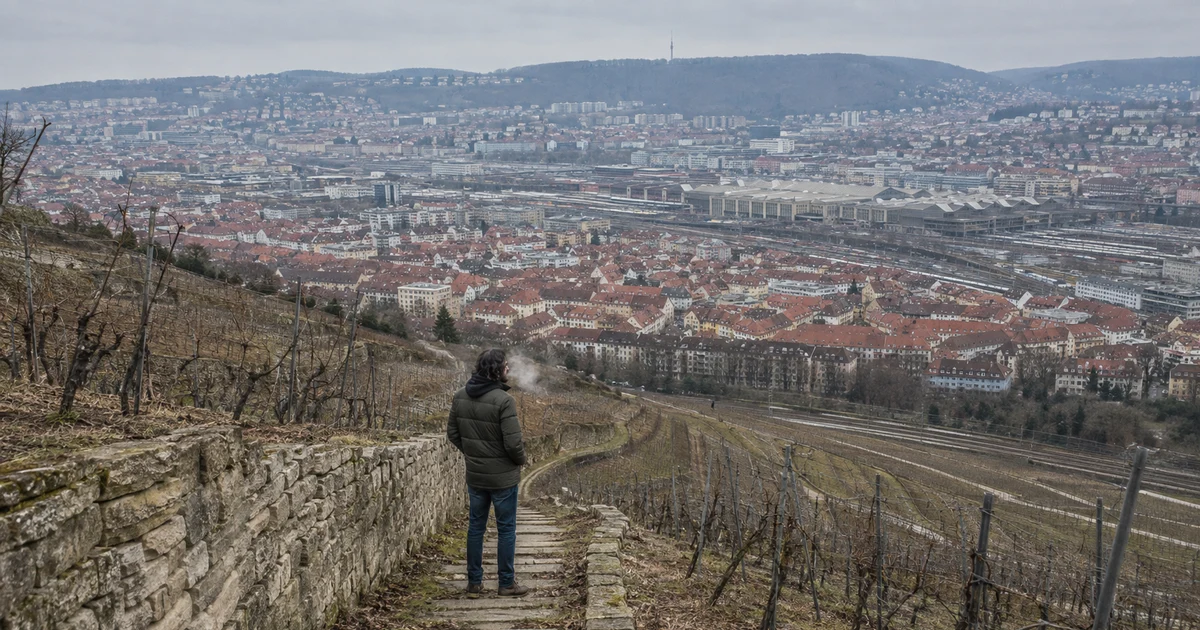
TL;DR: The University of Stuttgart is a TU9 school built around automotive, aerospace and civil engineering. Being in Baden-Wuerttemberg, it charges non-EU students EUR 1,500 per semester. Its English-taught master's are almost all master's level, and most of them close on January 15, six months before the July 15 date everyone plans around.
Stuttgart offers something unusual in Germany: heavy industry exposure at moderate living costs. The automotive and engineering firms around the city are the university's research partners, they run the job fairs, and they take the project placements. Rents, meanwhile, are nothing like Munich's.
The trade-off is the state fee. Non-EU students pay EUR 1,500 per semester, about 3,000 euros a year, plus the semester fee. EU, EEA and exchange students are mostly exempt. Plan that as a fixed cost, not a surprise.
What Stuttgart is strong at
Automotive, aerospace, mechanical, civil and electrical engineering, and computer science alongside them. The point is not the department names; it is that the companies doing this work in Germany are down the road, and the course projects and thesis topics come out of that relationship.
The university runs around 160 bachelor's and master's programs in total. Only a slice of them are in English, and that slice is where international applicants without German actually have a shot.
Which programs are in English
The English-taught list is a master's list. Stuttgart publishes no English-taught bachelor's, so if you are coming straight from school you are looking at a German-taught degree and a Studienkolleg or a C1 certificate first. At master's level the English catalogue covers most of what the university is famous for:
- Information Technology (INFOTECH), Electrical Engineering, Engineering Cybernetics, Computer Science
- Water Resources Engineering and Management (WAREM), Infrastructure Planning, Geomatics for Environmental Monitoring
- Computational Mechanics of Materials and Structures (COMMAS), Fundamentals and Applications of Mechanical Engineering (FAME), Materials Science
- Physics, Chemical Sciences, Computational Linguistics
- Air quality and waste process engineering (WASTE), Integrated Urbanism and Sustainable Design, and the architecture research master ITECH
For the wider picture see the English-taught programmes available across Germany.
The January deadline that catches people out
This is the single most expensive thing to get wrong about Stuttgart. The university publishes one application period for its German-taught master's and a completely different one for the English-taught master's, and the English window closes first.
German-taught master's follow the familiar pattern: May 15 to July 15 for a winter start, December 1 to January 15 for a summer start. The English-taught engineering master's, the ones international students actually apply to, open on November 15 and close on January 15 or February 15 for a start the following October. INFOTECH, Electrical Engineering, Engineering Cybernetics, FAME, WAREM, Infrastructure Planning and Geomatics all sit in the November 15 to January 15 window.
| Route | Winter start | Summer start |
|---|---|---|
| Bachelor's, restricted | May 15 - July 15 | No bachelor intake |
| Bachelor's, unrestricted | May 15 - September 15 | No bachelor intake |
| Master's, German-taught | May 15 - July 15 | December 1 - January 15 |
| Master's, English-taught | November 15 - January 15 or February 15 | Program-specific, often none |
Read that against the calendar. If you are reading this in September, the November 15 window for an October 2027 start opens in about ten weeks, and it shuts on January 15 just after new year. Miss it and there is no late round, no rolling admission and no waiting list: the portal closes and the next opportunity is a full year later. A few programs sit outside the pattern, notably Chemical Sciences (February 1 to July 15) and Integrated Urbanism (June 1 to October 15), so check your own program page rather than trusting a general rule.
If a July date has already slipped past you, the master's deadlines that close earlier than July 15 explains which other universities behave the same way.
Stuttgart does not use uni-assist
Worth saying plainly, because it changes your document plan and your budget. Stuttgart runs its own portal, C@MPUS, and charges no application fee. You upload documents yourself, in the original plus a certified German or English translation. There is no VPD to wait for and no uni-assist processing queue to build into your timeline, which is one fewer thing that can run late. If your other targets do route through uni-assist, see which universities use uni-assist and which do not.
What you need to apply
The generic answer is a relevant bachelor's with good grades. The useful answer is what an actual program asks for. INFOTECH, one of the most applied-to English master's here, publishes hard thresholds:
- A bachelor's of three to four years in computer science, computer engineering, electrical or electronics engineering, or automation. A master's degree does not qualify you.
- A cumulative average better than 70 percent, or 2.8 on a 4.0 scale, or 7.0 out of 10. Submit the original marks, not a German-scale conversion you did yourself.
- English proof before the deadline, not after: TOEFL iBT 95, IELTS Academic 7.0, PTE Academic 76, or a Cambridge C1 Advanced certificate.
- An APS certificate if you are from India, China, Vietnam or Mongolia. Pakistani applicants need the HEC stamp on their degree documents instead. See how the APS certificate works for Indian applicants.
That IELTS 7.0 is higher than the 6.0 to 6.5 floor a lot of German master's set, and it is the requirement students most often discover too late to retake the test. Book the test before you shortlist, not after.
What a year costs
On top of the 1,500 euros per semester fee, the semester fee at Stuttgart is 184 euros, made up of an 80 euro administrative contribution, 96.50 euros for the Studierendenwerk and 7.50 euros for the student body. Budget 900 to 1,100 euros a month to live in Stuttgart, and the 11,904 euros blocked-account deposit for the visa. It is a meaningfully cheaper city than Munich for the same regional job market. See what a year in Germany actually costs an Indian student and how to open a blocked account.
| Item | Cost | Notes |
|---|---|---|
| Non-EU tuition | 1,500 euros/sem | BW state rule |
| Second-degree fee | 650 euros/sem | If you already hold a German degree at that level |
| Semester fee | 184 euros | 80 admin + 96.50 Studierendenwerk + 7.50 student body |
| Application fee | None | No uni-assist charge either |
| Living | 900-1,100/month | Moderate for a big-industry city |
Who does not pay the 1,500 euros
Baden-Wuerttemberg's fee law exempts more people than students assume, and the exemption is not automatic in every case. You are outside the fee if you hold EU or EEA citizenship, if you have a German school-leaving qualification, if you are a doctoral candidate, or if you come on an exchange or partnership agreement such as Erasmus. Recognised refugees are exempt, as are non-EU citizens who have worked legally in Germany for at least five years, and those whose parents worked in Germany for three of the six years before the degree began.
A second group has to apply after the fee notice arrives: students on a leave-of-absence semester, students on a compulsory practical semester, and students with a substantially study-impairing disability. Stuttgart wants that application before lectures start, and the paperwork by your enrolment date or the re-registration deadline, which is August 15 for the winter semester and February 15 for the summer semester. Send it late and you pay for the semester regardless of whether you qualified.
Placements, jobs and the small-supplier route
Werkstudent roles and internships are genuinely plentiful here, which is not true everywhere. One piece of advice students resist and later thank us for: take the job at the small local supplier rather than holding out for the famous badge. Those roles hand you real responsibility early, and in this region they lead somewhere. After graduation, the 18-month job-seeker visa gives you time to turn a placement into a work permit and eventually permanent residence. See the rules on working during your studies and what the 18-month job-seeker visa lets you do.
Sources
- University of Stuttgart, application deadlines
- University of Stuttgart, admission regulations for English-taught master's
- University of Stuttgart, fees and charges
- INFOTECH admission requirements
- Baden-Wuerttemberg Ministry of Science, tuition fees for international students
Thinking about Stuttgart? A free profile evaluation matches your engineering background to the programs that would take you, checks whether your test scores clear the actual thresholds, and prices the Baden-Wuerttemberg fee into your plan.
Frequently Asked Questions
You probably qualify for more than you think.
Students who get evaluated find programmes they had no idea existed — at universities that charge nothing. 2 minutes, no cost. The only downside is not checking.
Want our guides higher up in Google?
Mark GradGermany as a preferred source and Google gives our pages more room when you search about studying in Germany. Takes one tap, and you can undo it any time from the same screen.
Living this, or on your way to it? Tell your story.
If you are already in Germany and finding it hard, or still fighting to get here, other students need to hear it from someone real. Share your honest journey. We help shape it, and nothing goes live until you approve it.
Free German Quiz · No Login
Can you score 10/10 on today's German challenge?
10 new words every day · 4,500+ words from A1 to C1 · takes about a minute.