TL;DR: You can study in Germany after JEE Mains via three main routes: Direct admission, Studienkolleg (1‑year foundation + Feststellungsprüfung), or after one year of an Indian bachelor’s. Expect Winter intake (Sept/Oct), a €11,208 blocked account requirement, and student visa steps including a €75 fee. Use JEE to strengthen STEM applications, confirm university rules (uni‑assist/DAAD), and prioritize German for most public programs.
If you’ve cleared or attempted JEE Mains and are wondering whether you can study in Germany, the short answer is yes. This 2026 guide explains practical pathways after JEE Mains, direct entry, Studienkolleg (foundation year), or after one year in India, plus timelines, costs, scholarships, and visa steps to help you make the switch confidently.
Why consider Germany after JEE Mains?
Germany is a top destination for engineering and STEM aspirants from India because public universities typically charge little to no tuition for bachelor’s degrees, research facilities are world-class, and graduates enjoy a strong job market. If you’ve geared your academics around JEE Mains, you already have a math- and physics-heavy profile that aligns well with German engineering curricula. With careful planning, your JEE preparation can translate into admission to top German universities.
Can JEE Mains help in German university admissions?
While JEE Mains is not a formal admission test in Germany, your score can strengthen your profile. Universities often evaluate Indian applicants on Class 12 board results, subject strength, language skills, and overall academic consistency. A strong JEE Mains percentile signals quantitative aptitude and can improve your chances, especially for competitive engineering programs. Always verify program-specific criteria on the university page or the centralized uni-assist portal if your target university uses it.
Key facts for 2026 applicants (quick table)
| Topic | 2026 Facts & Figures | Notes for JEE Mains Aspirants |
|---|---|---|
| Primary pathways | Direct entry; Studienkolleg (foundation) + Feststellungsprüfung; After 1 year of Indian bachelor’s | Choose based on your Class 12 subjects/marks and target university rules |
| Intakes | Winter (Sept/Oct start), Summer (Mar/Apr start) | Most English-taught bachelor options open in Winter |
| Student visa fee | €75 | Pay at VFS/consulate during submission |
| Blocked account | €11,208/year (€934/month) | Financial proof for visa; see our blocked account support |
| Health insurance (student) | ~€140/month (under 30) | Opt for public student plans; learn more in our health insurance guide |
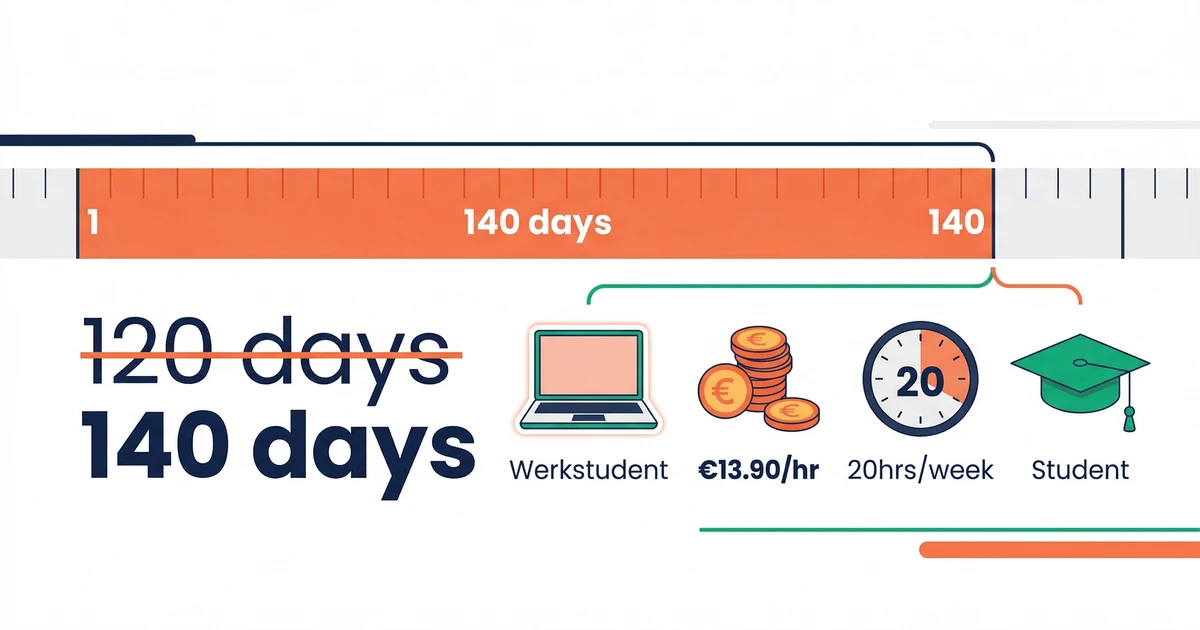
| Part-time work limit | 140 full days or 280 half days/year | Keep studies first; see part-time jobs tips |
| Minimum wage | €13.90/hour | Helps estimate living-cost offsets |
| APS fee (India) | INR 18,000 | Required for Indian-educated applicants; see our APS certificate guide |
| Post-study visa | 18 months | Seek jobs after graduation; details in post-study visa guide |
| EU Blue Card threshold | €45,934 (shortage) / €50,700 (general) | For long-term high-skilled employment after studies |
What are your pathways after JEE Mains?
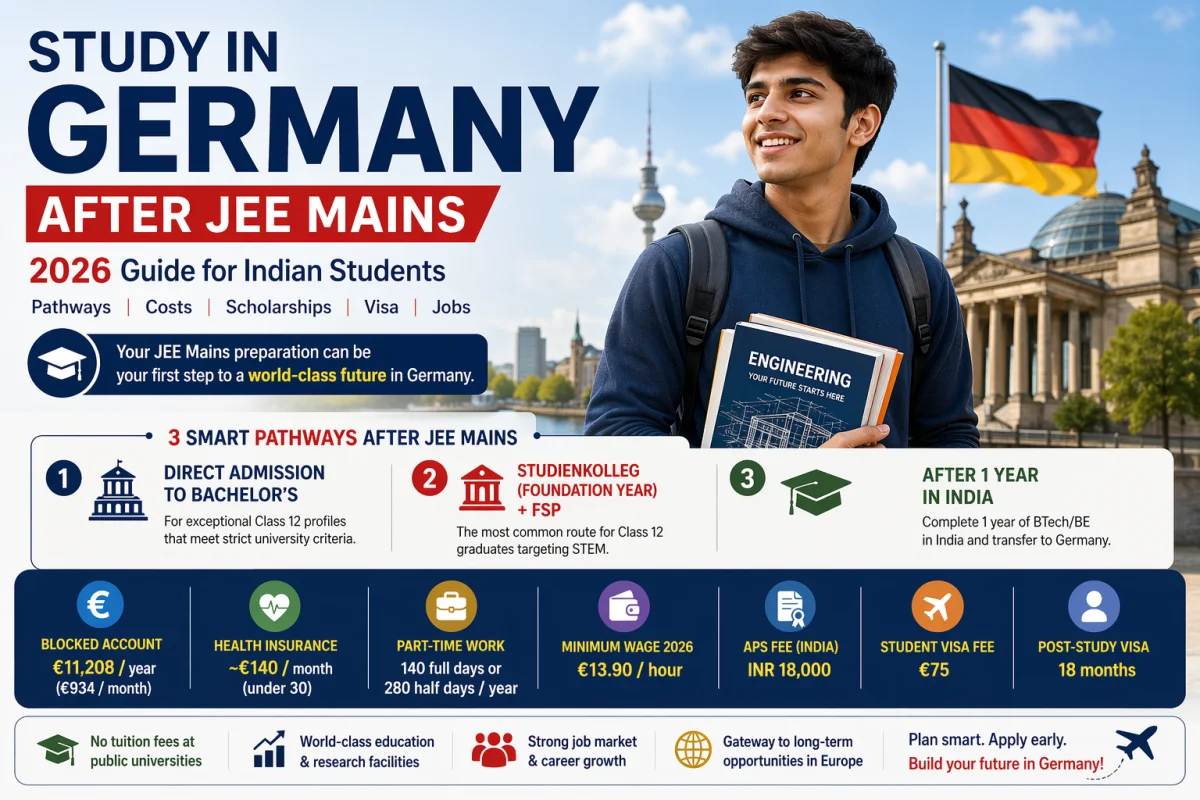
Depending on your Class 12 background and how quickly you want to transition, you can choose one of three common routes. Universities set their own entry rules, so use these as planning frameworks and confirm details on each program page or via uni-assist.
1) Direct admission to a bachelor’s
In limited cases, Indian students may qualify for direct entry if they meet strict academic criteria set by the university, such as exceptional Class 12 performance in relevant subjects, recognized international qualifications, or program-specific conditions. A strong JEE Mains result can strengthen the application, but it is not a substitute for the university’s formal eligibility rules.
2) Studienkolleg (foundation year) + FSP
This is the most common route for Class 12 graduates. Studienkolleg is a one-year foundation program aligned with your target field (e.g., T-Kurs for engineering). After completing the Feststellungsprüfung (FSP), you can apply to bachelor’s programs in the matched subject area. Your JEE Mains preparation in math and physics typically helps you perform well in the T-Kurs.
3) After one year of Indian bachelor’s study
Another route is to complete one successful academic year (or more) in a recognized bachelor’s program in India, then apply for a transfer or first-year admission in Germany. Your transcripts, course-match, and credits will be evaluated individually by the target university. Strong JEE Mains and first-year grades together can make a compelling case.
Pathway comparison: which is right for you?
| Criteria | Direct Entry | Studienkolleg + FSP | After 1 Year in India |
|---|---|---|---|
| Typical duration until bachelor start | Immediate (if admitted) | +1 year for foundation | +1 year in India, then start in Germany |
| Admission predictability | Low to medium | High if you pass FSP | Medium; depends on credit recognition |
| Best suited for | Exceptional Class 12 profiles | Most Class 12 graduates targeting STEM | Students already enrolled in Indian BTech/BE |
| Role of JEE Mains | Strengthens file; not a formal test | Helps with T-Kurs prep (math/physics) | Supports profile along with 1st-year grades |
| German language need (for public paths) | Varies; many bachelor’s are in German | Usually required (Studienkolleg is often in German) | Varies by target program |
| Cost implication | Lowest if tuition-free, standard living costs | +1 year of living costs for foundation | Year in India + standard German costs |
How competitive are top engineering universities?
German engineering is globally reputed. If you’re eyeing the elite technical cluster, research the TU9 universities and other strong public institutions. Admissions weigh school marks, prerequisite subjects, language readiness, and sometimes entrance or pre-study assessments. A high JEE Mains percentile signals strong quantitative skills, but university-specific eligibility remains decisive.
Step-by-step: From JEE Mains to a German admit
Use this timeline as a planning template for a Winter semester start (Sept/Oct). Shift backward by 6 months if you target the Summer semester (Mar/Apr).
Step 1: Shortlist your pathway and programs (Month 0-1)
- Decide between direct entry, Studienkolleg, or applying after one year in India.
- Make a balanced list of 8-12 target programs across public and applied sciences universities.
- Check if the university applies via uni-assist and note program-specific eligibility and language requirements.
Step 2: Prepare academics and language (Month 1-3)
- Organize official transcripts, school-leaving certificate, and detailed marksheets.
- If aiming for Studienkolleg, plan your German learning (often B2/C1 for public paths). For English-taught programs, prepare IELTS/TOEFL if required.
- Document your JEE Mains results; highlight percentile and subject strengths in your CV.
Step 3: Secure APS and financial proof (Month 2-4)
- Apply for APS verification early; the fee is INR 18,000. Follow our APS certificate guide for documents and timelines.
- Plan your blocked funds of €11,208/year (€934/month). We can help open and fund it faster: blocked account.
Step 4: Submit university applications (Month 3-5)
- Apply before deadlines (often May-July for Winter). Upload certified documents to uni-assist or the university portal.
- Write a concise motivation letter linking your JEE Mains prep to the target field.
- Request academic references (teachers, professors) focusing on math/physics rigor.
Step 5: Receive offers and enroll (Month 5-7)
- Respond promptly to conditional/unconditional offers.
- Pay any semester contributions (public universities charge administrative fees, not tuition for most bachelor’s), and complete enrollment steps.
- Book a Studienkolleg seat if relevant and prepare for the entrance/FSP exams.
Step 6: Apply for the student visa (Month 6-8)
- Gather your admission letter, APS, proof of funds, insurance, and biometric photos.
- The visa fee is €75. Consider our end-to-end student visa support to avoid delays.
- Schedule your VFS appointment early; consulate slots fill quickly before Winter intake.
Step 7: Arrival and first-week essentials (Month 8-9)
- Complete city registration and open a current account to access your blocked funds monthly.
- Activate student public health insurance (~€140/month). See our student insurance explainer.
- Attend orientation, get your semester ticket, and plan part-time work within 140 full days or 280 half days per year.
How much does it cost to study in Germany after JEE Mains?
Most public universities do not charge tuition for bachelor’s degrees, but you must plan for living costs, semester contributions, and visas. Use the figures below as planning anchors and verify your city’s rental market.
- Blocked account requirement: €11,208/year (€934/month).
- Health insurance: ~€140/month (under 30).
- Semester contribution: often €150-€350 per semester (varies by university; includes public transport in many states).
- Housing: depends on city and room type (student dorms vs. shared apartments). Research early.
- Visa fee: €75; APS fee: INR 18,000 (India).
To budget comprehensively across rent, food, transport, and study materials, read our city-by-city cost of studying breakdown.
Can you work part-time while studying?
Yes. International students can work up to 140 full days or 280 half days per year. The 2026 minimum wage is €13.90/hour, which helps offset living costs, but avoid overcommitting during intensive academic periods. Campus jobs, assistant roles, and relevant internships can also enhance your future employability.
What about scholarships after JEE Mains?
Germany offers merit-based and need-based funding. While a high JEE Mains percentile is not a scholarship criterion by itself, it reflects your academic caliber and may support competitive applications, especially when combined with strong school marks and motivation letters. Start with national options like DAAD, state-level foundations, and university-specific awards.
For timelines, eligibility, and application tips tailored to Indian students, read our dedicated DAAD scholarship guide.
Do English-taught bachelor’s exist for JEE Mains aspirants?
Yes, but they are fewer than German-taught options. Many applied sciences universities offer English-taught engineering or computer science tracks. Admission still hinges on your school subjects and overall academic profile. If you prefer public universities with wider choice, invest in German language learning, especially if you plan the Studienkolleg route.
How to leverage your JEE Mains preparation
- Quantitative edge: Your math-intensive practice gives you a head start in the T-Kurs (engineering) and first-year calculus/physics courses.
- Problem-solving mindset: German engineering emphasizes conceptual understanding, highlight projects, olympiads, or tinkering work in your CV.
- Subject alignment: Choose programs matching your Class 12 and JEE focus (e.g., ECE, ME, CSE). Misalignment can weaken your case.
- Documentation: Present your JEE Mains scorecard professionally; mention percentile and section scores where relevant.
Application essentials: documents and tips
- Academic records: Class 10 and 12 certificates and marksheets; semester-wise transcripts if you studied in India post-12th.
- Test scores: JEE Mains (optional but value-adding), English or German proficiency certificates.
- APS certificate (India): Mandatory for most applicants educated in India; start early to avoid delays.
- CV and motivation letter: Emphasize your STEM rigor, projects, and why Germany’s ecosystem fits your goals.
- Letters of recommendation: From teachers or professors who can attest to your mathematics and physics capability.
- Passport, photos, and financial proof: Blocked account confirmation and funding plan.
City and university selection for JEE Mains candidates
Balance ambition with practicality. Research acceptance rates, language of instruction, lab facilities, and industry links in your target region. Metropolitan areas offer internships but have higher rents. Smaller university towns can be affordable yet academically excellent. Browse curated programmes or explore institutions by region via our universities directory.
Admissions timeline example (Winter 2026 intake)
- January-March 2026: Shortlist programs; confirm eligibility via uni-assist/university pages.
- February-April 2026: Start APS; plan German or English test bookings.
- April-June 2026: Submit applications; watch for missing-document requests.
- June-August 2026: Receive offers; enroll; arrange housing and insurance.
- July-September 2026: Visa filing (€75 fee), purchase flight, pre-departure prep.
- September-October 2026: Arrive; register in city; open current account; begin classes.
After graduation: jobs and long-term residence
Upon completing your bachelor’s, you can apply for an 18-month post-study residence permit to find a qualifying job. Once employed with a suitable salary, many graduates pursue the EU Blue Card, which in 2026 has thresholds of €45,934 for shortage occupations and €50,700 for general roles. Use internships and student jobs to build German work experience early.
Common mistakes to avoid
- Assuming JEE Mains guarantees admission: It does not replace program-specific eligibility.
- Applying without language planning: Many public options are in German; factor in Studienkolleg language needs.
- Late APS or blocked account setup: These two steps often delay visa filing, start early.
- Ignoring workload: Balance part-time work within the 140/280 limit; academics come first.
- Weak motivation letter: Connect your JEE Mains learning to German program outcomes and research interests.
Sample profile mapping: where does JEE Mains fit?
| Profile Snapshot | Suggested Path | Notes |
|---|---|---|
| CBSE Class 12 with PCM, 85%+, strong JEE Mains percentile | Apply to Studienkolleg (T-Kurs) and select German/English bachelor options | Use JEE math/physics strength to excel in FSP and first-year core |
| CBSE/ISC 90%+ with advanced math coursework; strong English proficiency | Check for direct entry at target universities, keep Studienkolleg as backup | Eligibility is program-specific; confirm on uni pages |
| Completed 1 year of BTech/BE in India with solid grades; JEE Mains attempt | Apply for first-year or credit-evaluated entry in Germany | Submit detailed syllabi for credit recognition; outcomes vary by university |
Final tips to boost your chances after JEE Mains
- Keep a realistic but ambitious shortlist; mix high-reach with solid-match programs.
- Start language prep early if you’re targeting Studienkolleg or German-taught tracks.
- Apply on time, respond fast to document requests, and maintain tidy application folders.
- Use your JEE Mains story to highlight grit, problem-solving, and STEM depth.
- Budget early for the blocked account, APS, and insurance to avoid last-minute stress.
Ready to convert your JEE Mains momentum into a German admit? Get a personalised shortlist, eligibility checks, and a clear action plan from our experts. Start with a free profile review: profile evaluation. Or browse curated bachelor’s options and apply directly via our programmes hub.
JEE Main 2026 to Germany, Frequently Asked Questions
Is a JEE Main score required to study in Germany?
No, JEE Main is not mandatory for admission to German universities, but if you have a JEE Main score, it strengthens your application for engineering Bachelor's programmes. Many German public universities (RWTH Aachen, TU Munich, KIT, TU Darmstadt) explicitly recognise JEE Main as evidence of academic readiness in physics, chemistry and mathematics. Indian students without JEE Main can still apply via Class 12 marks plus a Studienkolleg foundation year.
What is the minimum JEE Main percentile or score for German universities?
There is no single official cut-off, German universities don't rank candidates by JEE Main alone. As a rule of thumb, a JEE Main score corresponding to a 75-85 percentile is competitive, especially when paired with a Class 12 PCM aggregate of 80% or higher. RWTH Aachen, TU Munich and other TU9 universities will weigh JEE Main alongside English/German proficiency, motivation letter and (often) an APS certificate.
Can I get into RWTH Aachen or TU Munich with a JEE Main score?
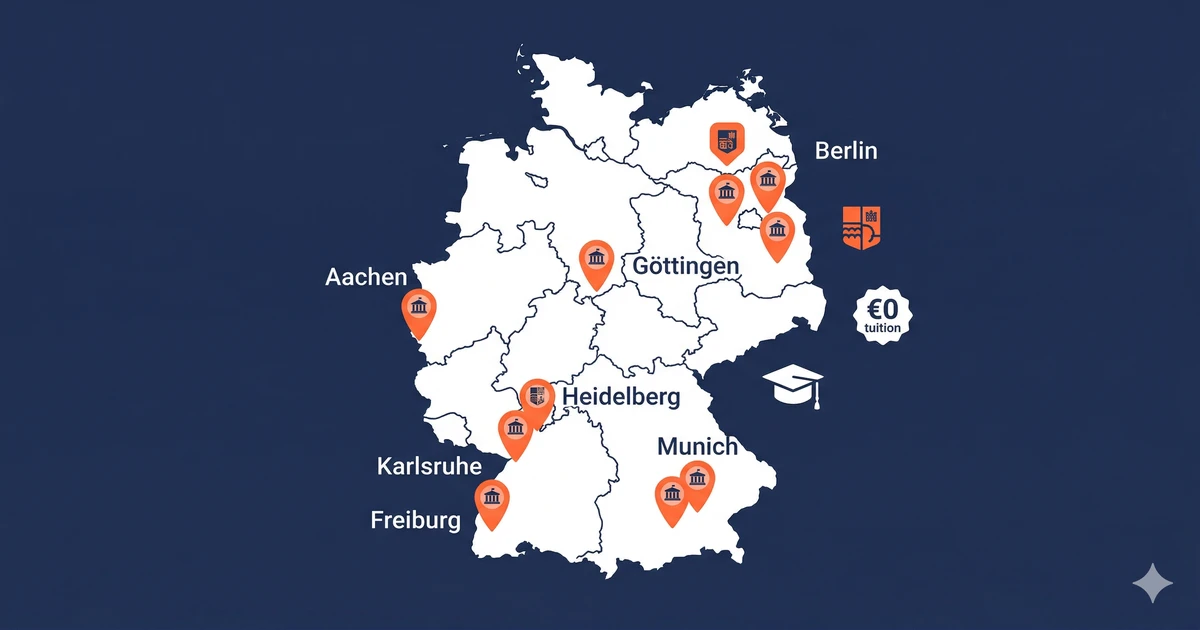
Yes, RWTH Aachen, TU Munich, KIT, TU Berlin and TU Darmstadt all admit Indian Bachelor's applicants who have written JEE Main. Admission is competitive but JEE Main is treated as a strong positive signal alongside Class 12 marks. None of these universities charge tuition for Bachelor's programmes, even for international students.
How is studying in Germany after JEE Main different from going to IIT or NIT?
Three big differences:
- Cost: Public German universities charge €0 tuition. IITs charge ~₹2.5 lakh/year; NITs ₹1.5 lakh/year; private engineering colleges ₹3-7 lakh/year.
- Work rights: Germany allows international students to work 140 full days per year and stay 18 months after graduation on a job-search visa, leading to PR in as little as 21 months.
- Selectivity: JEE Main → IIT requires top 1% percentile via JEE Advanced. JEE Main → German public university typically requires the 75th percentile or above plus Class 12 strength, far less of a single-exam bottleneck.
Do I need JEE Advanced for German universities?
No. German universities do not require JEE Advanced. JEE Main alone is sufficient to demonstrate engineering aptitude for Bachelor's admission. JEE Advanced is only needed for IIT admission in India and is not part of any German university's evaluation criteria.
Can I apply to Germany after JEE Main if I'm taking a drop year?
Yes. A drop year preparing for JEE Main does not disadvantage your German application, universities care about your final Class 12 percentage, JEE Main score, and APS certificate. Many Indian students treat their drop year as a gap year and apply for the next German winter intake (October) or summer intake (April).
Frequently Asked Questions
You probably qualify for more than you think.
Students who get evaluated find programmes they had no idea existed — at universities that charge nothing. 2 minutes, no cost. The only downside is not checking.
Want our guides higher up in Google?
Mark GradGermany as a preferred source and Google gives our pages more room when you search about studying in Germany. Takes one tap, and you can undo it any time from the same screen.
Get new guides as soon as they go live
Add our feed to Feedly, Inoreader or any RSS reader and every new guide on studying in Germany shows up there by itself. No email, no sign-up.
Living this, or on your way to it? Tell your story.
If you are already in Germany and finding it hard, or still fighting to get here, other students need to hear it from someone real. Share your honest journey. We help shape it, and nothing goes live until you approve it.
Free German Quiz · No Login
Can you score 10/10 on today's German challenge?
10 new words every day · 4,500+ words from A1 to C1 · takes about a minute.